
Night Driving Risks That Daylight Hides

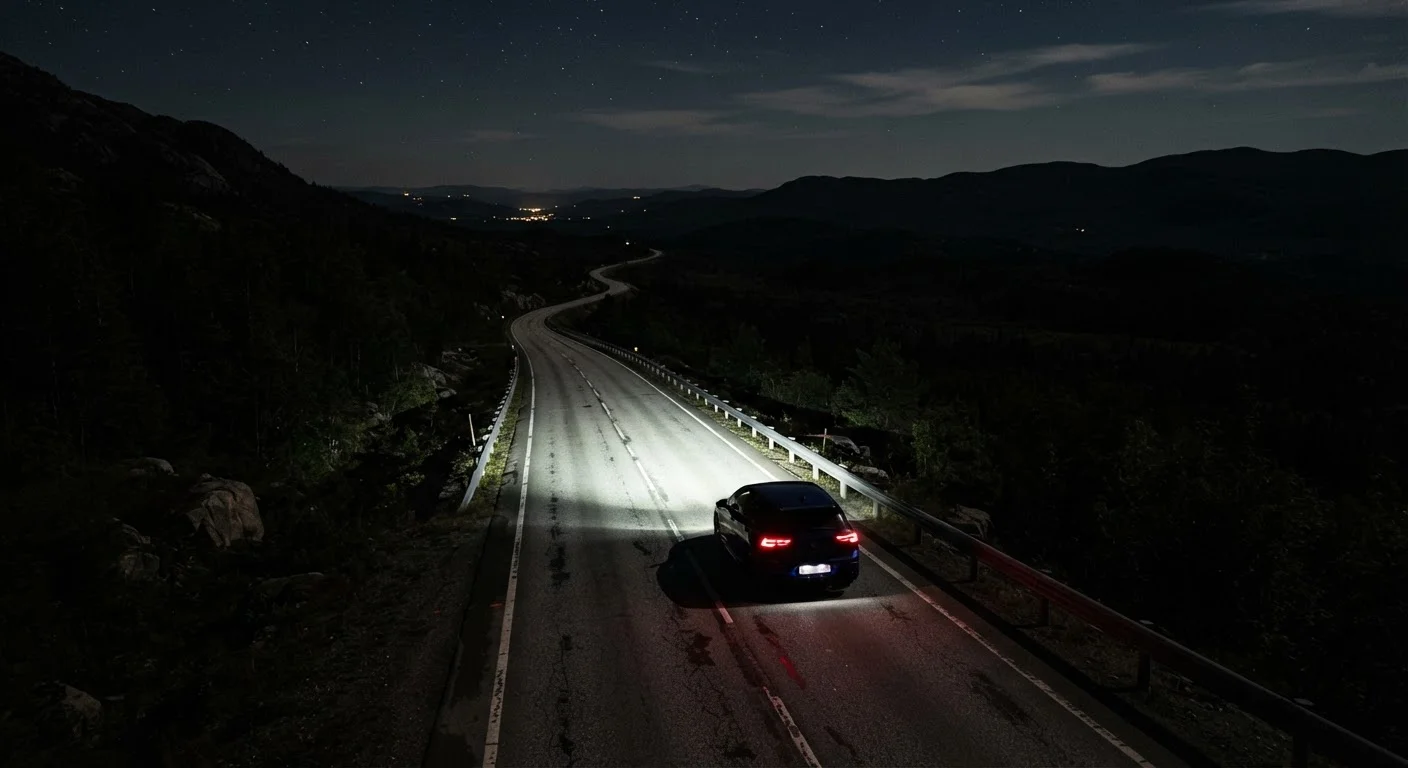
Photo: DockedReads.com | Information Made Easy editorial
Key Takeaways
- Fatal crash rates are disproportionately higher at night despite lower overall traffic volume.
- Human vision loses critical depth perception and peripheral sharpness in low-light conditions.
- Headlight glare from oncoming traffic causes temporary blindness lasting several seconds.
- Driver fatigue peaks in the late-night and early-morning hours, compounding visibility risks.
- Overdriving your headlights — going too fast to stop within the lit distance — is a common and underappreciated danger.
- Clean headlights, properly aimed beams, and reduced speed are the most effective countermeasures.
Why Night Roads Are Fundamentally Different
Driving after dark is not simply a darker version of a daytime commute — it's a meaningfully different sensory and cognitive challenge. The human eye performs well in bright light but loses several critical capabilities when illumination drops. Peripheral vision narrows, depth perception deteriorates, and the eye takes time to adjust every time it moves between brightly lit and dark zones — such as when passing through an intersection with streetlights.
According to the National Safety Council, roughly half of all traffic fatalities in the U.S. occur at night, even though only about a quarter of all driving happens after dark. That disparity reflects how much harder the environment is to navigate safely, not just how many more cars are on the road.
These risks exist independently of weather. Even on a clear, dry night with a full moon, road conditions look and feel different from how they appear at noon. Contrast sensitivity — the ability to distinguish objects from their backgrounds — drops sharply in low light, making pedestrians, cyclists, and animals on or near the road far harder to detect in time. Different driving environments demand different adjustments, and nighttime is among the most significant of those environment shifts.
The Three Core Hazards After Dark
1. Reduced visibility and overdriving headlights. Standard low-beam headlights illuminate roughly 160 feet ahead. At 60 mph, a vehicle covers that distance in under two seconds — meaning that if a hazard appears at the edge of your headlight range, there may not be enough time to stop. This is known as overdriving your headlights, and it's one of the most common contributors to nighttime crashes. Slowing down and increasing following distance are the most straightforward corrections.
2. Headlight glare from other vehicles. Glare from oncoming high beams or poorly aimed headlights can cause temporary visual impairment lasting three to five seconds after the light source passes. During that window, a driver at highway speed may cover hundreds of feet while functionally blind. Looking toward the right edge of the lane — rather than directly at the light source — helps limit the effect.
3. Driver fatigue. The body's circadian rhythm creates natural alertness dips in the late-night and early-morning hours, roughly between midnight and 6 a.m. When combined with darkness, fatigue creates a compounding risk: reaction time slows, lane-keeping becomes less consistent, and attention narrows. Fatigue impairs driving in ways that closely resemble alcohol impairment, yet many drivers underestimate how compromised they are.
~50%
Share of U.S. traffic deaths occurring at night
The National Safety Council notes that roughly half of all traffic fatalities occur after dark, despite nighttime representing only about a quarter of total driving.
160 ft
Typical low-beam headlight illumination range
At 60 mph, a vehicle covers this distance in under two seconds — leaving little margin when hazards appear at the edge of visibility.
3–5 sec
Temporary blindness duration after oncoming glare
Vision specialists note that recovery from bright headlight glare can take several seconds, during which a highway driver may cover hundreds of feet.
Practical Steps That Genuinely Reduce Night Driving Risk
Understanding the hazards is only useful if it changes behavior. Several straightforward habits make a measurable difference.
- Keep headlights clean and properly aimed. Oxidized or dirty headlight lenses can reduce light output by 50% or more. Headlights that are aimed too low or too high also reduce effectiveness or increase glare for other drivers. Both are correctable at most service centers.
- Reduce speed proportionally to visibility. Matching speed to your actual stopping distance — not just the posted limit — is the core principle of driving safely at night. Speed limits are set for ideal conditions; darkness is not ideal.
- Increase following distance. At night, brake lights may be the first indication that a vehicle ahead has slowed or stopped. Adding extra following distance gives more reaction time.
- Eliminate interior distractions. Bright phone screens, dome lights, and reflective surfaces inside the cabin reduce the driver's ability to see outside effectively. Distraction at night is especially consequential because the margin for error is already smaller.
- Recognize fatigue honestly. If you are yawning repeatedly, struggling to maintain lane position, or find your thoughts drifting, these are not signs that coffee will restore safe driving — they are signals to stop and rest.
Set Your Interior Lighting Wisely
Drivers who have developed habits that gradually erode their safety margins may find night driving particularly revealing. Routine shortcuts that feel low-risk in daylight often become genuinely hazardous after dark.
When Vehicle Condition Becomes a Safety Issue
Night driving amplifies the consequences of deferred vehicle maintenance in ways that daytime driving does not. Worn wiper blades that smear rather than clear the windshield, or a cracked windshield that scatters oncoming headlights, can reduce forward visibility dramatically. Mirrors that are not properly adjusted create larger blind spots when the only light source is other vehicles' headlights.
It's also worth noting that certain dashboard warning indicators — particularly those related to lighting circuits or battery charge — can signal problems that become especially relevant after dark. Understanding what your warning lights mean before a problem occurs puts you in a much better position to respond appropriately.
Night driving in adverse weather compounds these risks further. Rain, fog, and ice each interact differently with limited-visibility conditions. Severe weather and darkness together create some of the most demanding conditions any driver will encounter on U.S. roads.
Night Vision Declines with Age
Frequently Asked Questions
The content on this site is for informational purposes only and is not a substitute for professional advice. Always consult a qualified professional for guidance specific to your situation.