
Eating Patterns Around the World: What Nutrition Research Has Learned from Them

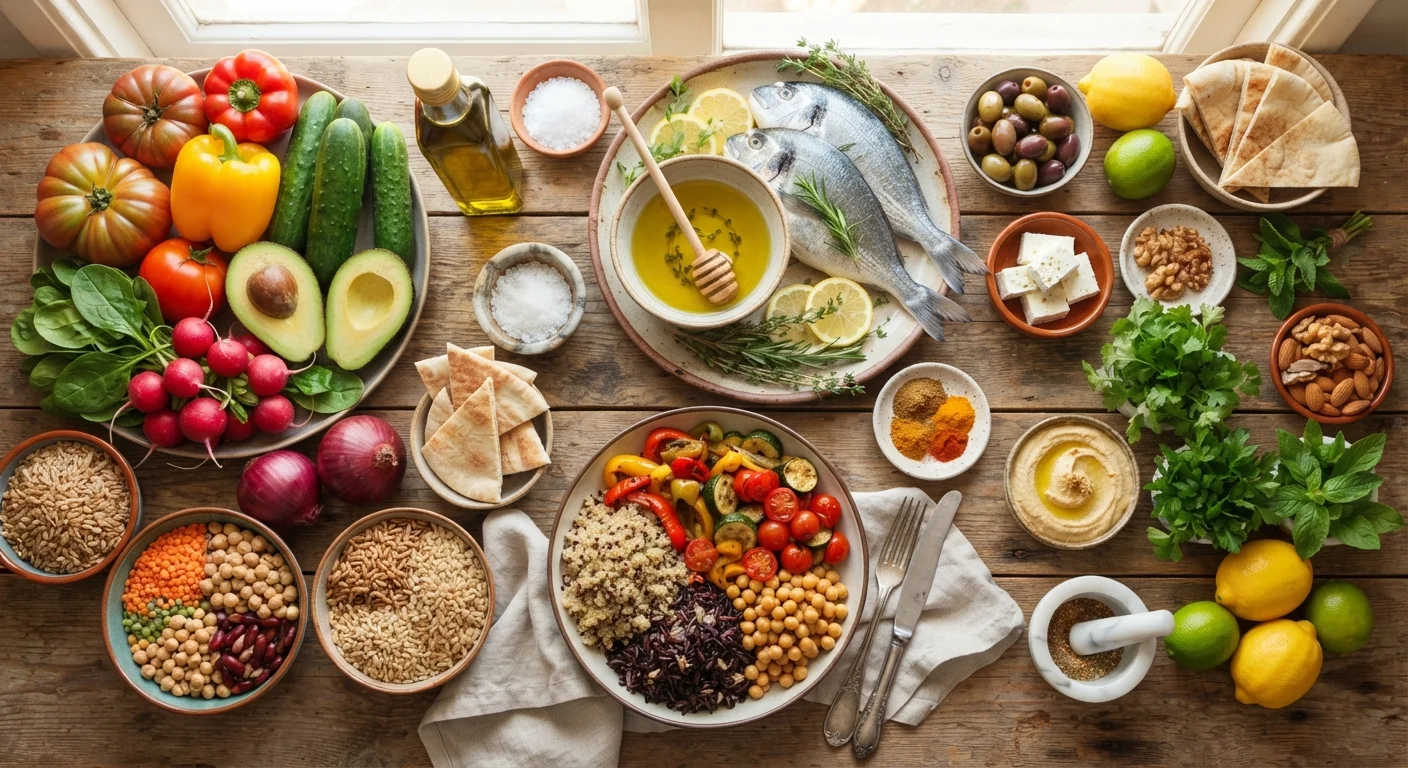
Photo: DockedReads.com | Information Made Easy editorial
Key Takeaways
- Most well-studied dietary patterns emphasize whole, minimally processed foods over refined or packaged alternatives.
- Plant foods — vegetables, legumes, whole grains, and fruits — form the foundation of nearly every pattern linked to positive health outcomes.
- No single global diet is universally superior; context, culture, and individual factors all matter.
- Eating patterns, not individual superfoods, appear most relevant to long-term nutritional health.
- Researchers consistently find that social and environmental eating contexts shape outcomes alongside food composition.
Why Researchers Study Whole Dietary Patterns
For much of the twentieth century, nutrition science focused on isolating individual nutrients — vitamins, minerals, macronutrients — and studying their effects one at a time. That approach yielded important breakthroughs, but it also produced a fragmented picture. Real people don't eat nutrients; they eat meals, shaped by culture, geography, and tradition.
Beginning in the mid-twentieth century, epidemiologists began comparing the eating habits of entire populations and correlating them with health outcomes over decades. What emerged was a richer, more nuanced understanding: dietary patterns — the overall combination of what people eat and how — appear to matter more than any single food or nutrient in isolation. This shift in perspective has since become a pillar of nutritional epidemiology.
Several patterns have accumulated enough research to be studied in depth. Each offers distinct lessons, and together they point toward a handful of shared principles. As you explore these patterns, keep in mind that nutrition science is an evolving field — findings from population studies show associations, not guaranteed cause-and-effect relationships for individuals. For guidance tailored to your own needs, consulting a registered dietitian or qualified healthcare provider is always the right call.
Curious about claims that often get in the way of clear thinking on this topic? Our breakdown of persistent nutrition myths can help separate fact from common misconception.
The Mediterranean Pattern: Diversity and Healthy Fats
The Mediterranean dietary pattern — broadly observed in countries bordering the Mediterranean Sea — is among the most extensively studied in nutrition research. It is characterized by abundant vegetables, fruits, legumes, whole grains, nuts, seeds, and olive oil; moderate fish and seafood; modest amounts of dairy and poultry; and limited red meat and sweets.
Researchers have observed consistent associations between this pattern and markers of cardiovascular health in large cohort studies and clinical trials, including the well-known PREDIMED trial conducted in Spain. The pattern's emphasis on unsaturated fats from olive oil and nuts, alongside fiber-rich plant foods, has drawn particular scientific attention.
One important insight: "the Mediterranean diet" is not a single, fixed prescription. It varies considerably by country and region, and researchers study it as a broad dietary pattern rather than a rigid menu.
The Mediterranean pattern's value lies in its overall composition, not any single food or oil.
Traditional Japanese Eating: Variety, Portion Awareness, and Fermented Foods
Traditional Japanese dietary patterns — particularly those associated with Okinawa and other longevity-studied regions — have attracted global research interest. These patterns are notable for their emphasis on fish, tofu, seaweed, vegetables, and fermented soy products such as miso and natto, alongside relatively small portions of rice as a staple grain.
Researchers note that traditional Japanese diets tend to be low in saturated fat and high in diverse plant compounds, including those found in sea vegetables and fermented foods. The cultural practice of hara hachi bu — eating until roughly 80% full — has also been cited by researchers studying eating behaviors associated with lower caloric intake in Okinawan populations.
Fermented foods in particular have generated growing research interest for their potential role in gut microbiome diversity, though this is an active and still-developing area of nutritional science.
Traditional Japanese patterns show that variety and portion mindfulness may matter as much as specific foods.
The Nordic Diet: Seasonal Produce, Whole Grains, and Fatty Fish
Developed in part as a research framework, the New Nordic Diet emphasizes foods native to Scandinavian countries: rye, barley, oats, root vegetables, berries, cabbage, rapeseed (canola) oil, and fatty fish such as herring, salmon, and mackerel. It also incorporates legumes and lean game meats.
Studies — including the OPUS project based in Denmark — have examined its effects on metabolic markers and body weight. Researchers have highlighted the role of whole-grain rye and oats for their fiber content, as well as omega-3 fatty acids from cold-water fish.
The Nordic pattern is particularly interesting because it demonstrates that the principles researchers observe in Mediterranean contexts can be applied to entirely different geographies and food traditions — suggesting that the underlying nutritional structure matters more than the specific cuisine.
The Nordic diet shows that health-supporting eating patterns don't require exotic ingredients — local and seasonal foods can do the same work.
Traditional Mexican and Latin American Patterns: Legumes, Corn, and Diversity
Traditional Latin American dietary patterns — before significant industrialization of food systems — centered on beans, corn tortillas, squash, chili peppers, tomatoes, and a variety of local vegetables and herbs. These patterns provided substantial dietary fiber and plant protein through everyday staples rather than specialty foods.
Nutrition researchers have pointed to the bean-and-corn combination as nutritionally complementary, providing a broad amino acid profile alongside complex carbohydrates. Studies of traditional Mexican-origin populations in the U.S. have also examined dietary acculturation — the shift away from traditional whole-food patterns toward more processed eating — as a factor in changing health outcomes across generations.
This highlights an important research insight: the context in which traditional diets erode can itself illuminate which dietary elements may have been protective.
Traditional Latin American staples like beans and corn form a nutritionally sound foundation that processed alternatives often lack.
Indian Subcontinent Patterns: Spices, Legumes, and Plant-Forward Variety
The Indian subcontinent hosts extraordinary dietary diversity, but traditional patterns across many regions share common features: dal (lentils and legumes), vegetables, whole grains, fermented foods like yogurt and idli, and a wide array of spices including turmeric, cumin, and coriander.
Researchers have examined compounds found in spices — such as curcumin in turmeric — for potential biological activity. While some findings are promising, scientists caution that isolated compounds in supplement form behave differently from spices consumed as part of whole meals, and that much research in this area remains preliminary.
The plant-forward emphasis in many traditional Indian diets, combined with fermented dairy and a wide diversity of legumes, offers a model of how varied protein sources and gut-supporting fermented foods can coexist naturally within a culinary tradition.
Indian dietary traditions demonstrate the power of culinary diversity and spice-based cooking as everyday nutrition tools.
The DASH Pattern: A Research-Designed Framework Drawing on Global Insights
Unlike the other patterns in this list, the Dietary Approaches to Stop Hypertension (DASH) eating plan was designed by researchers — not evolved culturally — as a structured dietary intervention for blood pressure management. It emphasizes fruits, vegetables, whole grains, low-fat dairy, fish, poultry, beans, and nuts while limiting sodium, red meat, and added sugars.
DASH has been evaluated in controlled clinical trials and is consistently cited in major dietary guidelines in the U.S. Its design drew implicitly on lessons from Mediterranean, Nordic, and other plant-forward eating patterns. It is notable for demonstrating that a deliberately constructed dietary pattern can produce measurable outcomes in a clinical setting.
Importantly, DASH is intended as a general framework, not a rigid prescription — and its benefits in clinical trials should not be interpreted as guaranteed outcomes for any individual. Those managing blood pressure or related conditions should work with their healthcare provider.
DASH shows that research-informed dietary frameworks, when grounded in whole foods, can translate global patterns into structured guidance.
What These Patterns Tell Us — Taken Together
Across these well-studied dietary traditions, a consistent picture emerges. The patterns most associated with favorable long-term health outcomes tend to center on whole or minimally processed plant foods, moderate protein (often from fish, legumes, or lean sources), and healthy fats — while limiting added sugars, refined grains, and heavily processed products. You can read more about that distinction in our article on whole foods versus processed foods.
Applying Global Patterns to Your Own Plate
It's worth noting that none of these patterns exists in a vacuum. Lifestyle factors — physical activity, sleep, stress management, and social connection — co-occur with dietary habits and likely interact with them. Researchers acknowledge this complexity when interpreting findings.
These global lessons can inform your own plate without requiring you to adopt an entire cultural cuisine wholesale. Our guide to building a balanced plate translates these principles into practical, everyday meal assembly — and if you want to audit where your own habits currently stand, try our weekly eating audit.
This article is for general informational and educational purposes only and does not constitute medical or dietary advice. Individual nutritional needs vary. Please consult a qualified healthcare professional or registered dietitian for guidance specific to your health circumstances.
The content on this site is for informational purposes only and is not a substitute for professional advice. Always consult a qualified professional for guidance specific to your situation.