
Driver Fatigue: The Risk That Feels Like Nothing Until It's Too Late

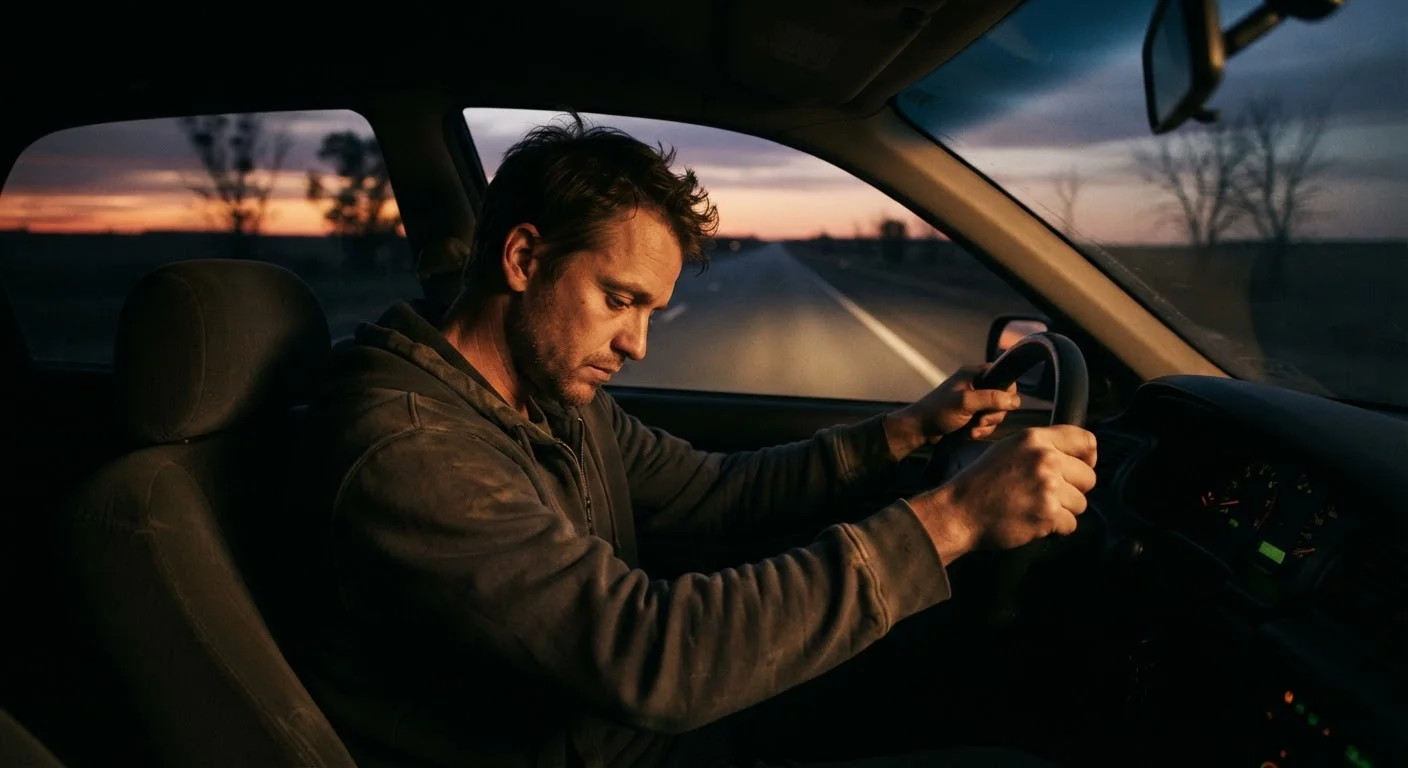
Photo: DockedReads.com | Information Made Easy editorial
Key Takeaways
- Fatigue impairs driving ability in ways that closely mirror alcohol intoxication, including slowed reaction time and poor judgement.
- Many drivers cannot accurately self-assess how fatigued they are, making the risk especially deceptive.
- Caffeine and opening the windows provide only brief, unreliable relief — the only true fix is sleep.
- Microsleeps lasting just a few seconds at highway speed can cover the length of a football field.
- Planning rest stops before you feel tired is more effective than reacting to fatigue after it sets in.
Why Fatigue Is a Stealth Hazard Behind the Wheel
Unlike a sudden blowout or an unexpected obstacle, driver fatigue builds quietly — and that subtlety is precisely what makes it so dangerous. Drivers who are sleep-deprived often report feeling alert and capable, even when objective tests show their reaction times and decision-making have degraded significantly. The National Highway Traffic Safety Administration (NHTSA) has consistently identified drowsy driving as a major factor in thousands of crashes each year in the United States.
Fatigue shares a troubling overlap with alcohol impairment. Research cited by the AAA Foundation for Traffic Safety has found that going without sleep for 17 to 19 hours produces impairment roughly equivalent to a blood alcohol concentration of 0.05%. Beyond 20 hours without sleep, that figure rises closer to 0.08% — the legal limit for driving in all 50 states. The key difference: there's no roadside test for fatigue.
For drivers who also struggle with cognitive distraction, fatigue compounds the problem — a tired brain is even less capable of filtering out irrelevant information and staying focused on the road ahead.
1 in 25
Adult drivers who have fallen asleep at the wheel in the past month
According to a Centers for Disease Control and Prevention (CDC) survey of adult US drivers.
~100,000
Police-reported crashes involving drowsy driving annually in the US
Estimated by the NHTSA; the true figure is considered higher due to underreporting challenges.
4–6 seconds
Duration of a typical microsleep episode
At 65 mph, a 4-second microsleep means covering roughly 380 feet — more than the length of a standard football field — with zero driver input.
Common Myths About Driver Fatigue — Corrected
Misconceptions about fatigue are widespread and genuinely dangerous. Many drivers rely on strategies that feel effective but have little evidence behind them. The myth-busting pairs below draw on what traffic safety research actually shows.
Myth
Turning up the radio or rolling down the window will keep me alert enough to finish the drive.
Fact
These tactics may produce a brief jolt of stimulation, but they do not address the underlying physiological need for sleep and provide only a few minutes of marginal benefit at best.
Stimulation strategies like cold air, loud music, or slapping your face work by triggering a momentary arousal response — but they do not reverse the cognitive degradation that fatigue causes. Studies consistently show these measures wear off quickly, and worse, they can give drivers false confidence that they have the situation under control. If you're relying on these tactics, you've likely already crossed into a level of impairment where stopping is the only safe option.
Myth
I can tell when I'm too tired to drive — I'll feel it coming.
Fact
Fatigue specifically impairs the brain's ability to self-assess, meaning tired drivers routinely underestimate how impaired they are.
This is one of the most counterintuitive and dangerous aspects of drowsy driving. The same cognitive processes you'd use to evaluate your own alertness — judgement, self-awareness, attention — are precisely the ones most degraded by lack of sleep. Research in sleep science has repeatedly shown that subjective ratings of sleepiness diverge sharply from objective performance measures as sleep deprivation deepens. By the time you feel "really tired," your driving ability has likely already been impaired for some time.
Myth
Coffee will make me safe to drive again after several hours without sleep.
Fact
Caffeine can temporarily mask feelings of sleepiness, but it does not restore the reaction time, lane-tracking ability, or decision-making that sleep deprivation has already degraded.
Caffeine works by blocking adenosine receptors — chemicals that promote sleepiness — but it does not reverse the neurological effects of sleep debt. A driver who has been awake for 20 hours and drinks a large coffee may feel more alert, but their measured performance on tasks requiring sustained attention and rapid response remains significantly below baseline. Caffeine is a useful short-term tool when combined with a rest stop nap (see the "coffee nap" strategy), but it is not a substitute for stopping and sleeping when genuinely fatigued.
Myth
Only driving at night creates a fatigue risk — daytime driving is safer.
Fact
While crash rates are higher at night, fatigue-related impairment can occur at any time of day, with a secondary peak in the early-to-mid afternoon tied to natural circadian rhythms.
The human body experiences two natural low-alertness windows each day: a primary trough between roughly 2 and 5 a.m., and a secondary trough in the early afternoon (often between 1 and 3 p.m.). This afternoon dip occurs independently of whether you ate a large lunch — it is a hardwired biological phenomenon. Long-haul drivers and commuters who drive after a poor night's sleep should be especially cautious during these windows, regardless of whether it is light outside.
Myth
Experienced, professional drivers are less affected by fatigue than regular drivers.
Fact
Driving experience does not confer physiological resistance to sleep deprivation; experienced drivers are equally impaired by fatigue, even if they are better at masking or ignoring the symptoms.
This myth partly reflects a confusion between skill and physiology. An experienced driver may have better hazard-perception habits and smoother vehicle control under normal conditions, but their brainstem, basal ganglia, and prefrontal cortex respond to sleep loss the same way any person's would. In fact, some research suggests experienced drivers may be more prone to dismissing fatigue warning signs because confidence in their ability leads them to believe they can manage through it — a form of risk normalisation common to many high-skill domains.
What Genuinely Helps on Long Journeys
Knowing what doesn't work is only half the picture. Here are the countermeasures that have meaningful evidence behind them:
- Schedule sleep before you drive. Aiming for at least 7 hours the night before a long trip is the single most effective preparation. There is no substitute for adequate sleep.
- Take a 15–20 minute nap at a rest stop. A short nap, combined with a caffeinated drink immediately before lying down, can temporarily improve alertness for 1–2 hours. The caffeine takes approximately 20 minutes to absorb, so timing it this way allows both strategies to work together. This is sometimes called a "coffee nap."
- Break every two hours. Plan stops proactively — getting out, walking around, and getting fresh air helps interrupt the monotony that accelerates fatigue.
- Travel with an alert co-driver. On long trips, switching drivers every two hours is one of the most reliable ways to manage fatigue risk.
- Avoid driving during your natural sleep window. The body's circadian rhythm creates peak drowsiness between roughly 2–5 a.m. and again in the early afternoon. These windows carry higher crash risk even for otherwise rested drivers.
If you frequently drive at night, it's also worth understanding the separate risks that darkness introduces — reduced visibility and glare interact with fatigue in ways that multiply the hazard.
Don't Rely on "Almost There" Thinking
Recognising When to Stop — Before Your Body Forces You To
The warning signs of dangerous fatigue are often clear in retrospect but easy to dismiss in the moment. Watch for:
- Difficulty maintaining your lane or consistent speed
- Missing exits or failing to recall the last few miles of driving
- Heavy eyelids, frequent blinking, or head nodding
- Drifting thoughts and difficulty concentrating on traffic
- Irritability or a sense that other drivers are "getting in the way"
Any one of these signs warrants pulling off safely at the nearest rest area or exit. Do not attempt to "push through" — the decision to stop is itself an act of good driving judgement. Fatigue is not a character flaw; it is a physiological state that degrades performance regardless of experience or skill level. Even the most experienced drivers are not immune, and overconfidence in one's own alertness is one of the habits that quietly erodes safety over time.
Microsleeps Give No Warning
The content on this site is for informational purposes only and is not a substitute for professional advice. Always consult a qualified professional for guidance specific to your situation.