
Distracted Driving: Beyond the Phone on the Dashboard

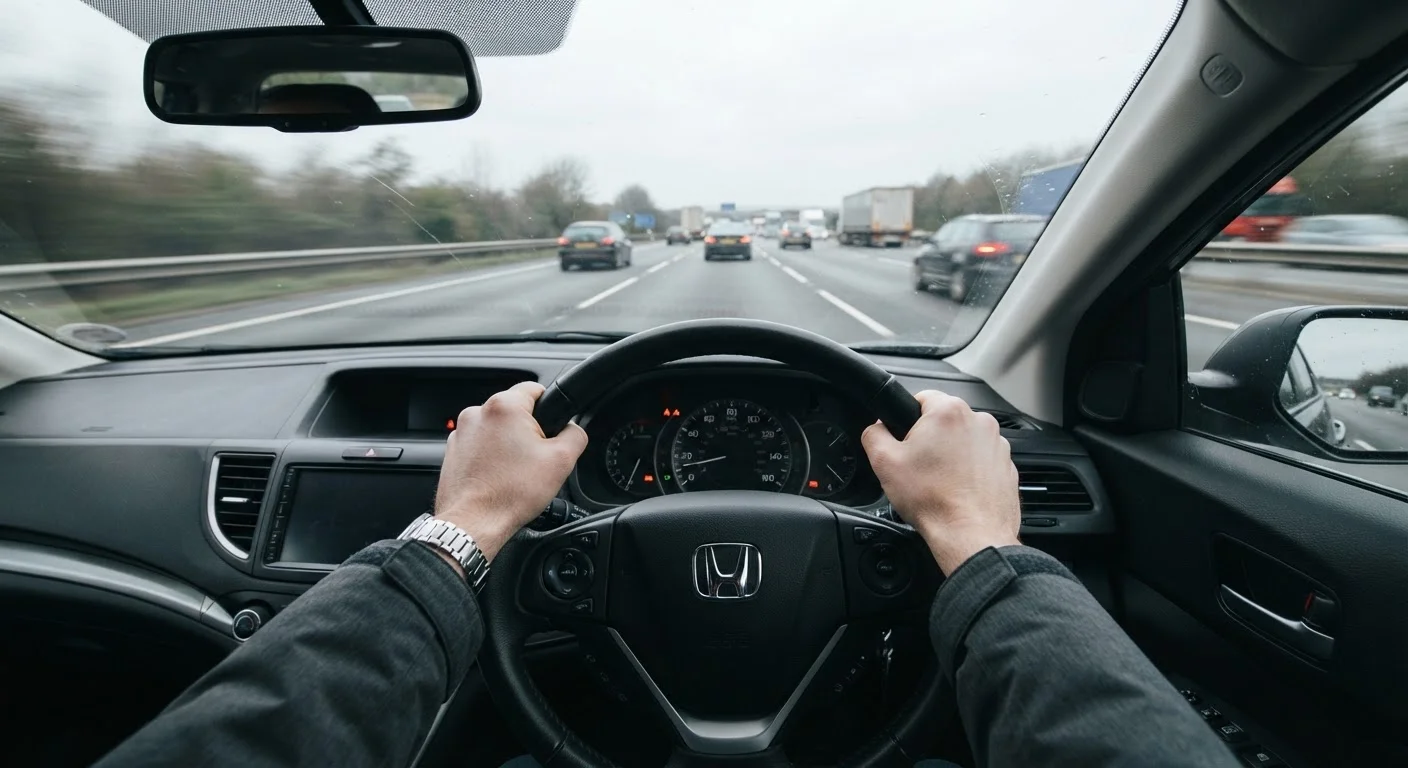
Photo: DockedReads.com | Information Made Easy editorial
Key Takeaways
- Distracted driving encompasses visual, manual, and cognitive impairment — phone use is just one example.
- Cognitive distraction remains dangerous even when a driver's hands are on the wheel and eyes are forward.
- Hands-free technology reduces manual distraction but does not eliminate cognitive load.
- Common in-car habits — eating, adjusting controls, daydreaming — carry measurable safety risks.
- Building deliberate pre-drive routines is one of the most effective ways to reduce distraction exposure.
The Full Picture of Driver Distraction
When distracted driving enters the conversation, phone use tends to dominate — and for good reason. Handheld phone use is among the most studied and legislated forms of distraction on U.S. roads. But focusing on the phone alone leaves a significant portion of distraction risk unaddressed.
Transportation safety researchers typically organize distraction into three categories: visual (eyes off the road), manual (hands off the wheel), and cognitive (mind off the driving task). Many behaviors trigger all three simultaneously. Others — like hands-free conversations or highway daydreaming — affect only cognition, yet studies consistently show that cognitive impairment alone is enough to degrade hazard detection and reaction time.
Understanding the full range of distraction types helps drivers make more deliberate choices, not just about phones, but about everything that competes for attention during a trip. This matters especially in the context of defensive driving principles, which depend on sustained situational awareness.
Handheld Phone Use
Handheld phone use is the most widely cited distraction because it triggers all three impairment types at once: looking at the screen (visual), holding the device (manual), and processing a conversation or message (cognitive). Research from the National Highway Traffic Safety Administration (NHTSA) consistently links it to significantly elevated crash risk. It is illegal while driving in most U.S. states.
The key insight here is that it's not just the call — composing or reading a text requires visual attention that removes your eyes from the road for several seconds at a time, during which a vehicle traveling at highway speed covers the length of a football field.
At highway speed, a few seconds of eye contact with a screen covers enormous ground blindly.
Hands-Free and Voice-Activated Technology
Hands-free calling is widely perceived as a safe alternative to handheld use, and it does eliminate manual and visual distraction. However, the cognitive load of a phone conversation persists regardless of whether your hands are free. Studies sponsored by AAA's Foundation for Traffic Safety found that voice-based tasks — including hands-free calls and some voice-command systems — can create measurable inattention blindness, where a driver's eyes are forward but the brain fails to register hazards.
This doesn't mean hands-free technology has no value — it is meaningfully safer than handheld use. But it is not distraction-free, and treating it as such creates overconfidence.
Hands-free calling removes manual distraction but leaves cognitive load largely intact.
Eating and Drinking While Driving
Eating behind the wheel is culturally normalized but carries real risk. It typically involves at least one hand off the wheel (manual distraction), occasional glances toward food or a spill (visual), and the mental effort of managing the task (cognitive). Spills or dropped items can cause sudden sharp reactions — reaching, jerking the wheel — at exactly the wrong moment.
Unlike phone use, eating while driving is not prohibited in most jurisdictions, but it can still contribute to inattentive or reckless driving citations if it causes an incident. The practical fix is straightforward: pulling over to eat adds only minutes and removes a layered distraction entirely.
A spilled drink can trigger a sudden, reflexive movement that pulls the wheel off course.
In-Car Controls and Infotainment Systems
Modern infotainment systems are sophisticated — and demanding. Adjusting navigation, changing audio sources, or interacting with climate controls can require visual attention comparable to glancing at a phone. Touchscreens that replaced physical knobs have drawn criticism from safety researchers precisely because they lack tactile feedback, requiring drivers to look at the screen to confirm inputs.
The practical implication: set navigation and audio preferences before moving, not while in traffic. Physical knobs and steering-wheel-mounted controls — where available — allow adjustments with less visual demand.
Touchscreen infotainment can demand the same visual attention as a handheld phone.
Passenger Interactions
Passengers represent a nuanced distraction. Conversations with passengers introduce cognitive load — but passengers also tend to naturally pause or lower the conversational demand during complex driving situations, a dynamic that doesn't occur with phone callers who can't see the road. Research generally suggests that adult passengers increase distraction less than phone conversations, though this varies by context.
The higher-risk scenario is managing children or pets in the vehicle. These interactions can demand visual attention (turning to check on a child) and cognitive attention simultaneously, especially when unexpected. Proper restraint systems for both children and pets reduce the likelihood of needing to intervene while driving.
Unlike phone callers, passengers can instinctively reduce demands during complex driving moments.
Mind-Wandering and Cognitive Drift
Cognitive distraction doesn't require a device. Mind-wandering — thinking through a work problem, replaying a conversation, planning the day ahead — is among the most common forms of inattention, and among the least acknowledged. Because the eyes remain on the road, drivers often don't recognize they've been cognitively absent for several seconds.
Monotonous driving environments (long straight highways, familiar commute routes) are particularly conducive to mental drift. This is one reason that familiarity with a route is not the same as safety — routine can reduce vigilance. Drivers who recognize the warning signs of cognitive drift can use simple reorientation strategies: narrating road conditions mentally, scanning mirrors on a set interval, or briefly reducing speed.
Mind-wandering with eyes forward is still distraction — and routine routes make it more likely.
External Distractions
Roadside events — crashes, unusual vehicles, advertising displays, or construction activity — draw visual attention away from the road ahead. This phenomenon, sometimes called rubbernecking, is a recognized contributor to secondary crashes near incident scenes. The hazard is compounded when multiple drivers slow and redirect attention simultaneously.
Awareness of the tendency to fixate on external stimuli is the first step toward managing it. Keeping eyes scanning the lane ahead and checking mirrors regularly — rather than locking onto an event — helps maintain awareness of the vehicles immediately around you.
Rubbernecking at roadside incidents is a recognized cause of secondary crashes nearby.
Building Habits That Protect Your Focus
Awareness alone does not eliminate distraction — habit change does. Drivers who establish a consistent pre-trip routine (navigation set, music queued, mirrors adjusted, phone silenced or stowed) remove many in-trip temptations before they arise. This is one of the practical insights behind how gradual habit drift erodes safety margins over time.
Set Up Before You Start Moving
It's also worth recognizing when distraction risk is elevated. Fatigue and distraction interact: a tired brain is slower to suppress irrelevant stimuli, making every competing input more costly. Drivers who are already managing fatigue — particularly on longer stretches — should be especially deliberate about minimizing additional cognitive load. For more on that overlap, see the risks of driver fatigue.
No single strategy eliminates distraction entirely, but building awareness of all its forms — not just the obvious ones — gives drivers a far more complete foundation for safer decisions on every trip.
The content on this site is for informational purposes only and is not a substitute for professional advice. Always consult a qualified professional for guidance specific to your situation.