
Starting a Vegetable Garden from Scratch

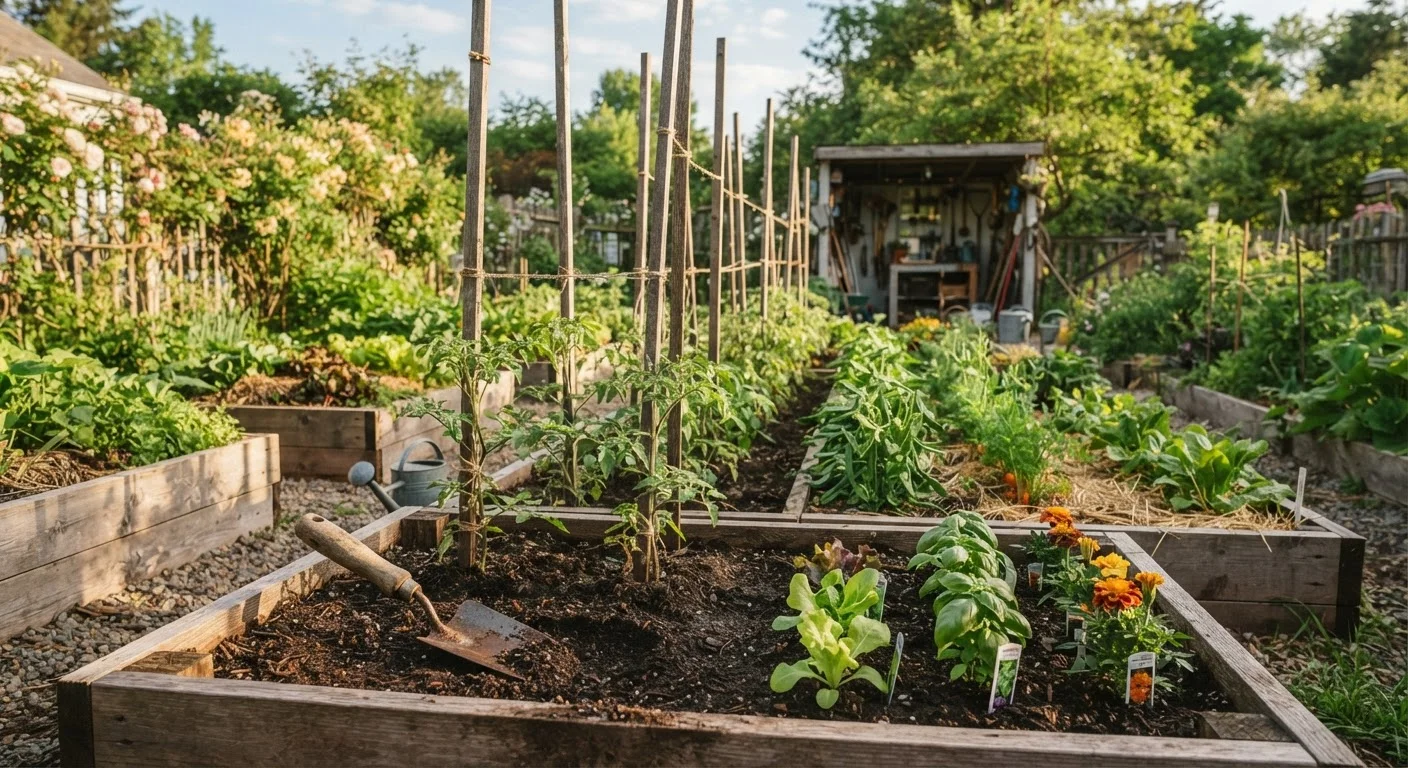
Photo: DockedReads.com | Information Made Easy editorial
Key Takeaways
- Most vegetables need at least six hours of direct sunlight daily to produce a good harvest.
- Healthy, well-draining soil amended with compost is the single most important factor in garden success.
- Starting small — a 4×8 foot plot or a few containers — reduces overwhelm and improves your results.
- Easy crops like lettuce, radishes, and bush beans build confidence and reward beginners quickly.
- Consistent watering and early pest checks prevent most common first-year garden problems.
Choosing the Right Spot
Location is the foundation of every successful vegetable garden. Before you buy a single seed, walk your yard at different times of day and observe where sunlight falls and for how long. Most vegetables — tomatoes, peppers, beans, squash — require a minimum of six hours of direct sun daily. Leafy greens like lettuce and spinach can manage with four to five hours, making them suitable for spots with partial shade.
Equally important is drainage. Vegetable roots are vulnerable to rot in waterlogged soil, so avoid low-lying spots where puddles linger after rain. A gentle slope or a naturally elevated bed is ideal. Proximity to a water source matters too — dragging a hose across the yard grows old fast.
If your available space is limited, don't rule out growing in containers. Our guide on container gardening for small spaces covers how to make the most of a patio or balcony. And if you're weighing whether to build raised beds or work directly in the ground, see our comparison of raised beds versus in-ground planting for a practical breakdown.
Test Your Sunlight Before You Dig
Understanding Your Soil
Soil is not just dirt — it's a living system that feeds your plants. Most native yard soil needs some improvement before it can support vegetables reliably. The goal is loamy, well-draining soil rich in organic matter, with a pH between 6.0 and 7.0 for the majority of common vegetables.
Start with an inexpensive soil test kit from a garden center or contact your local cooperative extension service for a more detailed analysis. The results will tell you whether your soil is too acidic or too alkaline and what nutrients may be lacking.
The most reliable way to improve almost any soil — clay-heavy or sandy — is to work in generous amounts of compost. Compost improves drainage in clay soils, helps sandy soils retain moisture, and feeds the microbial life that makes nutrients accessible to plant roots. Our guide to composting at home explains how to create your own supply from kitchen and garden scraps.
Loamy soil
A balanced soil texture containing a mix of sand, silt, and clay that drains well while holding enough moisture and nutrients for healthy plant growth.
Soil pH
A measure of how acidic or alkaline your soil is, on a scale of 0 to 14. Most vegetables grow best between 6.0 and 7.0, which is slightly acidic to neutral.
Compost
Decomposed organic material — food scraps, leaves, garden waste — that enriches soil with nutrients and improves its structure and water-holding capacity.
USDA hardiness zone
A map-based system that divides the US into zones based on average minimum winter temperatures, helping gardeners choose plants likely to survive and thrive in their area.
Direct sow
Planting seeds straight into the garden bed rather than starting them in pots indoors first. Some crops establish better this way because they don't tolerate root disturbance.
Transplant
A seedling started indoors or purchased from a nursery that is moved into the garden once conditions are right. Common for crops like tomatoes and peppers that need a long growing season.
Deciding What to Grow
One of the most common beginner mistakes is planting too many different things at once. A focused first garden — five or six crops you actually enjoy eating — is far easier to manage and more likely to succeed than a sprawling experiment.
Choose crops suited to your region's growing season. Check your USDA plant hardiness zone and find your last spring frost date (your local cooperative extension office is a reliable source). Then sort your choices into two groups:
- Cool-season crops (lettuce, spinach, peas, radishes, kale) — planted in early spring or fall, tolerant of light frost.
- Warm-season crops (tomatoes, peppers, cucumbers, zucchini, beans) — planted after the last frost when soil has warmed.
For first-year gardeners, bush beans, lettuce, radishes, and cherry tomatoes are particularly rewarding. They germinate reliably, mature relatively quickly, and respond well even when care isn't perfect. See our overview of tools every beginner actually needs to make sure you're equipped before planting day.
Seed Packets Contain Vital Information
Planting and Early Care
Seeds and transplants each have their place in a beginner's garden. Direct-sow crops like beans, radishes, carrots, and peas — they dislike having their roots disturbed. Tomatoes, peppers, and eggplant benefit from being started indoors six to eight weeks before transplanting, or purchased as nursery transplants to simplify the process.
When planting, follow the spacing guidelines on seed packets closely. Crowded plants compete for water, nutrients, and airflow, which invites disease. After planting, water gently but thoroughly so moisture reaches the root zone. A 2-inch layer of mulch (straw, shredded leaves, or wood chips) applied around — not touching — plant stems will conserve moisture, moderate soil temperature, and suppress weeds.
In the first few weeks, check plants every couple of days. Early intervention on pests — picking off caterpillars by hand, rinsing aphids with water — prevents small problems from becoming serious ones. Be aware that newly planted vegetables can show signs of stress similar to transplant shock; our article on why new plantings struggle in the first year explains what to watch for and how to respond.
Don't Overwater in the Early Weeks
Ongoing Maintenance and Harvest
A vegetable garden rewards consistent attention over dramatic interventions. The two non-negotiables are watering and weeding. Most vegetables need about one inch of water per week from rain or irrigation. Water at the base of plants rather than overhead to reduce the risk of fungal disease, and water in the morning so foliage dries before evening.
Weeds compete aggressively with vegetables for water and nutrients. Pull them when they're small — before they set seed — and refresh your mulch layer through the season to suppress new growth.
Harvest regularly. Many vegetables — zucchini, beans, cucumbers — produce more prolifically when picked frequently. Leaving overripe vegetables on the plant signals it to stop producing. Check plants every two to three days once they begin fruiting.
As the season winds down, clear spent plants and add them to your compost pile (avoiding any diseased material). Turn the soil lightly and consider planting a cover crop — such as clover or winter rye — to protect and enrich the bed over winter. Your second season will benefit directly from the lessons and soil improvements of your first.
USDA Plant Hardiness Zone Map
The official interactive map from the USDA lets you enter your zip code to find your hardiness zone, helping you choose appropriate crops and understand your frost dates.
Cooperative Extension Service
Land-grant universities operate extension offices in most US counties offering free or low-cost soil testing, local planting calendars, and region-specific growing guidance.
Composting at Home
Our companion guide on composting at home explains how to turn kitchen and garden waste into the rich organic matter your vegetable beds need most.
Frequently Asked Questions
The content on this site is for informational purposes only and is not a substitute for professional advice. Always consult a qualified professional for guidance specific to your situation.