
Garden Tools Every Beginner Actually Needs — and a Few They Don't

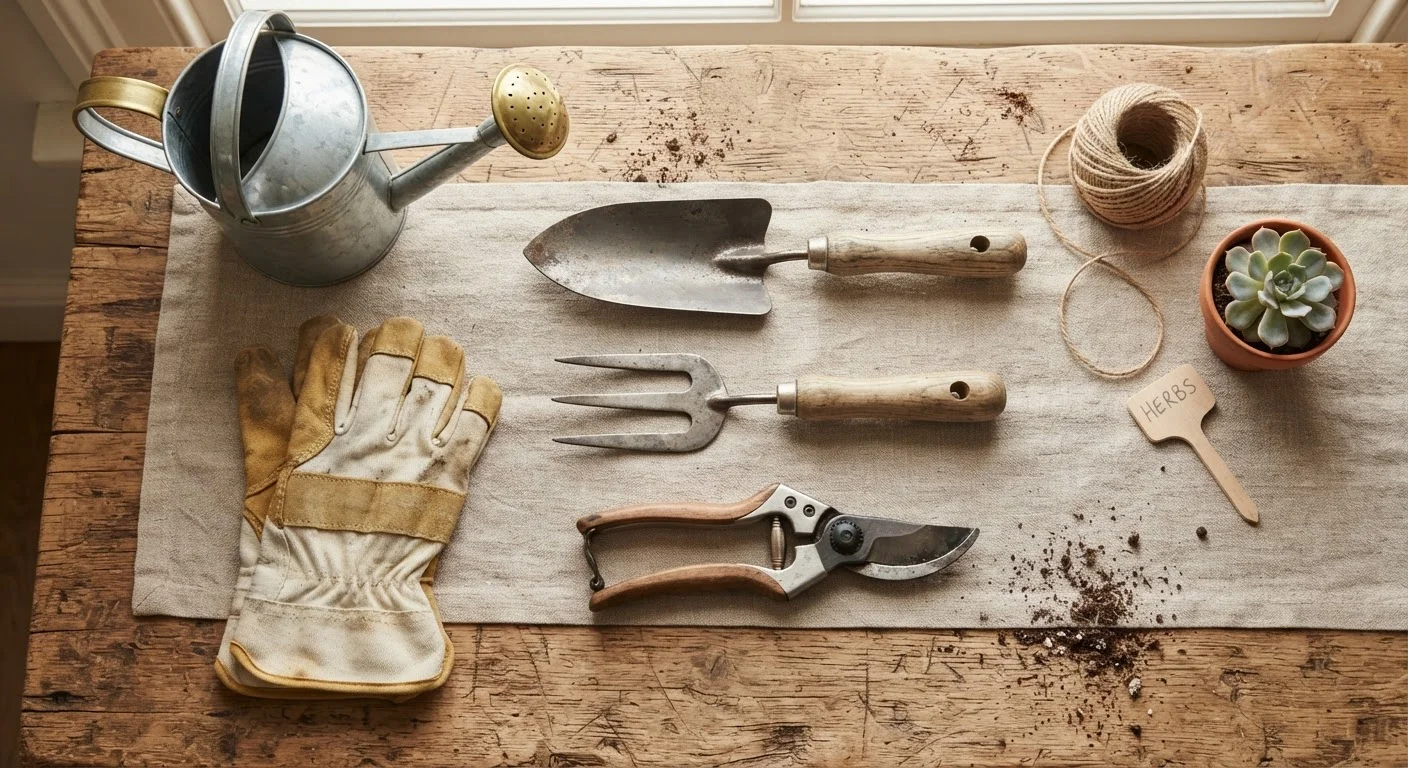
Photo: DockedReads.com | Information Made Easy editorial
Key Takeaways
- A small set of quality hand tools will serve most beginner gardeners better than a shed full of gadgets.
- Ergonomic fit matters — tools that match your hand size and strength reduce fatigue and injury risk.
- Several common impulse buys, like stand-up weeders and bulb augers, often go unused after the first season.
- Investing in a few durable basics outperforms buying many cheap, single-purpose tools.
- Caring for your tools — cleaning and storing them properly — extends their useful life significantly.
Build a Lean Kit, Not a Crowded Shed
Walk into any hardware or garden center and you'll find entire walls dedicated to gardening tools — long-handled, short-handled, specialty, ergonomic, collapsible. For someone just starting out, it's genuinely overwhelming. The good news is that most of what you see there is optional for a beginner. A small, thoughtful collection of hand tools will get you through planting, weeding, pruning, and general upkeep without spending a lot or storing items you'll rarely touch.
The tools below are divided into two groups: the ones that genuinely earn their place in your kit, and the ones that sound useful in theory but often gather dust. Whether you're tending a backyard plot or diving into container gardening, the same core tools apply.
Fit Matters as Much as Quality
The Tools You Actually Need
Hand trowel
This is the single most-used tool in almost every beginner's garden. A hand trowel handles transplanting seedlings, digging small planting holes, scooping soil or compost, and removing shallow-rooted weeds. Look for one with a comfortable grip and a blade that's welded or forged as one piece with the handle — riveted joints tend to loosen and fail over time. A trowel with depth markings etched into the blade is a small but genuinely useful feature when planting at a specific depth.
A one-piece forged trowel outlasts riveted versions and handles nearly every small digging task a beginner faces.
Hand fork (cultivator)
A hand fork — sometimes called a hand cultivator — has three or four short tines and is used to loosen compacted soil, break up clumps, mix amendments into beds, and scratch out shallow weeds between plants. It's particularly valuable if you're starting a vegetable garden from scratch, where regular soil aeration directly affects plant health. It pairs naturally with your trowel and costs very little.
A hand fork loosens soil and removes shallow weeds in tight spaces where larger tools simply can't fit.
Bypass pruners (secateurs)
Bypass pruners work like scissors — two curved blades passing each other — which produces a clean cut that heals quickly on woody stems. They're used for cutting back perennials, harvesting herbs and vegetables, trimming small shrubs, and removing dead wood up to about half an inch in diameter. Keep them clean and sharp; a dull, dirty pair will crush rather than cut, creating entry points for disease. Most gardeners find a pair rated for their hand size is more comfortable for extended use.
Sharp bypass pruners make clean cuts that help plants heal faster — dull blades do more harm than good.
Full-size garden hoe
A standard flat-head or stirrup hoe is invaluable for weeding between rows, shaping soil around plants, and preparing seedbeds. The long handle means you work standing upright, reducing back strain significantly compared to hand-weeding on your knees. A stirrup (or hula) hoe is especially effective because it cuts in both the push and pull stroke. This is the one long-handled tool most beginners genuinely need early on, particularly once a plot gets larger than a few square feet.
Working upright with a hoe dramatically reduces back strain compared to hand-weeding at ground level.
Watering can or adjustable hose nozzle
Controlled, gentle watering matters — especially for seedlings and newly transplanted plants that can be dislodged or damaged by a harsh stream. A watering can with a rose head (the perforated attachment) delivers a fine, even spray. If you prefer a hose, a quality adjustable nozzle that includes a gentle shower setting does the same job. Either works; the choice depends on the size of your garden. For small patios or container setups, a can is often all you need. For larger beds, a hose nozzle saves time.
A rose-head watering can or adjustable nozzle protects fragile seedlings from being battered by a direct water stream.
Tools most beginners can skip — at first
Several tools marketed heavily to beginners often see very limited use once the novelty wears off:
- Stand-up weeders: Designed to pull weeds without bending down, but they work well only in loose, evenly textured soil. In clay-heavy or compacted ground — which is what many beginners actually have — they're frustrating and slow.
- Bulb augers (drill attachments): Useful if you're planting hundreds of bulbs at once, but for most beginner quantities a hand trowel is faster and gives you more control.
- Long-handled bulb planters: Similar issue — they sound ergonomic but require more effort than expected in anything but perfectly loose soil.
- Specialty weeders: Narrow-tipped, single-purpose tools for specific weed types. Start with a hoe and hand fork; you'll rarely need more.
None of these are bad tools in the right context — but they're not the right starting point. Add them only if a specific, recurring task in your actual garden calls for them.
Specialty tools earn their place only when a specific, repeated task in your garden clearly calls for them.
Make the Most of What You Have
Once you have your core tools, the key to getting value from them is consistent care. After each use, knock off soil, wipe metal parts dry, and store them somewhere sheltered — not leaning against a damp fence. A light coat of oil on metal blades once a season keeps rust from forming. Sharpening your trowel and pruners once or twice a year makes a real difference in how cleanly they cut, which matters for both plant health and your own effort.
As your garden grows and gets more complex — say, you're working through an end-of-season tidy-up or adding mulched beds — you'll naturally discover which additional tools are worth adding. But expanding your kit reactively, in response to real tasks, is a much better approach than buying everything upfront on speculation. A lean, well-maintained toolkit will take most beginners through several full seasons before a true gap appears. If you're also picking up home maintenance skills in general, the same discipline applies — see our beginner's home improvement guide for the same approach applied indoors.
When to Add Long-Handled Tools
The content on this site is for informational purposes only and is not a substitute for professional advice. Always consult a qualified professional for guidance specific to your situation.