
Why Newly Planted Trees and Shrubs Struggle in the First Year

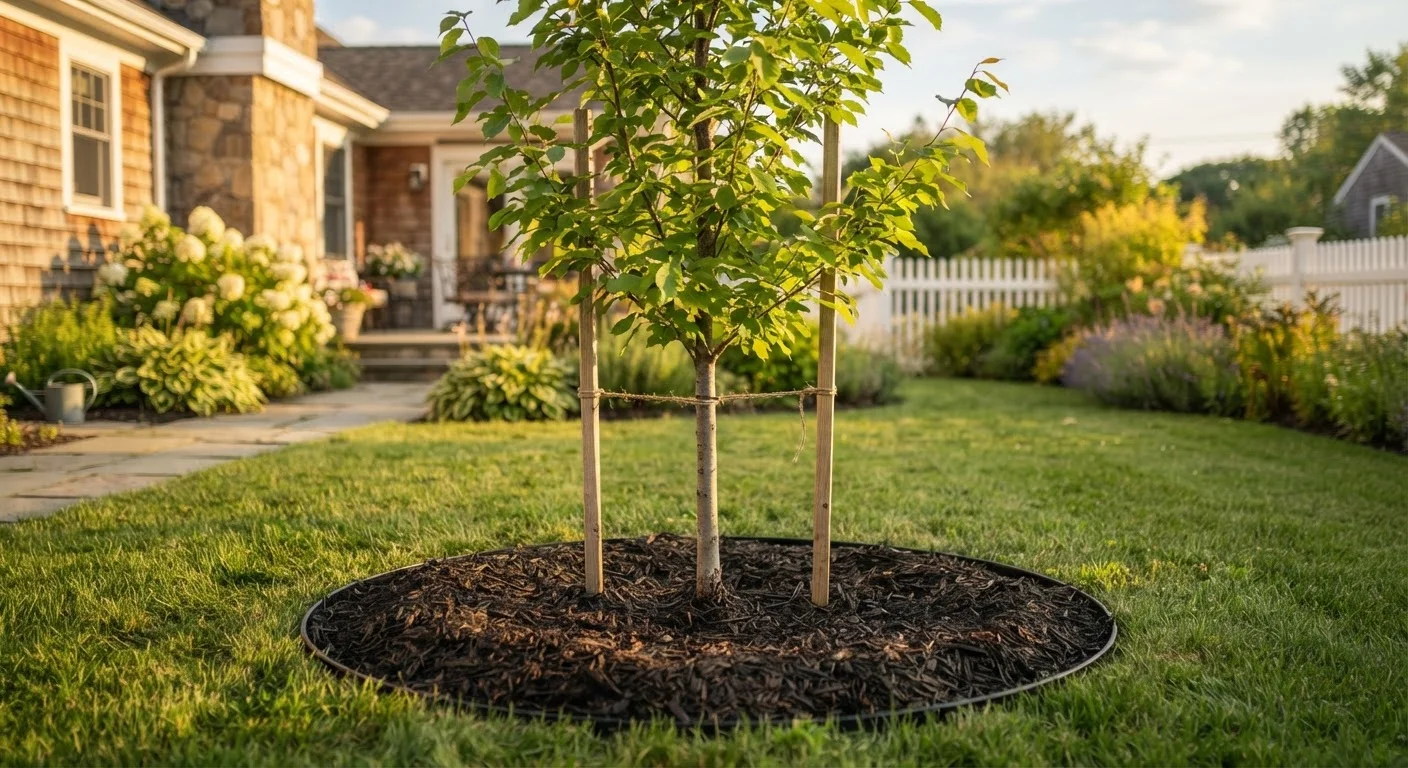
Photo: DockedReads.com | Information Made Easy editorial
Key Takeaways
- Transplant shock is a normal stress response, but several avoidable mistakes make it significantly worse.
- Improper planting depth is one of the most damaging and commonly overlooked errors homeowners make.
- Consistent, deep watering in the first season matters far more than fertilizing or pruning.
- Mulching correctly around new plantings dramatically improves moisture retention and root survival.
- Most trees and shrubs need 1–3 full growing seasons to fully establish, not just one summer.
Understanding Transplant Shock
When a tree or shrub is dug up at a nursery, balled, and transported to your yard, it loses a substantial portion of its root system along the way. That root loss is the core of what horticulturalists call transplant shock — a period of stress during which the plant struggles to absorb enough water and nutrients to sustain its existing canopy.
Signs are easy to mistake for other problems: wilting leaves even after watering, leaf scorch along the edges, yellowing foliage, stunted growth, or early leaf drop in summer. In some cases a plant appears fine through spring, then collapses in July heat when demand on the roots spikes. None of this means the plant is dying — but it does mean it needs time and the right conditions to rebuild. Understanding why this happens puts you in a much better position to help, and avoiding a handful of common planting errors can dramatically shorten recovery time.
Common Mistakes That Worsen Transplant Shock
Most first-year failures trace back to decisions made at planting time — or in the weeks immediately following. The mistakes below are the ones we see most often, and the good news is that nearly all of them are preventable.
Planting too deep — burying the root flare below the soil line.
Overwatering or underwatering in the critical establishment window.
Leaving the burlap, wire basket, or container intact after planting.
Applying fertilizer too aggressively right after planting.
Planting at the wrong time of year for your climate zone.
Don't Mistake Recovery for Failure
Setting Up Long-Term Success
Once you've avoided the critical planting errors, a few ongoing habits carry the plant through its first full year. Watering consistently — slowly and deeply, rather than frequently and shallowly — encourages roots to reach downward rather than cluster near the surface. A general guide for most trees and shrubs in average US climates is roughly one inch of water per week during the growing season, adjusting for rainfall and your specific region's conditions. Always check soil moisture a few inches below the surface rather than relying on surface appearance alone.
1–3 years
Typical full establishment period for trees and shrubs
University cooperative extension programs commonly note that woody plants need one to three full growing seasons before their root system is sufficiently established to sustain the plant independently.
~50%
Root mass lost during typical transplanting
Horticultural research indicates that balled-and-burlapped trees commonly lose the majority of their fine feeder roots during the digging and transport process, underscoring why aftercare is so critical.
Applying a 2–4 inch layer of organic mulch (wood chips, shredded bark) over the root zone — keeping it a few inches away from the trunk — is one of the single most effective steps you can take. It moderates soil temperature, retains moisture, and reduces competition from turf grass. For a deeper look at how mulching delivers these benefits season after season, see our guide on mulching practices that transform soil and save water.
Hold off on heavy pruning during the first year unless removing dead or broken branches. Your plant needs every healthy leaf it has to photosynthesize and rebuild its root mass. Similarly, resist the urge to push growth with high-nitrogen fertilizers; a root-stimulating, low-nitrogen formula applied in early fall — or simply patience — serves newly planted specimens far better. Whether you're establishing a shade tree in a lawn or adding shrubs to a mixed border, understanding the planting method you choose also matters. Our comparison of raised bed versus in-ground planting can help you evaluate which approach suits your site and plants best.
If you're building out a larger planting plan that includes perennials alongside your new woody plants, it's worth thinking through the multi-year picture. Our article on balancing perennials and annuals for effort and beauty covers how to layer plants with different establishment timelines into a garden that rewards you without constant replanting.
The content on this site is for informational purposes only and is not a substitute for professional advice. Always consult a qualified professional for guidance specific to your situation.