
The Two-Second Rule and Other Following-Distance Fundamentals

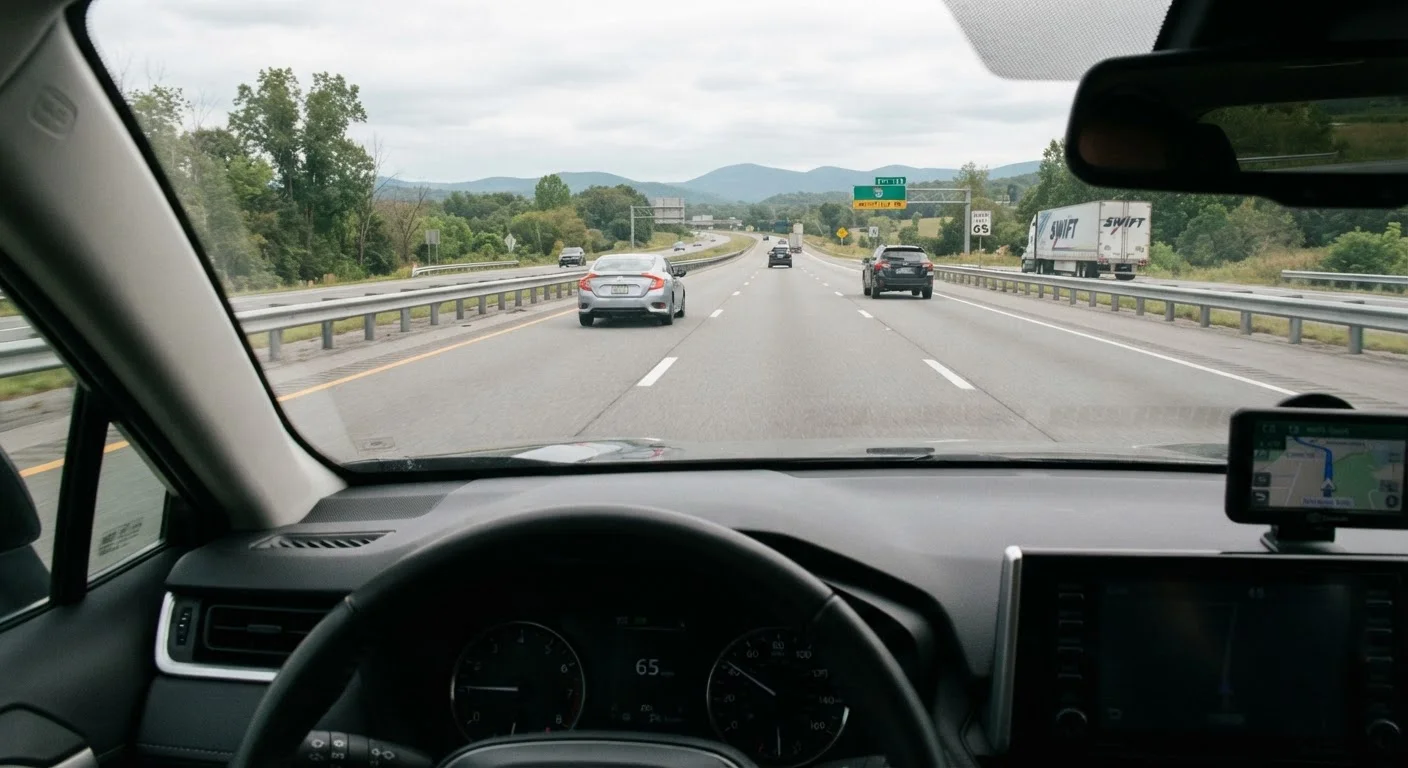
Photo: DockedReads.com | Information Made Easy editorial
What the Two-Second Rule Actually Means
The two-second rule is a straightforward method for estimating safe following distance at any speed. When the vehicle ahead passes a fixed reference point — a sign, an overpass, a shadow line on the road — you should be able to count at least two full seconds before your own vehicle reaches that same point. If you arrive sooner, you are following too closely.
The rule works because it scales automatically with speed. At 30 mph, two seconds translates to roughly 88 feet. At 60 mph, it becomes approximately 176 feet. Counting seconds is easier than estimating distances, which most drivers underestimate significantly.
To apply it: watch the rear of the car ahead pass a fixed marker, then say aloud — at a natural pace — "one-one-thousand, two-one-thousand." If your front bumper crosses that marker before you finish, ease off the accelerator.
For a broader look at proactive risk reduction, see what defensive driving actually means — following distance is one of its core building blocks.
When Two Seconds Isn't Enough
The two-second baseline assumes dry pavement, good visibility, and a vehicle in sound mechanical condition. Several common conditions require extending that gap considerably.
~29%
Share of all U.S. crashes that are rear-end collisions
According to NHTSA crash data, rear-end collisions are among the most common and preventable crash types on U.S. roads.
4–10×
Increase in stopping distance on ice vs. dry pavement
General driving safety guidance consistently notes that icy roads can require dramatically greater stopping distances than dry conditions.
1.5 sec
Typical human reaction time before braking begins
Traffic safety researchers generally cite around 1.5 seconds as an average perception-reaction time, which is why a 2-second gap provides only minimal margin.
- Rain and wet roads: Water reduces tire friction, lengthening braking distance. Add at least one to two extra seconds — a minimum of three to four total.
- Snow and ice: Braking distance can increase by four to ten times compared to dry pavement. A gap of eight to ten seconds is a reasonable starting point on icy roads.
- Heavy rain or fog: Reduced visibility means you need time to perceive and react, not just stop. Increase following distance and reduce speed together.
- Towing a trailer: Added weight significantly extends stopping distance. Check your vehicle's tow guide for specific guidance, and allow extra following distance as a baseline.
- Worn tires or brakes: Equipment condition directly affects stopping performance. Address maintenance needs promptly — no amount of following distance fully compensates for failing components.
The physics behind stopping distances matter here: braking distance grows with the square of your speed, not proportionally. Speed limits, stopping distances, and the physics most drivers ignore covers this relationship in useful detail.
Following distance also interacts with highway versus city driving. Motorway driving vs. urban roads explains how to calibrate spacing across different road types.
Large Vehicles Need Even More Space
Common Mistakes That Erode Your Safety Margin
Following too closely — commonly called tailgating — is one of the leading contributors to rear-end collisions. But some distance-related errors are less obvious than simply sitting on someone's bumper.
Following distance
The gap between the front of your vehicle and the rear of the vehicle ahead, typically measured in time (seconds) rather than feet. A safe following distance gives you time to perceive a hazard, react, and brake.
Reaction time
The interval between perceiving a hazard and beginning to apply the brakes. At highway speeds, even a second of reaction time translates to significant distance traveled before braking starts.
Braking distance
The distance your vehicle travels after the brakes are fully applied until the car comes to a complete stop. It increases with the square of speed and is affected by road surface, tire condition, and brake performance.
Tailgating
Driving closer to the vehicle ahead than is safe, leaving insufficient time to react and stop. It is a leading cause of rear-end collisions and is illegal in all U.S. states.
Closing gaps without noticing: Drivers often drift closer over time without consciously deciding to. Checking your following gap regularly, not just when you feel crowded, is a habit worth building deliberately.
Matching speed without accounting for stopping: Keeping pace with traffic feels safe but doesn't guarantee enough reaction time if the vehicle ahead brakes suddenly. Speed parity is not the same as safe spacing.
Reducing distance during lane changes: When merging into a gap, ensure the space you're entering already meets the two-second standard — don't assume a visible gap is a sufficient one. See why merging feels hard and how lane changes actually work for timing and spacing guidance.
Many of these patterns develop gradually and go unnoticed. The habits that quietly make drivers less safe over time examines how experienced drivers can quietly lose their margins without realizing it.
The content on this site is for informational purposes only and is not a substitute for professional advice. Always consult a qualified professional for guidance specific to your situation.