
Why Merging Feels Hard — and How Lane Changes Actually Work

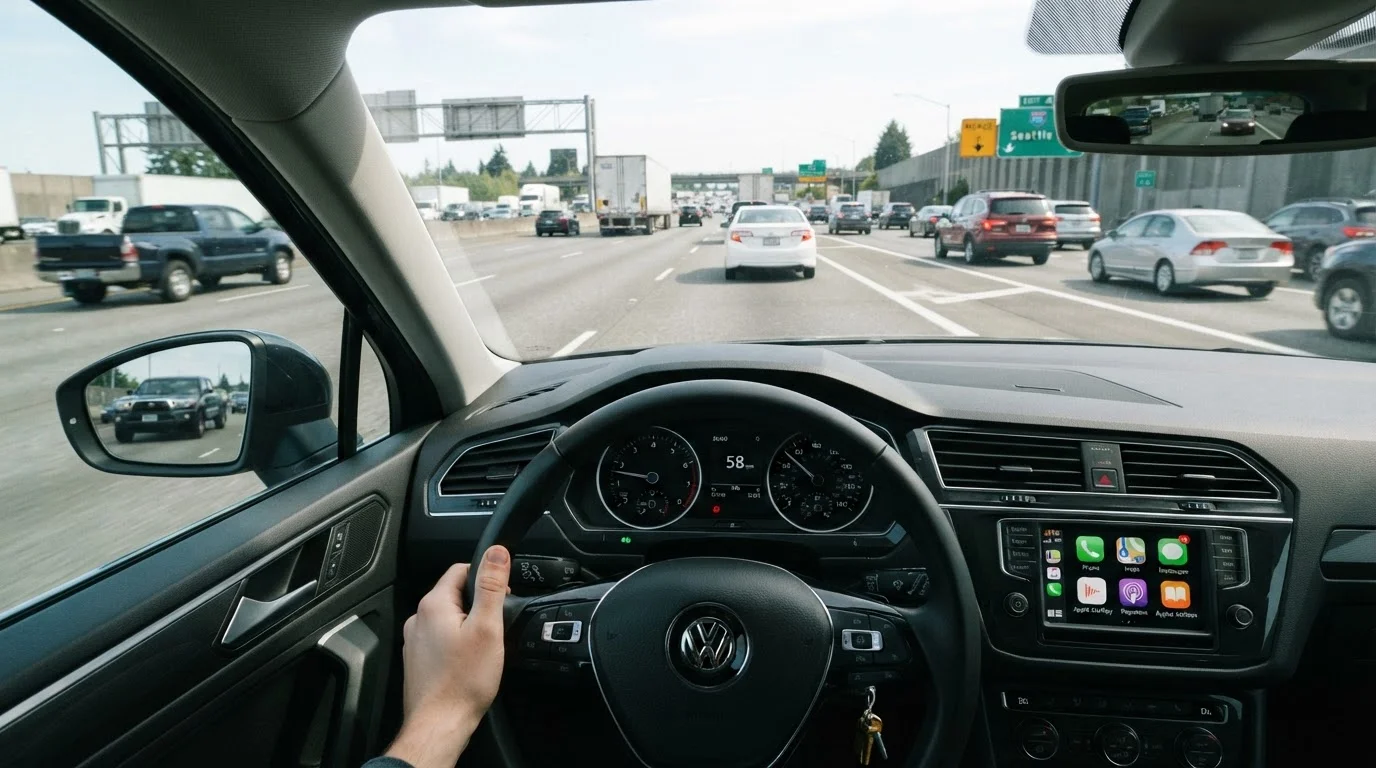
Photo: DockedReads.com | Information Made Easy editorial
Key Takeaways
- Drivers already in a lane have the right of way; merging drivers must yield.
- Matching the speed of traffic before merging is the most critical technique.
- Checking mirrors, blind spots, and signaling early prevents most lane-change conflicts.
- Hesitation and abrupt speed changes create more danger than smooth, assertive movement.
- Zipper merging — alternating one car at a time — is safest in slow or stopped traffic.
Why Merging Feels So Stressful
Merging and changing lanes generate more anxiety — and more friction between drivers — than almost any other everyday driving task. The reason isn't a mystery: you're moving laterally while also managing speed, tracking multiple vehicles, and making a judgment call with a narrow margin for error. That's a genuine cognitive load, especially for less-experienced drivers.
Part of the difficulty is a misunderstanding of right-of-way. Many drivers believe that vehicles on a highway are legally obligated to make space for merging traffic. In most U.S. states, that's not how the law works. The merging driver bears the responsibility to yield to vehicles already traveling in the target lane. Understanding this shifts your entire mindset: your job is to find a gap, not to demand one.
The psychological barrier compounds the mechanical challenge. Slow, tentative merges — where a driver crawls along an on-ramp at 40 mph on a 65-mph highway — actually create more danger than a confident, well-timed entry. This is why building deliberate habits matters. For a broader framework on anticipating risk before it arrives, see our guide to defensive driving principles.
Confidence Comes from Habit, Not Courage
The Mechanics of a Safe Lane Change
A proper lane change follows a consistent sequence every time. Improvising the order — skipping the mirror check, signaling after you've already moved — is where most close calls originate.
Check your mirrors in sequence
Before initiating any lateral movement, scan your rearview mirror first, then your side mirror on the target side. This gives you a picture of traffic behind and alongside you. Do this 3–5 seconds before you plan to move — not at the moment you begin steering.
Check your blind spot
Mirrors don't cover everything. A quick shoulder check — turning your head approximately 45 degrees toward the target lane — clears the blind spot that sits just outside your mirror's field of view. This step is non-negotiable, regardless of whether your vehicle has blind-spot monitoring technology.
Signal your intention early
Activate your turn signal before you begin moving. The signal is a communication tool, not a notification that you've already started the maneuver. Signaling 3–5 seconds in advance gives surrounding drivers time to adjust their position or speed.
Match the speed of the target lane
Speed-matching is the single most important technique in merging. If traffic in the target lane is moving at 60 mph, you need to be at or very close to 60 mph before moving over. Entering at a significantly lower speed forces vehicles behind you to brake suddenly, creating a chain reaction.
Identify a gap and move smoothly
A safe gap is typically at least two to three seconds of space in the target lane — the same buffer you'd want someone to leave behind you. Steer gradually and steadily into the lane; sharp, sudden inputs unsettle your vehicle and surprise other drivers. Once you've confirmed your mirrors and blind spot are clear, commit to the move without hesitation.
Cancel your signal and adjust your position
Once you're fully in the new lane, cancel the turn signal if it hasn't self-cancelled. Center your vehicle within the lane boundaries and check your mirrors again to confirm your position relative to surrounding traffic. Re-establish your following distance in the new lane before focusing on anything else.
One important note on following distance: your safety buffer doesn't disappear once you've merged. Maintaining an adequate gap in your new lane is just as important as the merge itself. Our article on following distance fundamentals explains how to calculate that gap under different road and weather conditions.
Zipper Merging and Highway On-Ramps
Two scenarios deserve special attention because they're handled poorly more often than not.
Highway On-Ramps
The acceleration lane exists for a reason: use all of it. Many drivers panic and brake mid-ramp, which makes matching highway speeds impossible. Accelerate steadily, identify your gap early, signal, and enter at traffic speed. If no gap exists when you reach the end of the ramp, it's legal — and safer — to briefly stop and wait rather than forcing your way in.
Zipper Merging in Congestion
When a lane ends or closes ahead — in construction zones, for example — research from traffic engineers consistently supports the zipper merge: drivers use both lanes fully until the merge point, then alternate one car at a time. This approach reduces overall queue length and is now actively encouraged by many state DOTs. The instinct to move over early is understandable but counterproductive in heavy traffic.
Don't Block Traffic by Merging Too Early
These same principles apply across different road environments. If you regularly switch between high-speed highways and dense urban streets, the differences between motorway and urban driving habits are worth reviewing — lane-change timing and gap acceptance differ significantly between the two settings.
The content on this site is for informational purposes only and is not a substitute for professional advice. Always consult a qualified professional for guidance specific to your situation.