
Travel Anxiety: What It Is and Why It Catches People Off Guard

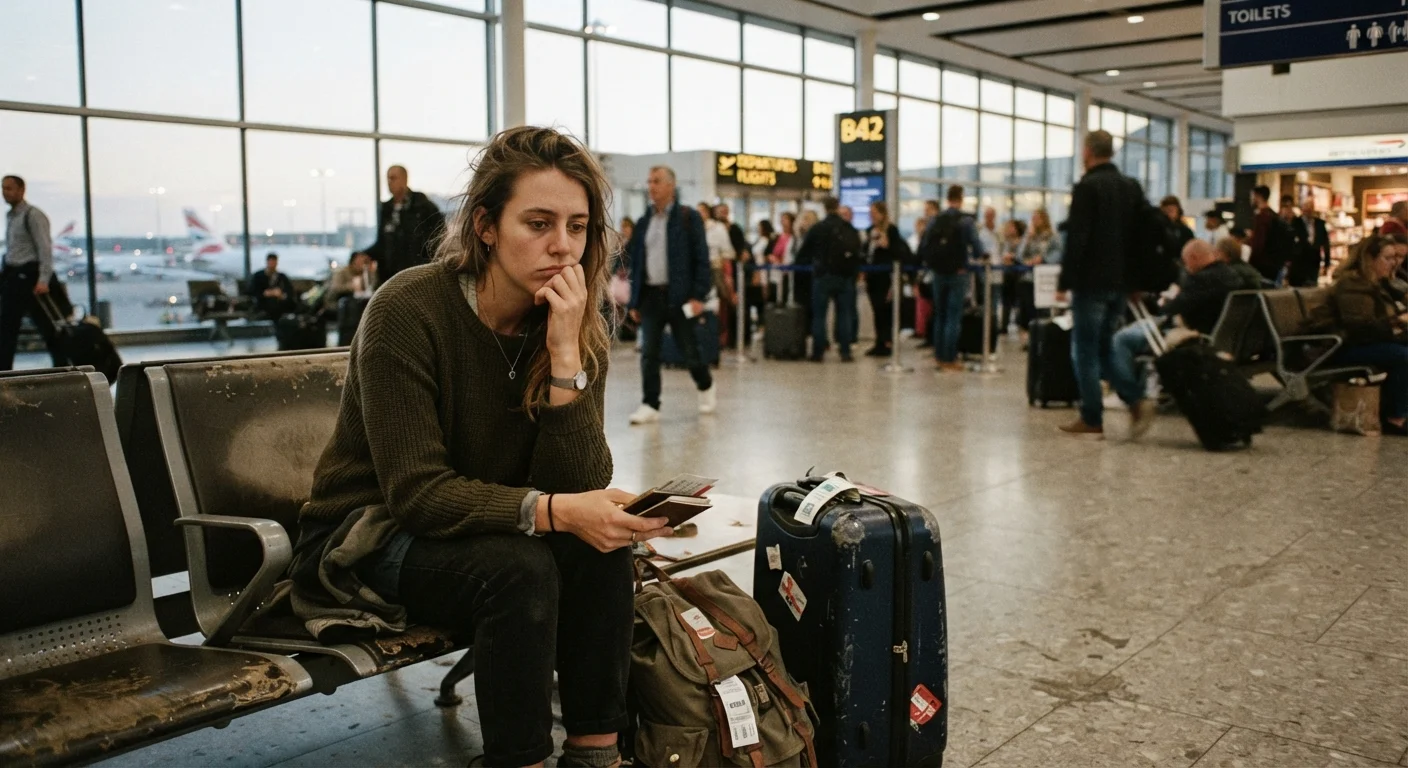
Photo: DockedReads.com | Information Made Easy editorial
Key Takeaways
- Travel anxiety goes far beyond a fear of flying — it can attach to any stage of a trip.
- Physical symptoms like nausea, rapid heartbeat, and insomnia are common and real, not imagined.
- Common triggers include loss of control, unfamiliar environments, health concerns, and logistical overwhelm.
- Travel anxiety can affect even experienced, frequent travelers.
- When anxiety significantly disrupts travel or daily life, professional support is worth considering.
- Preparation and realistic expectations can reduce — though not eliminate — travel-related stress.
More Than Nerves Before a Flight
Most people recognize the flutter of pre-trip nerves — the restless night before a big journey, the double-checking of passport and boarding passes. But for a significant number of travelers, what they experience goes well beyond that familiar anticipation. Travel anxiety is a persistent, often disruptive pattern of worry, dread, or fear that connects to the act of traveling itself, and it can surface at almost any point: when buying a ticket months in advance, during the frantic hours before departure, or even mid-trip in a foreign city.
What catches people off guard is how wide the net is. Many assume they don't have travel anxiety because they're comfortable on planes. But anxiety doesn't need altitude to take hold. It might emerge as obsessive checking of itineraries, catastrophic "what if" thinking about health abroad, dread of navigating foreign transportation, or a creeping unease about being far from familiar routines and people. Understanding what travel anxiety actually encompasses — and why it shows up — is the first step toward dealing with it constructively.
For readers navigating the broader landscape of worry and its effects, this related piece on when worry becomes a problem worth addressing offers helpful context about the line between everyday concern and something more persistent.
What Travel Anxiety Actually Looks Like
Travel anxiety isn't a single experience — it's a family of related responses that can look quite different from person to person. Some people feel it primarily in their bodies: a racing heart while sitting in a departure lounge, nausea that arrives the morning of a trip, or sleep that becomes fragmented and shallow in the days before leaving. Others experience it largely in thought: an almost compulsive rehearsal of worst-case scenarios, difficulty concentrating on anything else, or a sense of impending doom that they can't quite explain.
~25%
Adults reporting significant travel-related anxiety
Estimates from various mental health researchers suggest roughly one in four adults experiences anxiety levels that meaningfully affect their travel plans or enjoyment, though exact figures vary by study methodology.
40M+
Americans affected by anxiety disorders annually
According to the Anxiety and Depression Association of America, anxiety disorders are the most common mental illness in the U.S., affecting over 40 million adults each year — providing context for how common travel anxiety's underlying mechanisms are.
2–3 weeks
Typical anticipatory anxiety window before travel
Mental health clinicians commonly observe that travel-related anticipatory anxiety often peaks in the two to three weeks immediately before departure, rather than on the day of travel itself.
For some, the anxiety narrows around a very specific trigger — turbulence, border crossings, being in crowds, eating unfamiliar food, or the possibility of getting sick abroad. For others, it's more diffuse, a general sense that travel as an activity is threatening in ways they struggle to articulate. It's also worth distinguishing travel anxiety from related but different physical challenges. Motion sickness and jet lag can amplify anxiety, but they stem from different physiological mechanisms and deserve their own attention.
This article is for general informational purposes only and is not a substitute for professional medical or mental health advice. If you are experiencing significant anxiety, please consult a qualified healthcare professional.
Why Travel Is Such a Fertile Trigger
Travel, by its nature, dismantles the structures that normally keep anxiety at bay. Routine disappears. Control becomes limited — you can't choose your seatmate, predict whether a connection will hold, or guarantee that a hotel room will be quiet. Familiar social and physical anchors are replaced by the genuinely unknown. For many people, that's exactly what makes travel exciting. For others — and sometimes for the very same people — it's what makes travel feel threatening.
“Anxiety thrives on uncertainty, and travel is fundamentally an exercise in tolerating the unknown. The question isn't how to eliminate that uncertainty — it's how to build a relationship with it that doesn't derail the journey.”
— Dr. Martin Antony, Professor of Psychology, Toronto Metropolitan University, and researcher in anxiety disorders
Several specific factors tend to function as consistent triggers. Health and safety uncertainty ranks high, particularly for those traveling internationally or with pre-existing conditions. The possibility of needing medical care abroad, navigating language barriers in an emergency, or simply not knowing how local healthcare systems work can generate substantial worry. Thorough health preparation helps: a pre-trip health checklist can give travelers a structured way to address what's within their control.
Logistical complexity is another potent trigger. Long layovers, visa requirements, currency exchange, and the sheer number of moving parts in an international itinerary can feel overwhelming before a single bag is packed. Grounding preparation in a comprehensive pre-travel checklist can reduce the mental load, though it won't resolve anxiety that runs deeper than logistics.
Solo travel amplifies these dynamics for many people. The absence of a companion to share decisions — or simply to notice if something goes wrong — adds a layer of vulnerability. Solo travelers face health and safety considerations that group travelers rarely think about, and anxiety about those gaps is understandable and worth taking seriously.
When to Take It Seriously
Pre-trip nerves that dissolve once the journey begins are a normal part of traveling. Travel anxiety worth addressing is something different: it persists, it intensifies, and it begins to shape decisions in ways the person didn't choose. Someone who declines a long-awaited trip because the anticipatory dread is simply too much, or who spends a vacation unable to be present because they're consumed by worry, is dealing with something that deserves real attention.
Preparation Helps, But Has Limits
Panic attacks, avoidance behaviors that narrow a person's world over time, and anxiety that bleeds into daily functioning outside of travel — these are signals that speaking with a licensed mental health professional is worthwhile. Cognitive behavioral therapy, in particular, has a well-established evidence base for anxiety disorders, including those centered on travel-specific fears. A clinician can assess what's actually driving the anxiety and suggest approaches suited to that individual's situation — something no general article can do.
It's also worth thinking practically about the dimensions of travel risk that anxiety sometimes distorts. Understanding travel insurance — what it does and doesn't cover — is one example of replacing vague fear with accurate information, which is often a genuine anxiety reducer. The goal isn't to eliminate all concern, which wouldn't be realistic, but to distinguish grounded caution from anxiety that has outrun the actual risk.
Frequently Asked Questions
The content on this site is for informational purposes only and is not a substitute for professional advice. Always consult a qualified professional for guidance specific to your situation.