
Wired vs. Wireless Charging: What Changes Beyond the Cable

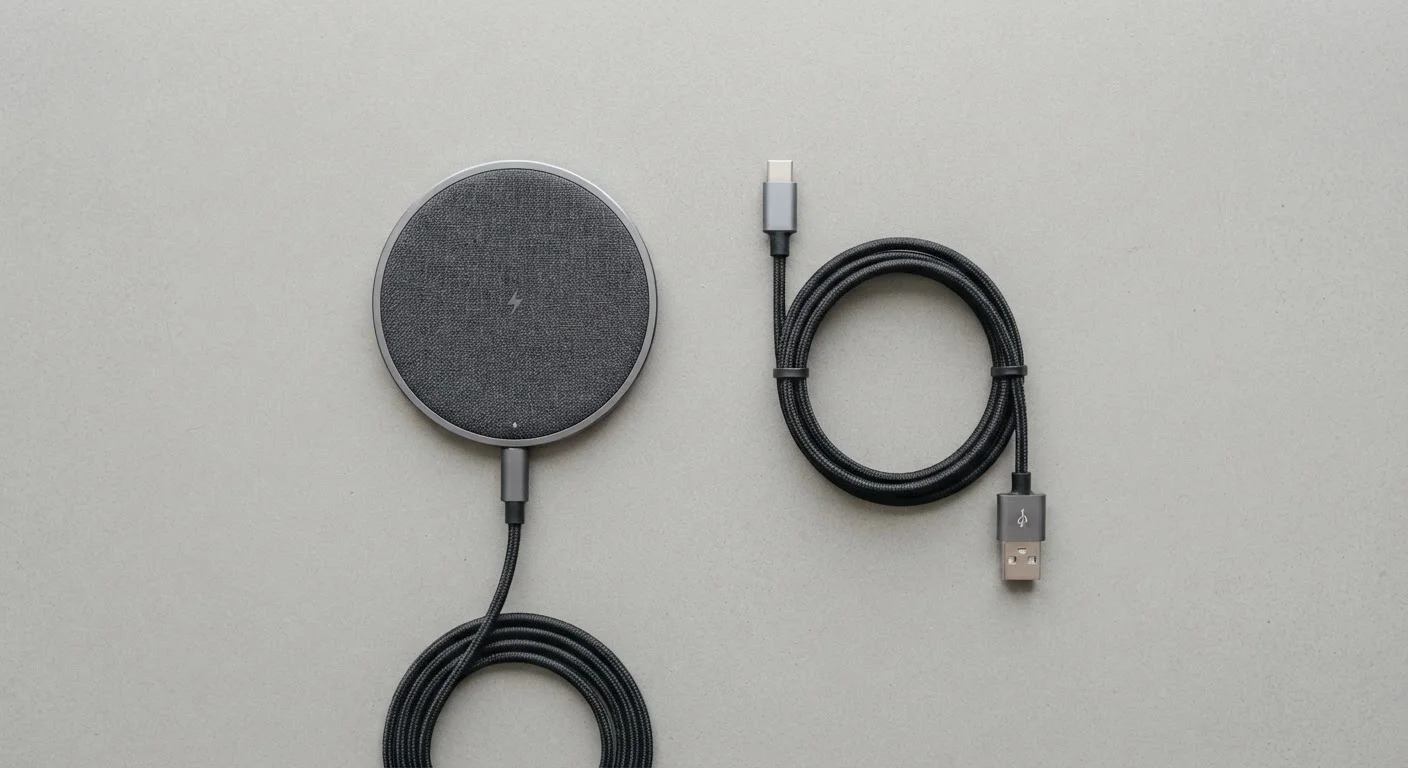
Photo: DockedReads.com | Information Made Easy editorial
Key Takeaways
- Wired charging is consistently faster than wireless charging at equivalent wattages.
- Wireless charging generates more heat, which can contribute to battery wear over time.
- Most mainstream phones support both methods, so the choice often comes down to daily habits.
- Wireless charging requires physical alignment with the pad and does not work through most thick cases.
- Neither method inherently ruins a battery when used with quality, certified chargers.
How Each Method Actually Delivers Power
Wired charging passes electrical current from a wall adapter directly into the phone's battery via a physical cable — typically USB-C on modern devices. Because the connection is direct, very little energy is lost in transit. Many current wired chargers can deliver anywhere from 18W to well over 60W depending on the device and adapter combination.
Wireless charging uses a technology called inductive charging. A coil inside the charging pad generates an electromagnetic field, and a second coil inside the phone converts that field back into electrical current. The dominant standard for this is called Qi (pronounced "chee"), which is supported by most major smartphone manufacturers. The energy conversion process is less efficient than a direct cable connection, which is why wireless charging tends to run at lower effective speeds and generates more heat. See our guide to device ports for a closer look at how the USB-C standard handles both power and data.
Speed and Efficiency: The Numbers That Matter
For a practical side-by-side, consider that a typical wired fast-charge at 20–30W can bring many phones from near-empty to 50% in roughly 30 minutes. Mainstream wireless pads certified for 15W may take 60–90 minutes to reach the same point, because the inductive process loses energy as heat rather than routing it into the battery.
| Criterion | Wired Charging | Wireless Charging |
|---|---|---|
| Typical speed (mainstream devices) | 18W–30W common | 7.5W–15W common |
| Energy efficiency | Higher — less lost as heat | Lower — inductive loss adds heat |
| Heat generated | Lower overall | Higher — affects battery wear |
| Cable / connector required | Yes — USB-C typical | No cable to the phone |
| Use device while charging | Yes, without interruption | Limited — must stay on pad |
| Case compatibility | Works with any case | Blocked by metal or very thick cases |
| Multi-device support | One cable per device | Multi-device pads available |
The efficiency gap matters most when you have limited time to charge. It matters less if you place your phone on a pad while sleeping or working at a desk, where total charge time is not a constraint. Common myths about overnight charging addresses whether either method causes harm during longer charge sessions.
Heat, Battery Health, and Long-Term Wear
Heat is the single biggest factor in long-term lithium-ion battery degradation. Both charging methods produce some heat, but wireless charging consistently produces more because energy is lost during the inductive transfer process — and that lost energy becomes warmth. If a device feels noticeably hot during wireless charging, it is converting a meaningful portion of the power into heat rather than stored charge.
~47%
Energy lost as heat in typical wireless charging
Independent efficiency tests published in engineering literature suggest wireless charging can waste roughly 40–50% of drawn power as heat, compared to under 20% for wired connections.
~20°C
Temperature rise above ambient during wireless charging
Laboratory measurements of inductive charging sessions have recorded device surface temperatures rising 15–25°C above room temperature, depending on pad wattage and case material.
This does not mean wireless charging ruins batteries quickly. Modern smartphones include battery management systems that throttle charging speed when temperatures rise. However, if long-term battery health is a priority, limiting prolonged wireless charging sessions — particularly under thick cases that trap heat — is a reasonable precaution. The habits for preserving rechargeable battery life article covers temperature management in broader detail.
Certified Chargers Matter for Safety
Convenience, Compatibility, and Daily Use
Wireless charging's main advantage is frictionless placement. There is no connector to align precisely or cable to wear out from repeated plugging. The trade-off is that the phone must remain still on the pad — using it while charging can break the coil alignment and interrupt the charge. Very thick protective cases or cases containing metal elements can also block or reduce the electromagnetic field, preventing wireless charging altogether.
Wired charging allows normal device use while charging and works regardless of case thickness. The cable and port do wear over time with physical use, though quality cables and ports are designed for thousands of insertion cycles. For those curious about how wireless standards extend beyond charging, how your gadgets communicate wirelessly puts inductive technology in broader context.
Ultimately, neither method is universally superior. Many users find that wired charging suits time-sensitive situations while wireless pads serve well as a default overnight or desk option — and using both in rotation is a practical middle ground.
The content on this site is for informational purposes only and is not a substitute for professional advice. Always consult a qualified professional for guidance specific to your situation.