
Common Myths About Charging Your Phone Overnight

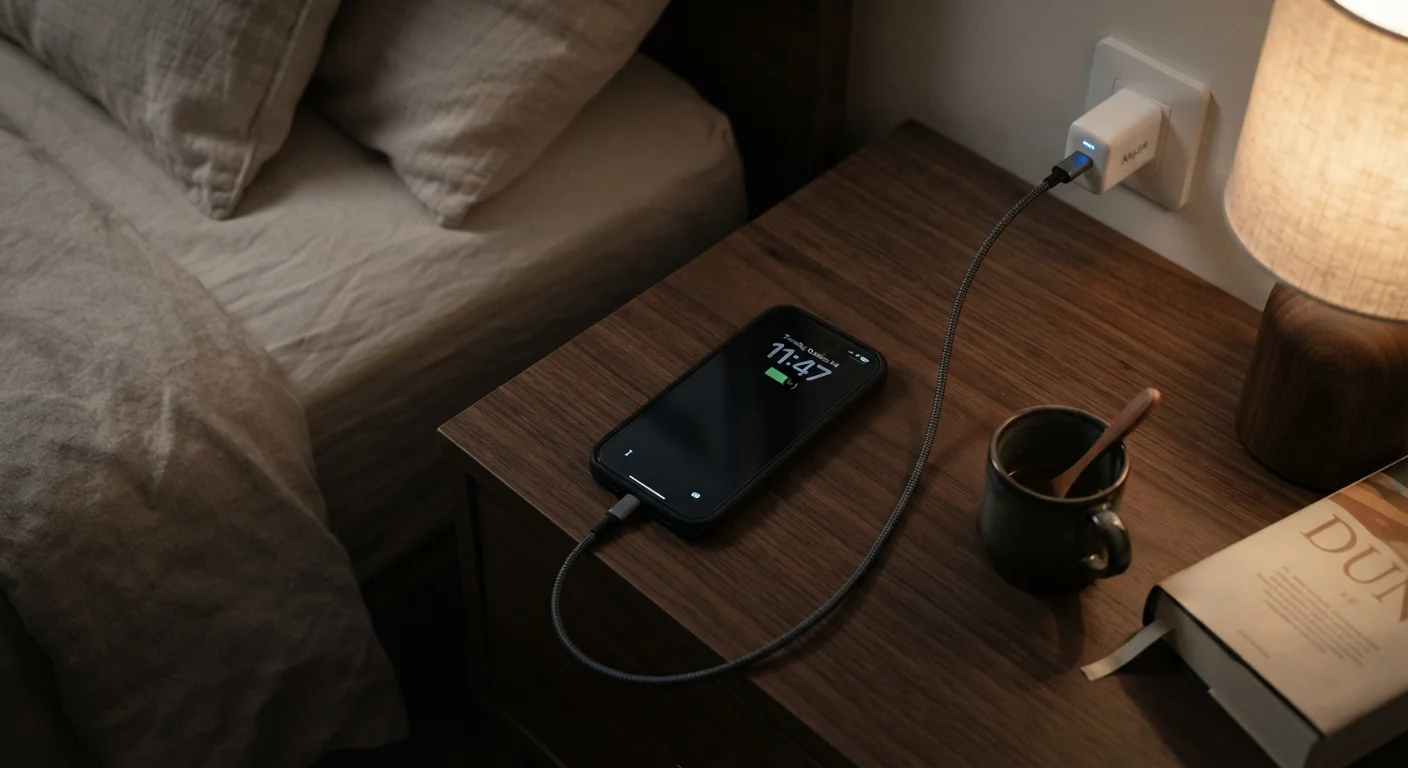
Photo: DockedReads.com | Information Made Easy editorial
Key Takeaways
- Modern smartphones use battery management chips that stop drawing current once fully charged.
- Lithium-ion batteries degrade from heat and deep discharge cycles, not from overnight charging alone.
- Keeping your battery between 20% and 80% charge can extend its long-term capacity.
- Off-brand chargers without proper safety certifications pose a real risk that name-brand or certified alternatives do not.
- Most battery-health features built into current operating systems actively limit charge to protect longevity.
Why These Myths Persist
Charging habits are one of the most talked-about topics in smartphone ownership — and one of the most misunderstood. Many of the warnings circulating online originated with older nickel-cadmium (NiCd) batteries, which did suffer from a "memory effect" that required full discharge-recharge cycles. Today's phones use lithium-ion (Li-ion) or lithium-polymer (LiPo) cells, which behave very differently. Understanding that distinction is the key to separating fact from outdated folklore.
For a broader look at how charging method affects your battery, see our comparison of wired and wireless charging.
Myth
Leaving your phone plugged in all night overcharges the battery and permanently damages it.
Fact
Modern smartphones stop actively drawing charging current once they reach 100%, preventing true overcharging.
Every current smartphone contains a dedicated battery management integrated circuit (IC) that monitors charge state and cuts off the charging current when the battery reaches full capacity. The phone may trickle-charge briefly if voltage dips slightly, but it does not continuously push electricity into a full cell. The risk of overcharging in the traditional sense does not apply to Li-ion devices with this hardware in place.
Myth
You should always fully drain your phone to 0% before charging it again.
Fact
Deep discharges are actually stressful for lithium-ion chemistry; partial top-ups are healthier.
Unlike older NiCd batteries, lithium-ion cells do not have a memory effect requiring full cycles. Each complete charge cycle — from 0% to 100% — counts against the battery's rated cycle life (often 300–500 full cycles before noticeable capacity loss). Keeping the charge level between roughly 20% and 80% accumulates partial cycles more slowly, preserving capacity over time.
Myth
Using any USB charger is fine — they all deliver the same power.
Fact
Charger quality and certification matter significantly for both safety and battery longevity.
Voltage and current regulation vary widely between chargers. Uncertified or counterfeit chargers may deliver inconsistent power, generate excess heat, or lack the protective circuitry that prevents dangerous conditions. Look for chargers that carry recognized safety certifications (such as UL listing in the US) and that match your device's supported charging standards. Using an incompatible fast-charger can generate more heat than your phone's thermal design expects, accelerating cell aging.
Myth
Wireless charging is far worse for battery health than wired charging.
Fact
Wireless charging generates somewhat more heat, but the difference in long-term battery impact is modest with normal use.
Wireless (inductive) charging is less energy-efficient than a direct cable connection, and the conversion process does produce slightly more heat at the coil. Heat is a genuine stressor for Li-ion batteries. However, under typical daily use conditions — not sustained hours of gaming while wirelessly charging — the practical difference in battery degradation is small. Placing the phone on a hard, ventilated surface rather than under a pillow or blanket during wireless charging helps manage heat.
Myth
Charging your phone more frequently throughout the day wears it out faster than one overnight charge.
Fact
Frequent partial charges are generally gentler on lithium-ion batteries than infrequent full cycles.
Battery cycle life is measured in full equivalent cycles, not in the number of times you plug in. Topping up from 60% to 80% twice counts as less than one full cycle. Frequent, small charges that keep the battery in a mid-range state of charge are actually the recommended pattern for lithium-ion chemistry, and they impose less stress than repeated deep discharges followed by full charges.
What Actually Damages a Lithium-Ion Battery
Two factors consistently accelerate lithium-ion battery aging: heat and deep discharge. Sustained high temperatures — whether from leaving a phone in a hot car, using an incompatible fast-charger, or running processor-intensive apps while charging — cause chemical degradation inside the cell. Repeatedly draining a battery to 0% before recharging also shortens overall cycle life.
20–30%
Typical Li-ion capacity loss after ~500 full cycles
Battery manufacturers commonly rate lithium-ion cells to retain around 70–80% of original capacity after 300–500 full charge cycles under standard conditions.
~86°F (30°C)
Temperature above which battery aging accelerates notably
Research on lithium-ion degradation consistently identifies sustained exposure above approximately 30°C as a key accelerant of capacity loss.
A useful middle-ground habit is to plug in before the battery drops below 20% and unplug — or use a charge-limit setting — around 80%. This keeps the battery operating in its most chemically stable range. Our guide on caring for rechargeable batteries covers these habits in detail across multiple device types.
Avoid Charging Under Pillows or Blankets
Making Sense of Your Phone's Built-In Battery Tools
Both major mobile operating systems now include features specifically designed to reduce battery stress during overnight charging. Apple's Optimized Battery Charging learns your daily routine and holds the charge at 80% until shortly before you typically wake up. Android devices from various manufacturers offer similar adaptive charging modes under different names in the battery settings menu.
These features exist precisely because engineers know users charge overnight — and they are engineered to make it safer. Enabling them is one of the most effective steps you can take. You might also be interested in how standby power consumption works when your phone stays plugged in but idle.
Enable Your Phone's Charge Limit Feature
The content on this site is for informational purposes only and is not a substitute for professional advice. Always consult a qualified professional for guidance specific to your situation.