
Perennials vs. Annuals: Planning a Garden That Balances Effort and Beauty

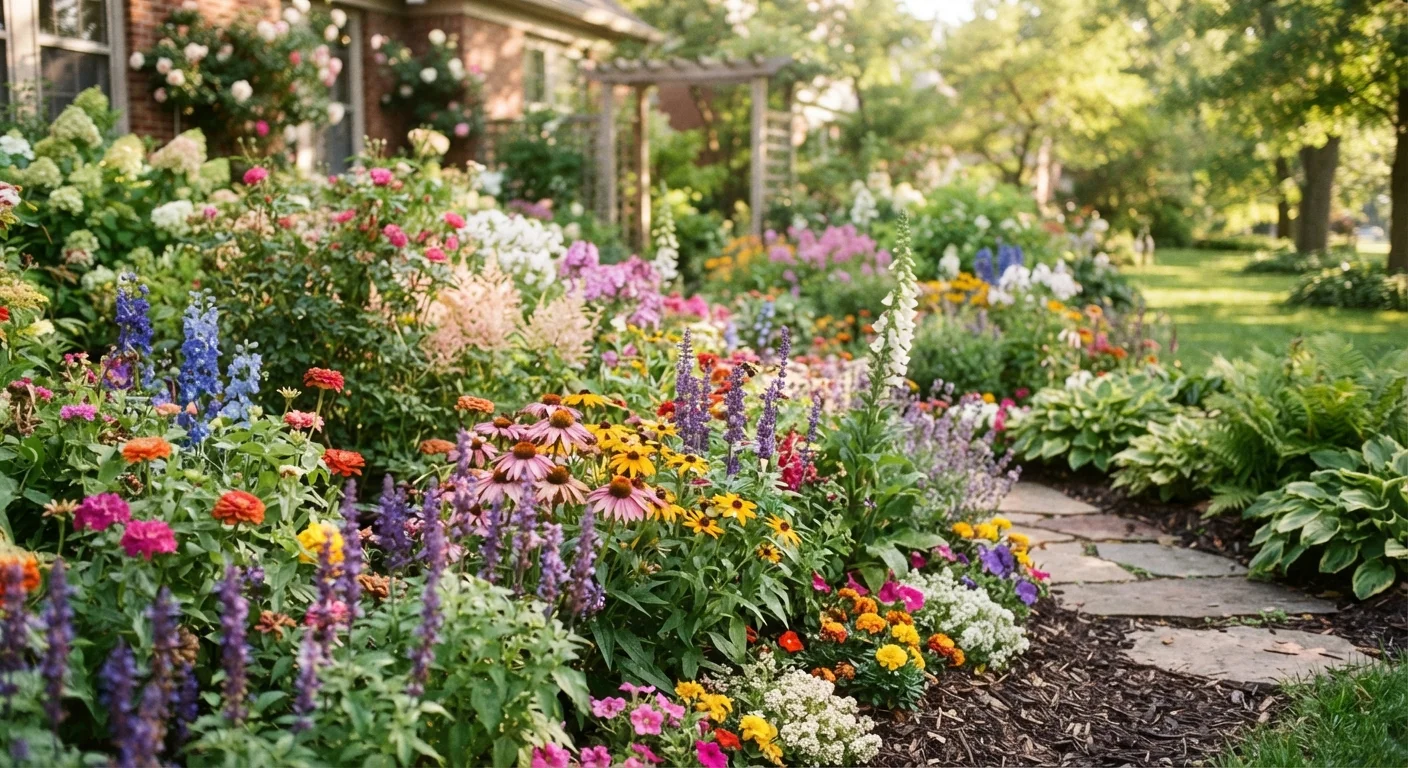
Photo: DockedReads.com | Information Made Easy editorial
Key Takeaways
- Perennials return year after year, reducing replanting labor but often blooming for a shorter window each season.
- Annuals deliver continuous, vivid color throughout the growing season but must be replanted or reseeded annually.
- Combining both types creates a garden with reliable structure and flexible seasonal interest.
- Upfront cost for perennials is typically higher, but long-term spending is lower compared to buying annuals every year.
- Annuals are ideal for filling gaps in perennial beds while new plantings establish themselves.
What Separates a Perennial from an Annual
The distinction comes down to lifespan. Perennials are plants that complete their life cycle over multiple years — they die back to the ground in winter (in most US climates) and re-emerge from their root system each spring. Annuals complete their entire life cycle — germination, growth, flowering, and seed production — within a single growing season, then die. Some plants sold as annuals in northern states are technically tender perennials that simply can't survive frost.
Understanding this difference shapes every planning decision, from how much you spend at the nursery to how much time you spend in the garden each season. Neither type is inherently superior; they solve different problems and work best when used together.
The Real Cost and Effort of Each Approach
Perennials generally cost more per plant at purchase — a quart or gallon-sized perennial may run two to four times the price of an annual flat. However, because they return year after year, your cost per season drops considerably over time. They also tend to spread or self-divide, meaning you can eventually split clumps and fill in new areas at no extra cost.
Annuals require a fresh purchase each spring, but they're typically inexpensive in flats and packs. The annual replanting ritual does take time, but it also gives you a chance to rethink color schemes or try new varieties. For gardeners who enjoy hands-on seasonal gardening, this is a feature, not a burden.
| Criterion | Perennials | Annuals |
|---|---|---|
| Lifespan | Returns each year | One growing season |
| Upfront cost | Higher per plant | Lower per flat |
| Long-term cost | Lower over time | Ongoing annual spend |
| Bloom duration | 2–6 weeks typically | Frost to frost |
| Replanting required | No (spreads over time) | Every spring |
| Design flexibility | Fixed once established | Changes each season |
| Establishment time | 1–3 years to mature | Immediate impact |
| Maintenance level | Low once established | Moderate (deadheading) |
Mulching around both perennials and annuals reduces watering frequency, suppresses weeds, and moderates soil temperature — a habit worth developing regardless of what you're growing. See our guide to mulching for practical material recommendations.
Bloom Time and Seasonal Interest
One of the most common surprises for new gardeners is discovering that most perennials bloom for only two to six weeks during the season. A garden planted entirely with perennials can look spectacular in June, then quiet and green for the rest of summer. Strategic plant selection — layering early, mid, and late-blooming perennials — helps extend the window, but it requires careful planning.
Annuals, by contrast, are bred specifically for continuous blooming. Many flower from the last frost of spring until the first frost of fall with minimal deadheading (removing spent blooms to encourage new ones). This makes them invaluable for filling beds that would otherwise have awkward bloom gaps.
2–6 weeks
Typical perennial bloom window per season
Most perennial varieties flower for a relatively short period, making layered planting plans essential for continuous garden interest.
3 years
Average time for perennials to fully establish
Horticulturalists commonly use the phrase 'sleep, creep, leap' to describe the typical three-year establishment arc of most perennial plants.
~80%
Reduction in replanting labor with a perennial-dominant bed
Once a perennial bed reaches maturity, annual planting tasks are largely replaced by division and light pruning rather than full replanting.
If supporting local wildlife matters to you, both plant types can contribute. Our article on attracting pollinators covers which flowering plants offer the most reliable nectar and pollen sources across the season.
How to Plan a Garden That Uses Both
The most resilient and visually satisfying home gardens treat perennials as the framework and annuals as the finishing layer. Start by establishing perennial anchors — plants with interesting foliage, reliable bloom times, and structural presence throughout the growing season. Then use annuals to fill gaps, extend color into periods when perennials are resting, and add seasonal personality.
A practical approach: plant perennials toward the middle or back of a bed where their full-season foliage can carry visual weight even when not in bloom. Use lower-growing annuals at the front edge for continuous color. As your perennials mature and spread over two to three years, you may need fewer annuals to fill space.
The 'Sleep, Creep, Leap' Rule for Perennials
New to garden bed design? Our comparison of raised beds vs. in-ground planting can help you decide on the right structure before you commit to a planting plan.
At the end of each season, a proper closeout routine makes the next year easier. Our end-of-season garden tidy-up checklist walks you through protecting perennial root systems, clearing annual debris, and improving soil before winter sets in.
The content on this site is for informational purposes only and is not a substitute for professional advice. Always consult a qualified professional for guidance specific to your situation.