
Organic vs. Synthetic Fertilisers: What Every Home Gardener Should Know

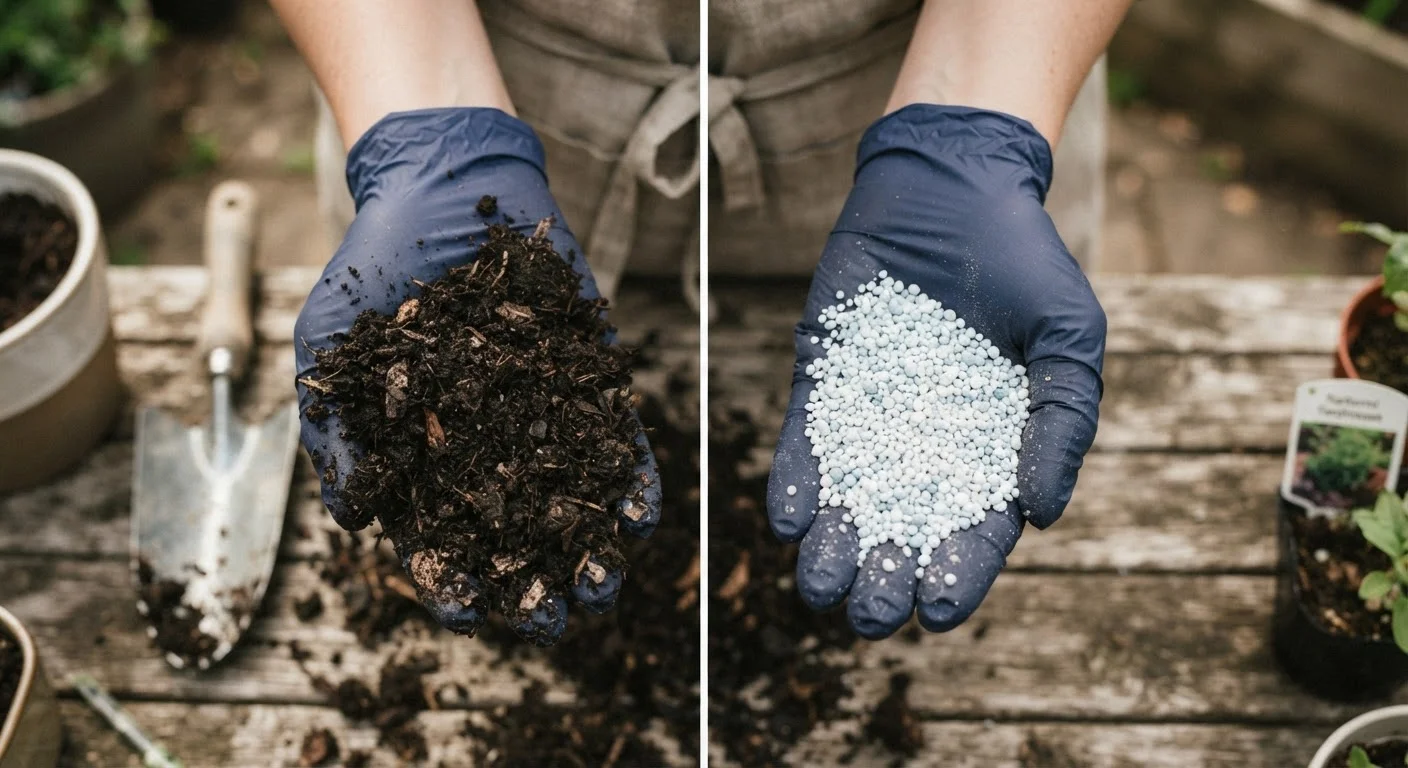
Photo: DockedReads.com | Information Made Easy editorial
Key Takeaways
- Organic fertilisers feed soil biology slowly; synthetic fertilisers deliver nutrients quickly but bypass biological processes.
- Synthetic fertilisers can cause nutrient runoff and salt buildup if over-applied; organic types carry lower runoff risk.
- Soil health improves over time with organic inputs; synthetic use alone does not build long-term soil structure.
- Both types supply the same core nutrients — nitrogen, phosphorus, and potassium — but at different rates.
- Most home gardeners benefit from understanding when each type is appropriate rather than committing to one exclusively.
How Each Fertiliser Type Works
All fertilisers exist to supply plants with the three primary nutrients they need: nitrogen (N), phosphorus (P), and potassium (K) — shown as an N-P-K ratio on product labels. What differs fundamentally between organic and synthetic options is how those nutrients reach plant roots.
Organic fertilisers — derived from plant matter, animal by-products, or minerals — release nutrients gradually as soil microbes break down organic material. This biological process feeds the soil ecosystem at the same time it feeds your plants. Common examples include compost, blood meal, bone meal, kelp meal, and fish emulsion.
Synthetic fertilisers are manufactured to deliver concentrated, water-soluble nutrients that plants can absorb almost immediately. There's no waiting for microbial activity — the nutrients are available in a form roots can take up right away. This is why a struggling plant can visibly green up within days of a synthetic application.
Understanding this core difference explains most of the trade-offs that follow. For a deeper look at how soil chemistry interacts with both types, see our guide to soil pH.
Effects on Soil Health Over Time
This is where the two approaches diverge most significantly for long-term gardeners.
Organic fertilisers contribute organic matter to the soil, improving its structure, moisture retention, and aeration over seasons. They support earthworms, beneficial fungi, and the billions of microorganisms that make healthy soil function. Over time, regular organic inputs can measurably improve a garden bed's capacity to grow plants with less intervention.
Synthetic fertilisers, used in isolation over many years, do not add organic matter. Repeated heavy applications can cause salt accumulation in the soil, which stresses plant roots and disrupts microbial communities. This doesn't mean synthetic fertilisers are inherently damaging — at appropriate rates, they're widely used in productive gardens — but they do nothing to rebuild depleted or compacted soil on their own.
Combine Compost with Fertiliser for Best Results
If you're already composting at home, combining finished compost with a balanced fertiliser programme can give you the best of both worlds: steady nutrient availability and ongoing soil improvement.
Speed, Precision, and Practical Trade-offs
| Organic Fertilisers | Synthetic Fertilisers | |
|---|---|---|
| Nutrient release speed | Slow (weeks to months) | Fast (hours to days) |
| Soil biology impact | Feeds and supports microbes | Neutral to mildly disruptive at high rates |
| Soil structure improvement | Yes, adds organic matter | No organic matter added |
| Nutrient precision | Variable, label ratios are approximate | Consistent, exact N-P-K on label |
| Runoff/leaching risk | Generally lower | Higher if over-applied or rained on |
| Typical upfront cost | Higher per unit of nutrient | Lower per unit of nutrient |
| Best application timing | Before season or as ongoing top-dress | During active growth or to correct deficiency |
For most home gardeners, timing and convenience matter as much as soil science. Synthetic fertilisers win on speed and predictability — you know exactly what nutrient ratio you're applying, and results show quickly. This makes them useful for correcting an identified deficiency, supporting a heavy-feeding vegetable crop mid-season, or establishing new plantings in a hurry.
Organic fertilisers require more planning. Because release depends on soil temperature and microbial activity, they work best when applied ahead of the growing season rather than as a quick fix. In cold soil, nutrient release slows considerably — which means early spring application may not feed plants as quickly as you expect.
Cost is another real-world factor. Pound for pound, synthetic fertilisers typically deliver more concentrated nutrients at a lower initial price. Organic options — especially bagged compost or premium dry amendments — often cost more per unit of nutrient. However, the long-term reduction in soil amendment needs as organic matter builds can offset some of that difference.
Environmental Considerations
Both fertiliser types carry environmental trade-offs worth understanding, particularly if your garden sits near waterways, storm drains, or areas with sandy, fast-draining soil.
Synthetic fertilisers — especially water-soluble nitrogen — can leach through soil or run off during heavy rain before plants can absorb them. This contributes to nutrient loading in local waterways, which can affect aquatic ecosystems. Applying synthetic fertilisers at the correct rate and timing (not before heavy rain) significantly reduces this risk.
Organic fertilisers generally release nutrients more slowly and are less prone to rapid leaching. However, concentrated organic products such as fresh manure or blood meal can still contribute to runoff if applied carelessly or in excess. No amendment is entirely without environmental impact at high volumes.
Mulching around your plants reduces nutrient loss from both fertiliser types by slowing water runoff and keeping the soil surface stable.
More Is Not Better with Either Type
Choosing an Approach for Your Garden
There's no universal answer, but a few questions can help you decide:
- What is your soil's current condition? Depleted, compacted, or sandy soils benefit most from consistent organic inputs that build structure.
- What are you growing? Heavy-feeding vegetables in a raised bed may benefit from targeted synthetic supplementation mid-season, while established perennials generally do well on organic programmes alone.
- How quickly do you need results? If a plant shows clear distress signs, a fast-acting synthetic application may be warranted while you address underlying soil issues organically.
- Are you gardening with children, pets, or in a food garden? Follow all label directions carefully regardless of type; both organic and synthetic fertilisers can be harmful if mishandled or ingested.
Many experienced home gardeners settle on a hybrid approach: building soil year-round with compost and organic matter, while using synthetic fertilisers selectively and sparingly when the situation calls for speed or precision.
This article is intended as general educational information. Soil conditions, climate, and plant needs vary widely — consider having your soil tested by a local cooperative extension service for personalised guidance.
The content on this site is for informational purposes only and is not a substitute for professional advice. Always consult a qualified professional for guidance specific to your situation.