
Soil pH Explained: What It Means for Your Plants and How to Adjust It

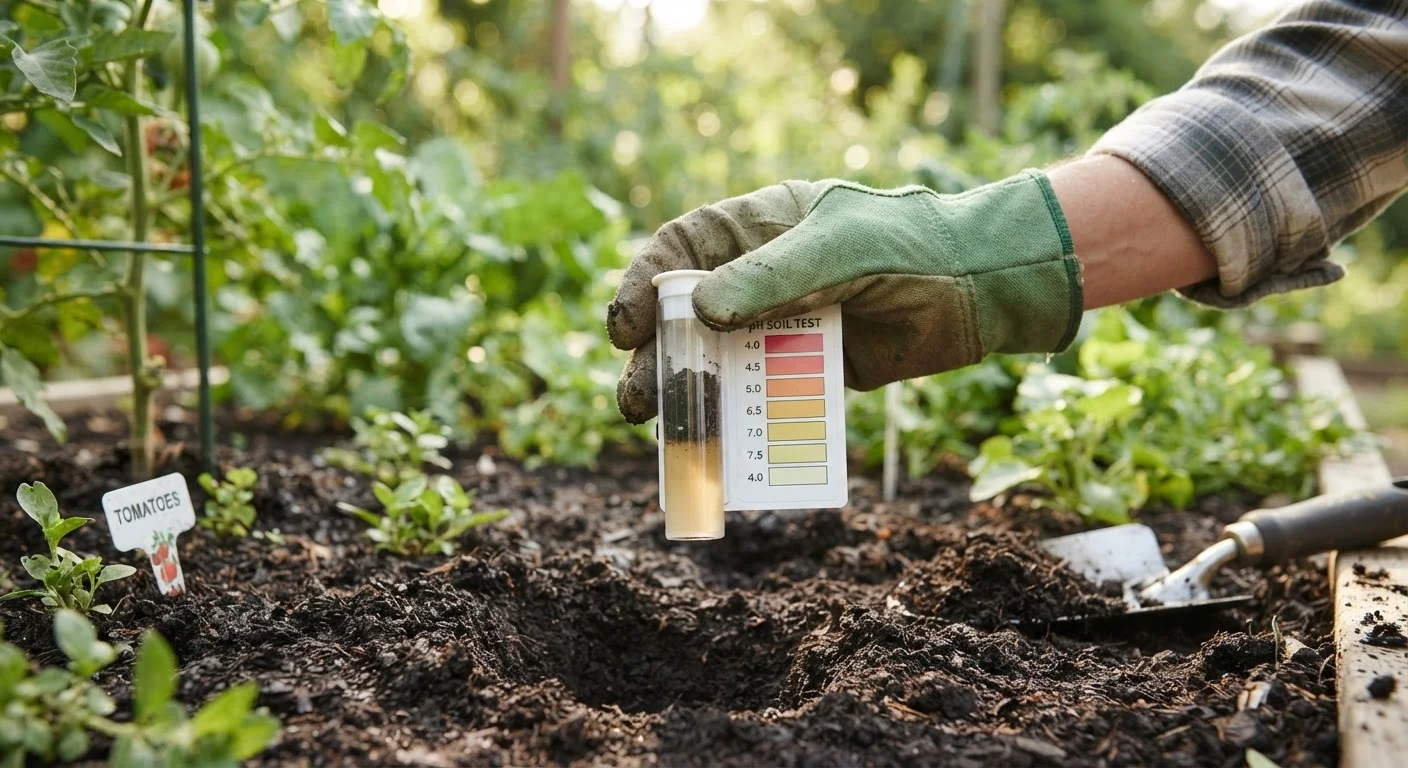
Photo: DockedReads.com | Information Made Easy editorial
Key Takeaways
- Soil pH controls how well plant roots can absorb essential nutrients from the soil.
- Most vegetables and ornamentals prefer a slightly acidic pH between 6.0 and 7.0.
- A simple home test kit or inexpensive meter can tell you your soil's current pH.
- Lime raises soil pH; sulfur or acidifying fertilizers lower it — both take time to work.
- Raised beds give you greater control over soil chemistry than in-ground planting.
Why pH Determines What Your Plants Can Eat
Think of soil pH as a gate controlling nutrient access. Even if your soil is rich in nitrogen, phosphorus, and iron, roots can't take up nutrients that are chemically locked by the wrong pH. In highly acidic soil (below 5.5), aluminum and manganese can reach toxic levels. In overly alkaline soil (above 7.5), iron, manganese, and phosphorus become insoluble — present in the soil but effectively invisible to plant roots.
This is why fertilizing without knowing your pH can be a waste of effort. You may be adding nutrients your plants simply cannot absorb. Getting the pH right first makes everything else — watering, feeding, and mulching — work more effectively.
6.0–7.0
Optimal pH range for most garden vegetables
This range is widely cited by university cooperative extension programs across the US as the sweet spot for nutrient availability and microbial activity.
~30%
Estimated US soils with pH outside ideal range
Soil surveys suggest a significant portion of residential and agricultural soils in the US are either too acidic or too alkaline without amendment, particularly in high-rainfall regions and arid areas.
10x
Acidity difference per single pH unit
Because the pH scale is logarithmic, a soil at pH 5.0 is ten times more acidic than one at pH 6.0 — making precise testing more important than guesswork.
How to Test Your Soil's pH
Testing is straightforward and worth doing before you plant or amend anything. Here are the main options:
- Liquid test kits: Mix a small soil sample with water and a color-indicating solution. Compare the resulting color to a chart. Accurate enough for most home gardens.
- Digital pH meters: Insert a probe directly into moist soil for an instant reading. Handy for monitoring multiple spots in a large yard.
- Cooperative Extension testing: Your state's land-grant university cooperative extension service can test a soil sample and return a detailed report with specific amendment recommendations. This is the most thorough option and is often inexpensive or free.
Test several spots in your garden — pH can vary meaningfully between a raised bed and an adjacent in-ground border. If you're weighing whether to build a raised bed, our guide to raised beds vs. in-ground planting covers how each setup affects soil management.
Test Before You Amend
Raising Soil pH: Making Acidic Soil More Alkaline
If your soil tests below your target range, the standard approach is adding agricultural lime. Two common forms are:
- Ground limestone (calcitic lime): Raises pH and adds calcium. Widely available and suitable for most soils.
- Dolomitic lime: Raises pH while adding both calcium and magnesium — a good choice if your soil is also low in magnesium.
Work lime into the top several inches of soil rather than leaving it on the surface. Apply in fall where possible so winter moisture helps it incorporate before spring planting. Follow product label guidance for application rates based on your current pH reading and soil texture — clay soils require more lime than sandy ones to achieve the same shift.
Soil Texture Affects Amendment Rates
Lowering Soil pH: Making Alkaline Soil More Acidic
For soil testing above your target — common in the arid West and Midwest where soils are naturally alkaline — the two main options are:
- Elemental sulfur: Soil bacteria convert sulfur into sulfuric acid over time, gradually lowering pH. It works slowly but is long-lasting.
- Acidifying nitrogen fertilizers: Products containing ammonium sulfate or similar compounds can modestly lower pH with repeated use. Pairing soil acidification with the right fertilizer approach matters — see our comparison of organic vs. synthetic fertilizers for context.
Organic matter like composted pine bark or peat moss can also nudge pH down modestly over time while improving soil structure. For permanent alkaline soil conditions, choosing naturally acid-tolerant plants or growing in raised beds with custom-blended soil is often more practical than fighting your native soil chemistry indefinitely.
Whatever amendments you use, layering them with a good mulch helps regulate soil moisture and slow pH drift. Our overview of mulching benefits explains how the right mulch material can also influence soil acidity over time.
Frequently Asked Questions
The content on this site is for informational purposes only and is not a substitute for professional advice. Always consult a qualified professional for guidance specific to your situation.