
Companion Planting: Which Plants Genuinely Help Each Other Grow

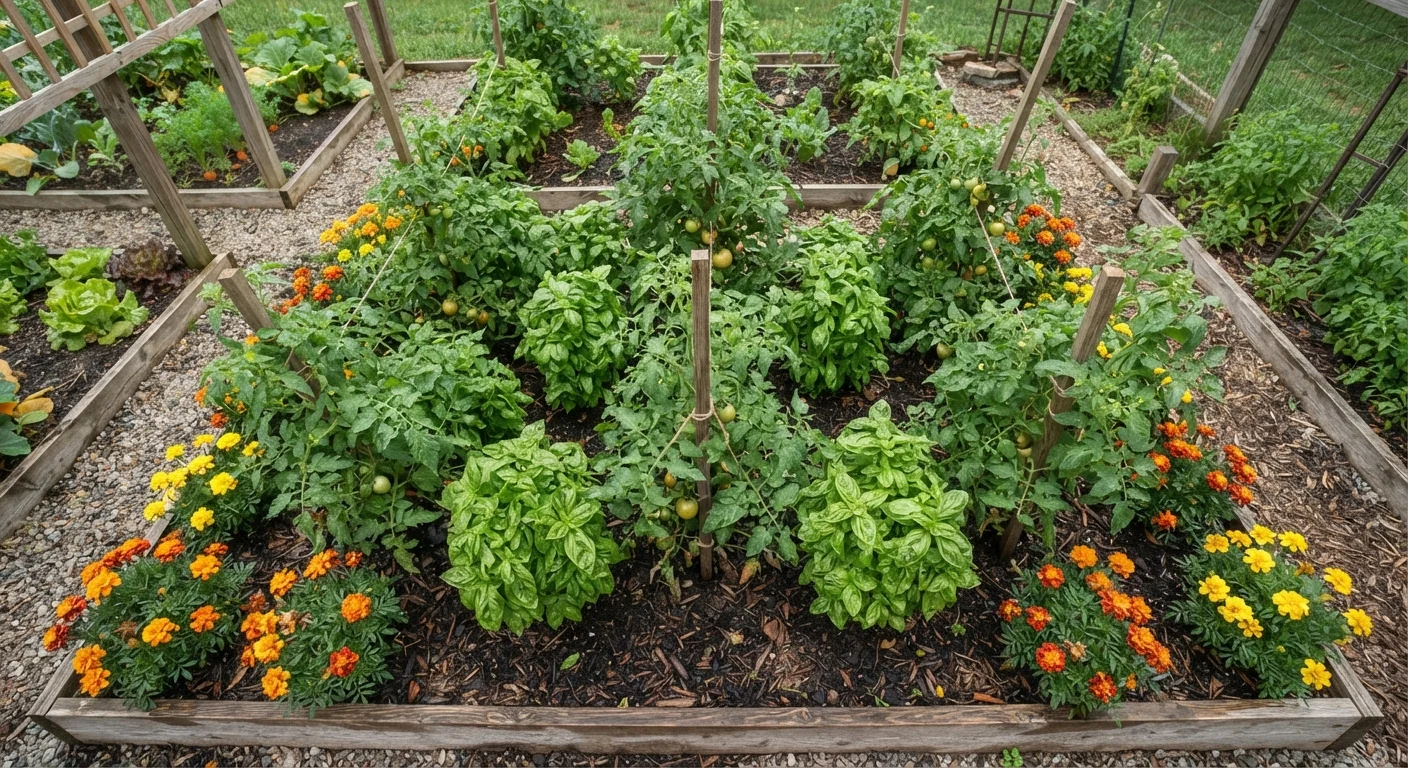
Photo: DockedReads.com | Information Made Easy editorial
Key Takeaways
- Some companion plant pairings have credible research support; many others remain anecdotal.
- Legumes like beans genuinely fix nitrogen in soil, benefiting neighboring heavy-feeding crops.
- Marigolds produce compounds that can suppress certain soil nematodes and deter some pests.
- The 'Three Sisters' combination of corn, beans, and squash is one of the best-documented pairings.
- Plant spacing, soil conditions, and climate matter as much as which plants you pair together.
- Companion planting works best as one tool among many, alongside good soil care and watering.
What Companion Planting Actually Does
Companion planting works through several distinct mechanisms — and understanding them helps you choose pairings with purpose rather than guesswork. The main benefits fall into a few categories: soil improvement, pest disruption, physical support, and pollinator attraction.
Soil improvement is one of the most reliably documented effects. Legumes — beans, peas, clover — host bacteria in their root nodules that convert atmospheric nitrogen into a form plants can use. Growing a nitrogen-fixing crop alongside a heavy feeder like corn or squash puts that nutrient directly where it's needed.
Pest disruption works in a few ways. Some plants emit volatile compounds that confuse or deter insects. Others attract predatory insects that feed on common garden pests. Strongly scented herbs like dill and fennel draw parasitic wasps that prey on caterpillars, for example. A few plants produce root chemicals that suppress soil-borne pathogens or nematodes.
Physical structure can also be a companion planting benefit. Tall plants provide shade for heat-sensitive crops below. Ground-covering plants suppress weeds and retain soil moisture — benefits that work regardless of what any specific pairing study says.
Understanding these mechanisms lets you evaluate any proposed pairing more critically, rather than simply following a list. See our guide to raised beds vs. in-ground planting to understand how your garden setup affects which companion strategies make the most sense.
Observe Before You Rearrange
Pairings With Real Evidence Behind Them
Not every companion planting claim holds up to scrutiny, but several pairings have enough research or consistent horticultural documentation to be worth practicing deliberately.
The Three Sisters: Corn, Beans, and Squash
This Native American agricultural system is among the best-documented companion arrangements. Corn provides a vertical structure for beans to climb. Beans fix nitrogen, feeding the corn and squash. Squash spreads along the ground, its large leaves shading out weeds and keeping soil moist. The combination works as a system, and that interdependence is what makes it effective.
Marigolds and Vegetable Crops
French marigolds (Tagetes patula) have documented evidence for reducing populations of root-knot nematodes when planted densely and over multiple seasons. They also attract beneficial insects. This benefit takes time — a ring of marigolds planted for one season has modest impact; consistent planting over years is more meaningful.
Legumes with Heavy Feeders
Planting beans or peas before or alongside corn, brassicas, or squash provides a genuine nitrogen benefit. This is chemistry, not folklore — the symbiotic bacteria in legume roots actively enrich the soil. Allowing legume roots to decompose in place after harvest extends that benefit.
Dill and Fennel as Insectary Plants
Dill attracts parasitic wasps and other beneficial insects that prey on common pests. Note, however, that mature fennel is allelopathic to many vegetables — keep it isolated at the garden edge rather than interplanting it directly with crops.
~80%
Of legume nitrogen fixed symbiotically with bacteria
Research consistently shows that legume-rhizobium partnerships can meet the majority of a legume crop's nitrogen needs, with residual benefit to neighboring plants.
3 Sisters
Documented companion system used for centuries
The corn-beans-squash combination was practiced by multiple Indigenous North American peoples and remains one of the most studied polyculture systems in agricultural research.
Several seasons
Time needed for marigolds to reduce nematode levels
University extension research indicates that meaningful nematode suppression from French marigolds requires dense planting maintained across multiple growing seasons, not a single year.
Folklore Versus Fact: Claims to Treat With Caution
Many popular companion planting recommendations circulate widely online but have limited controlled research supporting them. That doesn't mean they're wrong — gardening knowledge is often empirical — but it's worth knowing where evidence is thin.
Basil repelling tomato pests: This is one of the most repeated pairings. There's plausible chemistry involved, but controlled studies show inconsistent results. Basil is still a sensible companion because it uses space efficiently and attracts pollinators — just don't rely on it as pest control.
Nasturtiums as trap crops: The idea is that aphids prefer nasturtiums over vegetables. This can work in practice, but nasturtiums can also simply add another aphid population to your garden if not managed. Used deliberately near a crop you're protecting, with regular monitoring, it's a reasonable tool.
Garlic repelling pests: Garlic's repellent properties are often overstated. It may have some effect on certain insects and fungal diseases in immediate proximity, but planting garlic near roses or fruit trees won't create a pest-free zone.
The practical takeaway: try reported pairings with curiosity, observe your own results over seasons, and combine companion planting with solid fundamentals like healthy soil, adequate water, and good crop rotation. Companion planting can also integrate naturally with pollinator garden design — flowering companions often do double duty by feeding beneficial insects.
Putting It Into Practice
Starting with companion planting doesn't require redesigning your entire garden. A few targeted decisions each season will teach you what works in your specific soil and climate.
- Start with the Three Sisters or a legume-grain pairing if you have space. These are the most reliably productive combinations for edible gardens.
- Plant a border of French marigolds around vegetable beds. Even where evidence for specific pest deterrence is mixed, they attract beneficial insects and contribute to biodiversity.
- Grow low-growing crops under taller ones. Lettuce, spinach, or cilantro planted under staked tomatoes or trellised cucumbers use space efficiently and appreciate the partial shade in warm weather.
- Keep records. Note what you planted together and how both crops performed. Your observations over two or three seasons in your garden are more useful than any general list.
If you're gardening in containers or limited space, many companion principles still apply — see our container gardening guide for pairing ideas suited to pots and small plots.
Companion planting is also more effective alongside other soil-health practices. Mulching, for instance, reinforces the weed suppression and moisture-retention roles that ground-covering companions play. Learn how mulching complements good garden planning and can amplify what companion arrangements are trying to achieve.
Companion Planting Varies by Region
Frequently Asked Questions
The content on this site is for informational purposes only and is not a substitute for professional advice. Always consult a qualified professional for guidance specific to your situation.