
Vehicle Title and Registration: What the Paperwork Actually Does

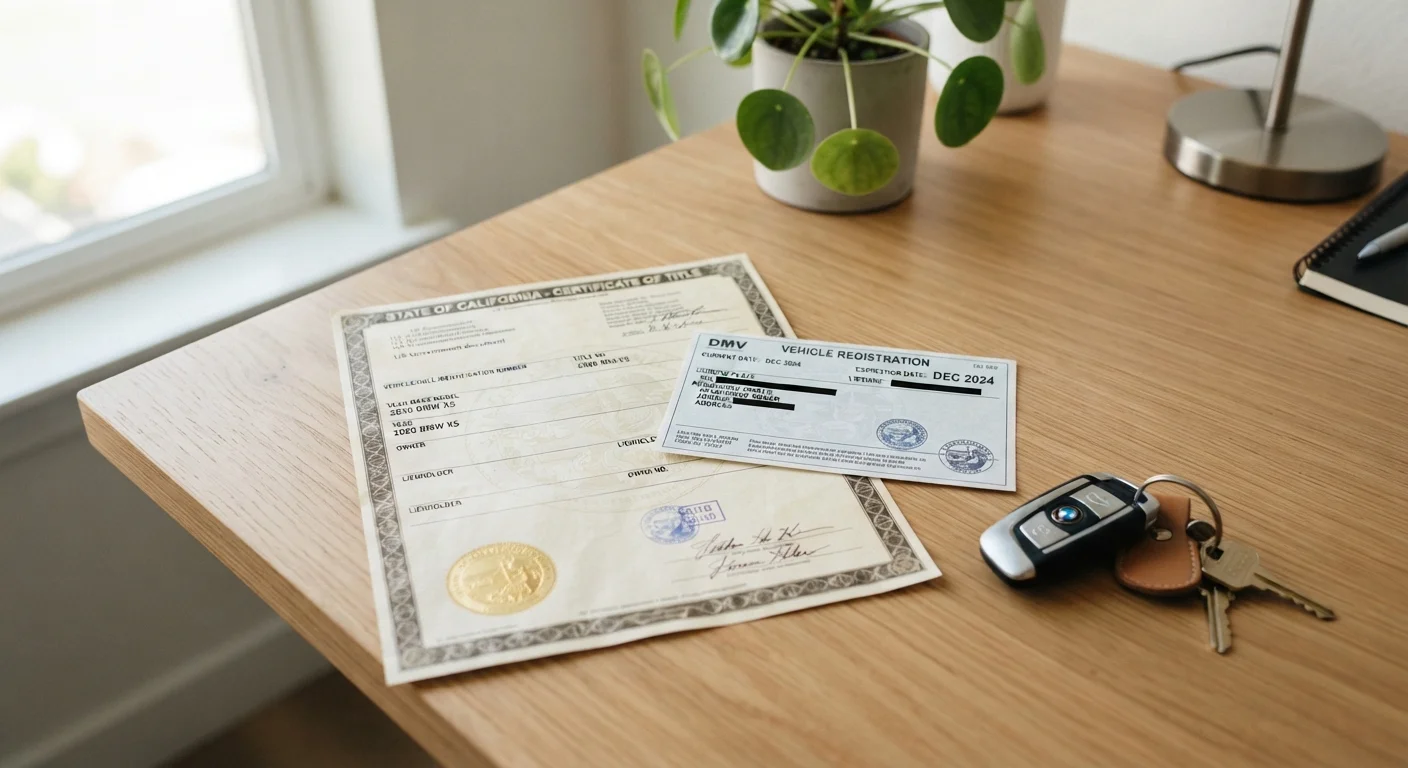
Photo: DockedReads.com | Information Made Easy editorial
Key Takeaways
- A car title proves legal ownership; registration proves the vehicle is permitted to operate on public roads.
- These are two separate documents — you can register a car without holding a clear title if it's financed.
- Lenders are listed on the title as lienholders until a loan is paid off.
- Title brands like 'salvage' or 'rebuilt' are permanent and affect a vehicle's value and insurability.
- Registration must typically be renewed annually and requires proof of insurance in most states.
- Transferring ownership requires a proper title transfer — registration alone does not convey ownership.
The Title: Proof of Legal Ownership
A vehicle title — sometimes called a certificate of title or pink slip — is the document that establishes who legally owns a car. Issued by your state's Department of Motor Vehicles (DMV) or equivalent agency, it contains key identifying information: the vehicle identification number (VIN), make, model, year, and the name and address of the registered owner.
If you financed your vehicle through a bank or credit union, you'll notice a lienholder listed on the title. This means the lender has a legal claim on the vehicle until the loan is paid in full. Once you make that final payment, the lender releases the lien and the title transfers to you outright — a status commonly called a clear or clean title.
Titles can also carry brands — permanent notations that flag significant events in a vehicle's history. Common brands include salvage (total loss declared by an insurer), rebuilt or reconstructed (a salvage vehicle that has been repaired and reinspected), and flood or hail damage. These brands follow the vehicle for life and are visible on any vehicle history report.
Check the Title Before Any Transaction
The Registration: Permission to Use Public Roads
Where the title answers "who owns this vehicle," the registration answers "is this vehicle authorized to operate?" Registration is a government-issued permit — typically a certificate and a license plate or sticker — that confirms the vehicle has met state requirements for roadway use.
Those requirements vary by state but commonly include:
- Proof of valid auto insurance
- Payment of registration fees (often based on vehicle weight, age, or value)
- A passing emissions or safety inspection in states that mandate them
Registration must be renewed on a schedule set by your state — most commonly every year. Driving with an expired registration sticker is a traffic violation and can result in a fine. It's one of the annual ownership tasks drivers most frequently let slip.
49
US states requiring liability insurance for registration
New Hampshire is the only state that does not mandate auto insurance as a condition of vehicle registration, though drivers remain financially responsible for damages.
~$150
Median annual vehicle registration fee nationally
Registration fees vary significantly by state, ranging from under $30 in some states to several hundred dollars in others, often based on vehicle weight or value.
Why Both Documents Matter When Buying or Selling
Confusion between title and registration causes real problems in private-party vehicle transactions. Registration alone does not convey ownership — only a properly signed and transferred title does. If you purchase a car and only receive the registration, you do not legally own the vehicle.
When buying a used car, always verify that the name on the title matches the name of the seller. Any discrepancy — such as a title still in a previous owner's name — is a red flag worth investigating before you sign anything. Our guide to documents to review before buying a used car covers this in detail.
Selling a vehicle works in reverse: you sign the title over to the buyer, note the odometer reading as required by federal law, and the buyer takes that signed title to their DMV to complete the transfer and register the car in their name. For a full walkthrough of that process, see our guide on transferring a car title.
Odometer Disclosure Is Federally Required
“The title is the foundation of vehicle ownership. Without a clean chain of title, every subsequent transaction — sale, financing, insurance — becomes more complicated and potentially disputed.”
— National Association of Motor Vehicle Boards and Commissions, Industry body representing state motor vehicle administrators across the US
Keeping Your Paperwork in Order
Store your title somewhere safe and dry — a fireproof home safe or a secure filing system works well. Do not keep it in the glove compartment; a title left in a stolen vehicle could complicate the theft report and ownership dispute process.
Your registration certificate, on the other hand, should be kept in the vehicle at all times. Law enforcement can request it during a traffic stop. Most states also issue a registration sticker for the license plate to provide a visible, at-a-glance expiration indicator.
If you lose your title, most states allow you to apply for a duplicate through the DMV. The process typically involves submitting a form, verifying your identity, and paying a small fee. If your vehicle is financed and the lender holds the original title, contact them directly for guidance. For first-time owners navigating the full scope of paperwork and costs, our overview of car ownership essentials is a useful starting point.
Frequently Asked Questions
The content on this site is for informational purposes only and is not a substitute for professional advice. Always consult a qualified professional for guidance specific to your situation.