
Car Ownership Basics

Annual Car Ownership Tasks Most Drivers Forget Until It's Too Late

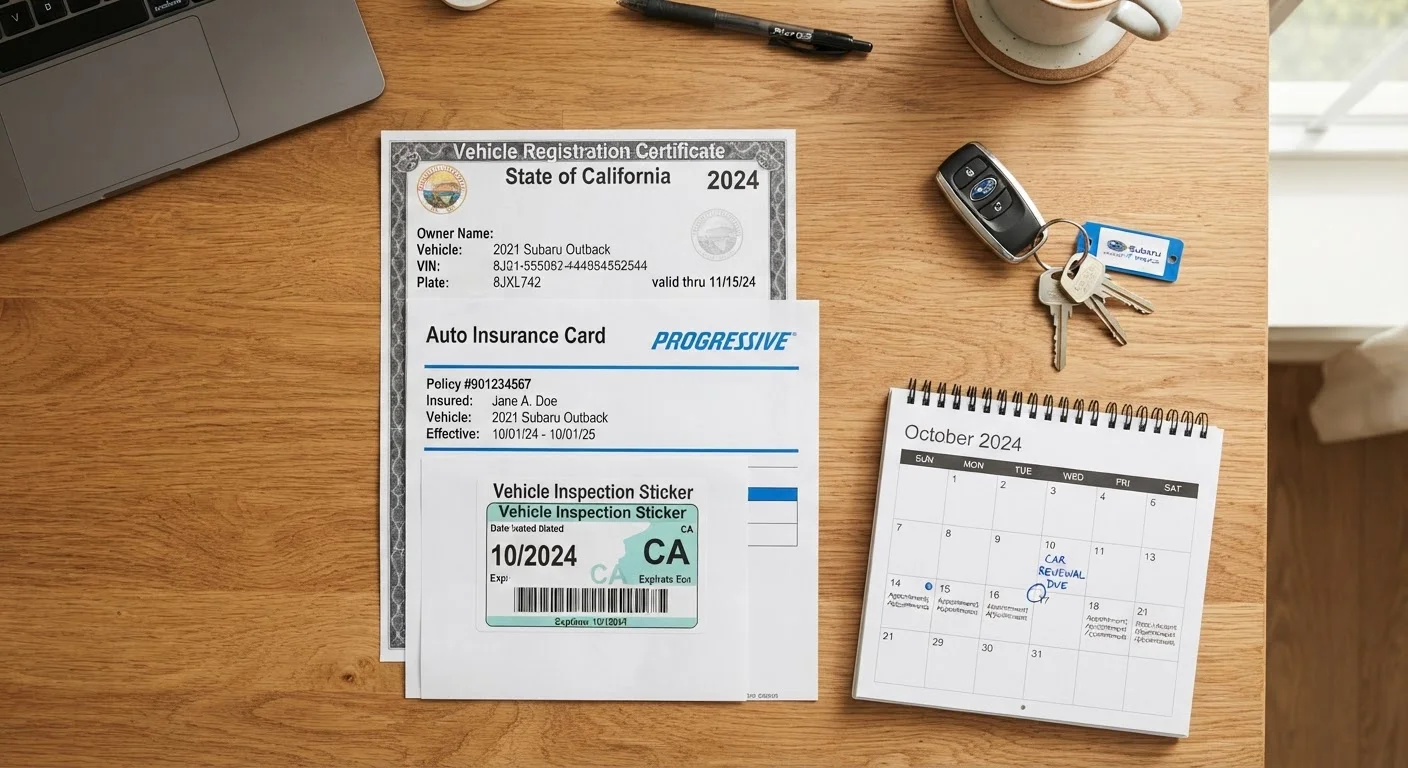
Annual Car Ownership Tasks Most Drivers Forget Until It's Too Late

Photo: DockedReads.com | Information Made Easy editorial

Registration renewals, insurance reviews, emissions tests, and more — a yearly checklist to keep your vehicle legal and well-maintained.

Key Takeaways

  • Registration renewal deadlines vary by state and carry real fines if missed.
  • Auto insurance coverage needs often change year to year and deserve an annual review.
  • Emissions and safety inspection requirements differ by state and sometimes by county.
  • Your vehicle's service record directly affects resale value and warranty claims.
  • Outdated emergency kit contents and expired documents are easy to overlook but risky.

Why Annual Car Ownership Tasks Slip Through the Cracks

Most drivers stay on top of oil changes and tire rotations — but the administrative and financial side of car ownership tends to pile up quietly until a deadline is missed or a lapse becomes expensive. Registration renewals, insurance reviews, and state-mandated inspections all follow annual cycles that are easy to lose track of, especially when life gets busy.

This checklist covers the tasks that commonly get forgotten. Whether you're a seasoned owner or navigating your first full year behind the wheel, running through these items once a year keeps your vehicle legal, well-maintained, and financially sound. If you're newer to ownership, our guide on common first-year mistakes covers the administrative slip-ups that catch people off guard early on.

Required

NHTSA VIN Lookup Tool (nhtsa.gov)

Check for open safety recalls on your vehicle using your 17-digit Vehicle Identification Number — free and takes under a minute.

Required

State DMV Website

Renew registration, confirm emissions and inspection requirements, and update your address — requirements vary significantly by state.

Required

Vehicle Owner's Manual

Reference the manufacturer's recommended maintenance schedule to verify you haven't missed any time- or mileage-based service intervals.

Required

Digital or Physical Service Log

Track all maintenance and repairs performed on your vehicle to support warranty claims, resale value, and future service planning.

Required

Insurance Policy Documents

Review your current coverage limits, deductibles, and policy terms so you can evaluate whether your protection still fits your situation.

The Annual Car Ownership Checklist

Work through the groups below at least once per calendar year. Some items, such as registration renewal, will have a fixed due date tied to your vehicle — set a reminder one month in advance so you're never scrambling. For a deeper look at what your registration and title documents actually do, see our plain-language guide to registration paperwork.

Legal and Administrative

Renew your vehicle registration before the expiration date on your sticker or renewal notice — driving with expired registration can result in fines and, in some states, vehicle impoundment. Must
Confirm your proof of insurance card (physical or digital) is current and stored in the vehicle, as you are legally required to carry it in all 50 states. Must
Check whether your state requires an annual or biennial emissions test and schedule it before your registration renewal deadline. Must
Verify whether your state or county requires a separate safety inspection and confirm its due date, as requirements vary widely across the US. Must
Update your address with your state's DMV if you've moved, since registration and renewal notices may go to your old address otherwise. Should

Insurance Review

Review your current coverage levels — liability limits, comprehensive, collision, and uninsured motorist — to confirm they still reflect your vehicle's value and your financial situation. Must
Check whether your life changes over the past year (new driver in the household, change in commute distance, or a paid-off loan) warrant adjusting your policy. Should
Confirm your deductible amounts are ones you could realistically cover out of pocket in the event of a claim. Should
Review whether you still need gap insurance if you carry a loan or lease, especially as the gap between loan balance and vehicle value narrows. Nice to have

Vehicle Maintenance Records

Log all maintenance performed over the past year — oil changes, tire rotations, brake service, and any repairs — in a physical or digital service record. Must
Cross-reference your owner's manual to confirm you haven't missed any mileage- or time-based service intervals for your specific vehicle. Must
Check for any open manufacturer recalls on your vehicle using the NHTSA's free VIN lookup tool at nhtsa.gov — recall repairs are performed at no cost to the owner. Must
File or scan any repair invoices from the past year so your service history is complete and verifiable for warranty claims or resale. Should

Safety and Emergency Preparedness

Inspect and restock your vehicle's emergency kit — check that the first-aid supplies, jumper cables, flashlight batteries, and reflective triangles are all present and functional. Should
Verify that your spare tire is properly inflated and that your jack and lug wrench are accessible and in working order. Must
If a child car seat is installed, confirm it hasn't exceeded its expiration date (printed on the seat) and that the installation still meets current guidelines — see our child car seat safety guide for details. Must
Review your roadside assistance coverage — whether through insurance, a membership plan, or your vehicle manufacturer — and confirm it's active. Should
Consider whether your driving patterns have changed enough to warrant a seasonal maintenance check, particularly around tires and battery. Our seasonal car maintenance guide covers what to prioritize as conditions shift. Nice to have

Emissions and Inspection Requirements Vary by State

There is no single national standard for vehicle emissions or safety inspections in the United States — requirements differ by state and sometimes by county or vehicle age. Some states have no mandatory inspection at all, while others require annual testing at certified stations. Always verify your specific requirements through your state's DMV before assuming you're exempt or up to date.

Maintenance tasks overlap with administrative ones more than most drivers realize. Keeping an accurate service record, for example, is both a maintenance habit and a financial safeguard — gaps can affect warranty claims and resale value. Our article on why service records matter explains what to track and how to do it simply. For the mechanical side of your annual review, the annual vehicle inspection checklist walks through tires, lights, fluids, and brakes in detail.

Lapsed Registration Can Trigger More Than a Fine

In many states, driving with an expired registration isn't just a ticketable offense — officers can also order your vehicle towed at your expense. If your registration has already lapsed, address it before driving the vehicle again. Penalties accumulate the longer the lapse continues, and in some states, reinstatement involves additional fees beyond the base renewal cost.

Autos & Driving Editorial Team

DockedReads.com | Information Made Easy

Autos & Driving Editorial Team is the collective byline for our editorial team and contributor network. Articles published under this byline or an editorial pen name are researched, written, and reviewed according to our editorial standards for clarity, consistency, and independence before publication.

Car MaintenanceDriving & SafetyCar Ownership Basics
View author profile

The content on this site is for informational purposes only and is not a substitute for professional advice. Always consult a qualified professional for guidance specific to your situation.