
Managing a Chronic Condition While Traveling

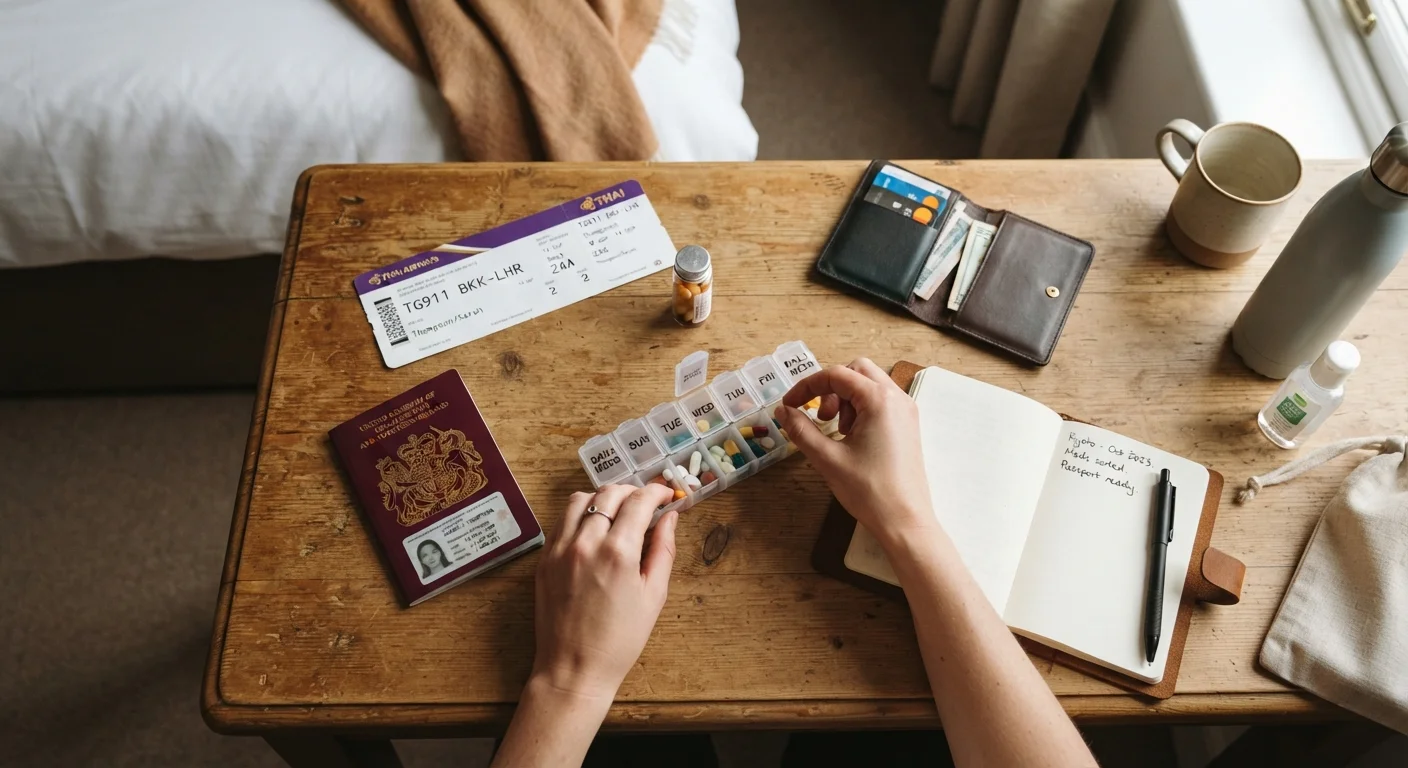
Photo: DockedReads.com | Information Made Easy editorial
Key Takeaways
- Visit your doctor well before departure to update prescriptions and obtain a medical summary letter.
- Carry medications in original, labeled containers and pack extras in a separate bag from checked luggage.
- Know the generic name of every medication — brand names vary significantly by country.
- Research local healthcare options at your destination before you arrive, not after something goes wrong.
- Travel insurance with medical evacuation coverage is especially important for travelers with chronic conditions.
Why Chronic Conditions Require a Different Kind of Trip Planning
Most travel planning focuses on logistics: flights, hotels, and itineraries. For travelers managing diabetes, asthma, a heart condition, or another chronic illness, that foundation still matters — but it's only part of the picture. The disruptions that travel introduces, from altered sleep schedules and unfamiliar foods to physical exertion and time zone shifts, can all interact with a condition in ways that don't happen at home.
That doesn't mean travel is off the table. Millions of Americans with chronic conditions travel domestically and internationally every year, often without incident. The difference between a smooth trip and a stressful one usually comes down to how much thought went into health planning before departure. As our well-planned trip guide explains, the most enjoyable journeys are built on preparation — and that's doubly true when your health is part of the equation.
133M+
Americans living with at least one chronic condition
According to the Centers for Disease Control and Prevention, chronic diseases affect a majority of US adults.
60%
Travelers who don't consult a doctor before international travel
Research published in travel medicine literature consistently finds that most travelers skip pre-travel medical consultations.
1 in 3
Travelers who experience a health problem abroad
Various travel medicine studies suggest roughly one-third of international travelers encounter some form of health issue during their trip.
Getting Medical Clearance and Documentation Right
The most important step happens weeks before you pack a single bag: a conversation with your healthcare provider. This visit should accomplish several things — reviewing whether your condition is stable enough for travel, updating any prescriptions, and obtaining a written medical summary you can carry with you.
That summary letter is more useful than many travelers realize. It should include your diagnoses, current medications and dosages, known allergies, and emergency contact information for your provider. If you use devices like a continuous glucose monitor, CPAP machine, or inhaler spacer, having documentation that explains them can prevent delays at airport security or customs.
Ask your provider to write your medical summary letter on official letterhead and include their direct contact number — this carries far more weight at customs or a foreign pharmacy than a personal note.
Photograph every prescription label, device manual, and your insurance card before you leave, and store the images in a cloud folder you can access without cell service.
For international travel, also research whether any of your medications are controlled substances in your destination country — regulations vary widely, and what's legally prescribed in the US may require advance import authorization elsewhere. The Traveler's Pre-Trip Health Checklist walks through vaccinations, prescriptions, and additional health documents worth gathering before any trip.
Packing Medications Safely and Legally
Medications that leave home in an unlabeled pill organizer can create real problems at security checkpoints — or worse, if you need a replacement supply in an unfamiliar city. Keep medications in their original pharmacy-labeled containers whenever possible, and always carry them in your carry-on bag, not checked luggage, where temperature extremes and lost bags become a genuine risk.
Pack more than you think you need. A general principle many travel medicine providers suggest is carrying at least a week's supply beyond the length of your trip, to account for delays, lost bags, or prescription challenges abroad. Learn the generic (chemical) name of each medication, since brand names differ internationally and a pharmacist in another country may not recognize what you're asking for.
Never Rely on Checked Baggage for Medications
For temperature-sensitive medications like insulin, invest in an insulated travel case rated for your specific storage needs, and research whether your accommodations can reliably provide refrigeration. Staying well-hydrated throughout your journey also matters more than many people realize — our article on staying hydrated while traveling covers the specific challenges airports and cabin air create.
Managing Your Condition Day-to-Day on the Road
Once you're at your destination, the goal is maintaining the routines that keep your condition stable while adapting to a new environment. This looks different for every condition. Someone managing asthma needs to think about air quality, allergens in unfamiliar accommodations, and the altitude of their destination. A traveler with heart disease should account for how much walking a given itinerary actually involves and plan rest accordingly.
Time zone changes deserve particular attention from anyone whose condition involves timed medication. If you cross multiple time zones, ask your provider before you leave how to adjust your dosing schedule — don't try to work this out mid-flight. Travelers with diabetes, in particular, should monitor blood glucose more frequently when schedules shift, meals change, and physical activity levels are unpredictable.
Solo travelers face a heightened version of these challenges. Without a companion who knows your condition, it's worth leaving your medical summary with a trusted contact at home and considering a medical ID bracelet or phone-based emergency health profile. Our piece on solo traveler health safety covers this ground in more depth.
When to Seek Medical Care While Traveling
Even with excellent preparation, symptoms can emerge. Knowing in advance where to go — and having the insurance coverage that makes going feasible — removes a layer of stress when you're already not feeling well.
Research healthcare resources at your destination before you arrive. Many countries have urgent care equivalents or English-speaking clinics in tourist areas. Your travel insurance provider, if you have one, may offer a 24-hour nurse line or assistance service that can direct you. Travel insurance with medical evacuation coverage is worth serious consideration for anyone with a chronic condition, particularly for international travel.
Travel Insurance Is Not Optional for High-Risk Travelers
As part of the broader pre-travel checklist process, take a few minutes to note the address of the nearest hospital or clinic at each stop on your itinerary. It takes less than ten minutes and can save a great deal of time and panic if you ever need it.
This article provides general health and travel information for educational purposes only. It is not a substitute for personalized medical advice. Always consult a qualified healthcare provider before traveling with a chronic condition, and seek emergency care immediately if you experience symptoms that concern you.
The content on this site is for informational purposes only and is not a substitute for professional advice. Always consult a qualified professional for guidance specific to your situation.