
Everything First-Time Visitors to Morocco Get Wrong

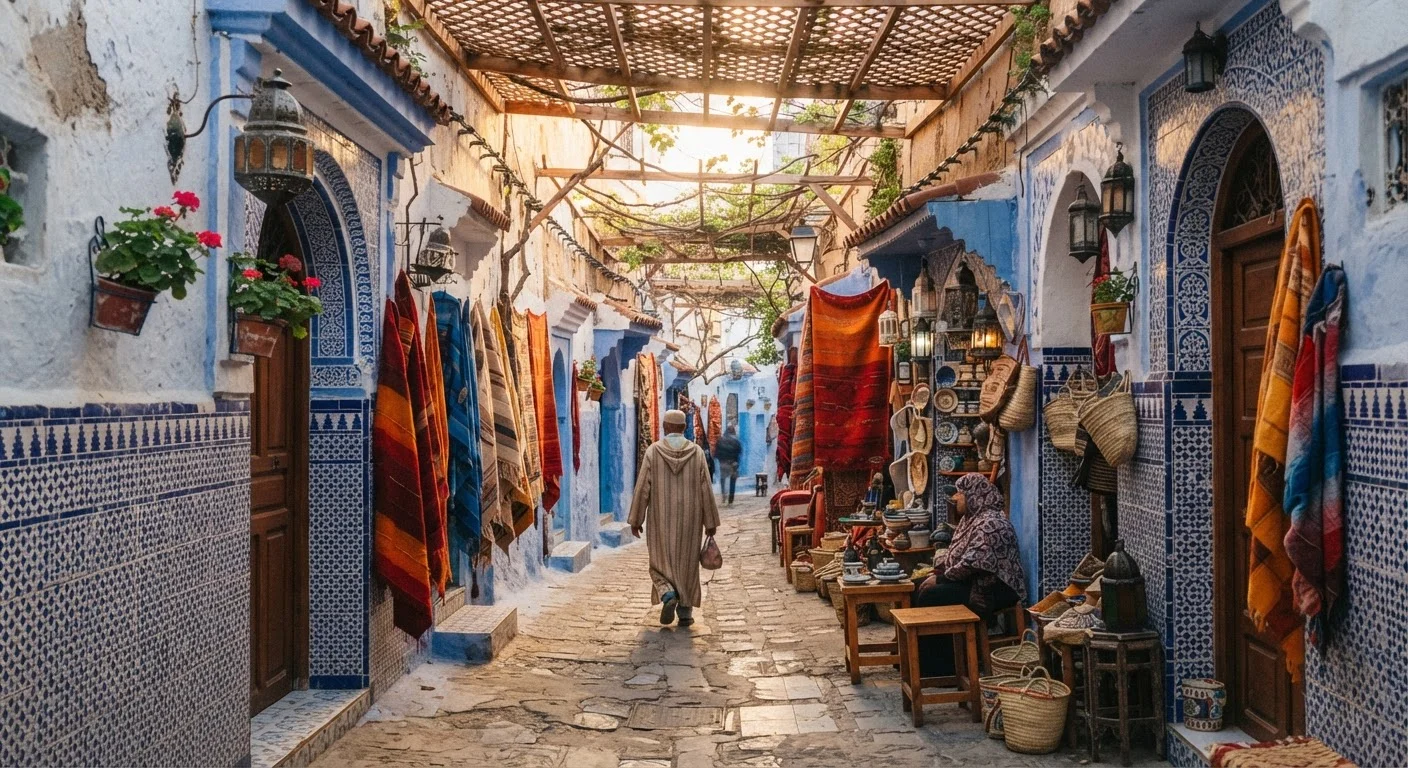
Photo: DockedReads.com | Information Made Easy editorial
Key Takeaways
- Morocco's medinas are navigable with preparation; getting disoriented is normal and manageable.
- Bargaining is culturally expected in souks, but aggressive haggling can come across as disrespectful.
- Morocco is a Muslim-majority country with dress expectations that vary significantly by setting.
- Tap water safety varies by city; travelers should verify locally rather than assuming either way.
- Morocco is far more than Marrakech — its geographic and cultural diversity rewards broader exploration.
Why Morocco Surprises Even Well-Traveled Americans
Morocco sits at a remarkable crossroads — African, Arab, Berber, and Mediterranean influences layered over centuries into something entirely its own. For American travelers, that complexity is both the appeal and the source of most pre-trip anxiety. Too often, first-timers arrive armed with half-truths gleaned from travel forums, outdated guidebooks, or the impressions of someone who spent three days in Marrakech a decade ago.
The result is a kind of double failure: some visitors over-prepare for problems that don't exist, while others genuinely miss the cultural cues that matter. If you're thinking about planning a first visit — or trying to make sense of conflicting advice you've encountered — this piece is designed to cut through the noise. For a broader foundation on international trip preparation, our guide to planning a first trip abroad covers the structural basics well.
What follows addresses the misconceptions that actually shape how visitors experience Morocco — and corrects them with honest, grounded context.
The Myths That Shape — and Distort — First Visits
From medina navigation to food safety, Morocco attracts a surprising density of confident misinformation. The myths below aren't fringe ideas — they're the ones that show up repeatedly in traveler forums, social media, and word-of-mouth conversations.
Myth
The medinas are so chaotic and confusing that you'll inevitably get lost and taken advantage of.
Fact
Medinas are dense and non-linear by design, but they follow internal logic. Getting disoriented is common; getting genuinely lost or exploited is far less so with basic orientation strategies.
Moroccan medinas — the historic walled quarters of cities like Fez and Marrakech — are not laid out on a grid, and they weren't designed for outsiders to navigate quickly. But "confusing" and "dangerous" are not the same thing. Most medinas have a clear structure: major arteries connect the main gates to the central souks and mosques, with smaller lanes branching off into residential areas.
Arriving with a downloaded offline map, noting a few landmark buildings near your accommodation, and giving yourself unhurried time to explore dramatically changes the experience. Most interactions with locals are genuinely helpful. Unsolicited "guides" do exist, particularly near major tourist sites, and it's reasonable to politely decline — but their presence is not unique to Morocco and shouldn't define the whole environment.
Myth
Bargaining aggressively is expected everywhere, and if you don't haggle hard, you're being naive.
Fact
Negotiating is culturally normal in souks and markets, but it should be respectful and good-humored — not confrontational. Fixed-price shops are increasingly common, and not every transaction is an invitation to haggle.
There's a meaningful difference between the relaxed, back-and-forth negotiation that characterizes souk culture and the adversarial approach some travelers adopt after reading that "everything is a ripoff." The latter can come across as disrespectful and often produces worse outcomes anyway.
In practice: souk vendors generally expect some negotiation on crafts, textiles, and decorative goods. Restaurants, pharmacies, supermarkets, and many established shops operate on fixed prices. Asking "is the price fixed?" (in French: "c'est fixe?") is a perfectly acceptable opener. If you agree on a price, honor it — walking away after a deal is struck is considered genuinely rude.
Myth
Morocco is too conservative for tourists — women especially will feel uncomfortable or unsafe.
Fact
Morocco is a Muslim-majority country with cultural dress norms that vary by setting. Millions of international visitors travel comfortably each year, and thoughtful preparation makes a significant difference.
Morocco receives millions of international tourists annually, including large numbers of solo female travelers. That said, it would be inaccurate to suggest that cultural context doesn't matter — it does, and visitors who acknowledge it generally have far more positive experiences.
In urban tourist areas and coastal resort towns, the dress environment is notably more relaxed. In traditional medinas, rural areas, and religious sites, more conservative clothing — covered shoulders, longer skirts or trousers — is both respectful and practical. Harassment does occur and is more commonly reported by women traveling alone in certain areas; being aware of this, having strategies for responding calmly and firmly, and adjusting routes when needed is simply realistic travel preparation, not a reason to avoid the country.
Myth
You can't eat street food or drink tap water safely — stick to bottled everything.
Fact
Food safety in Morocco depends on where and what you eat, not a blanket rule. Tap water safety varies significantly by city and neighborhood; bottled or filtered water is generally the lower-risk default for travelers.
Moroccan street food — from msemen flatbreads to freshly squeezed orange juice to grilled merguez — is genuinely delicious and widely eaten by both locals and travelers without incident. The key variables are vendor turnover (busy stalls move product faster and more safely), visible hygiene practices, and whether food is cooked to order versus sitting out.
Tap water in Morocco's major cities is treated, but infrastructure quality varies and travelers' digestive systems may react differently than those of long-term residents. Most independent travel health guidance suggests that bottled or filtered water is a sensible default for short-term visitors — not out of alarm, but as a reasonable precaution. Always consult a qualified travel health professional before your trip for personalized guidance.
Myth
Morocco means Marrakech — everything else is hard to reach or not worth the effort.
Fact
Morocco has extraordinary regional diversity. Cities like Fez, Chefchaouen, and Essaouira offer entirely distinct experiences, and intercity travel by train and bus is generally reliable and affordable.
Marrakech is the entry point for many visitors and it's genuinely impressive — the Djemaa el-Fna square, the Bahia Palace, the souks of the medina. But treating it as Morocco's totality misses most of what the country offers.
Fez's medina (a UNESCO World Heritage Site) is considered by many historians to be one of the best-preserved medieval urban environments on earth. Chefchaouen, in the Rif Mountains, has a distinctive blue-painted aesthetic that photographs can't fully capture in person. Essaouira offers a windswept Atlantic character completely unlike the inland imperial cities. Morocco's national rail network connects major cities efficiently, and intercity buses cover most of the country. Multi-city itineraries are entirely manageable for independent travelers.
Food and water concerns deserve particular attention. Many travelers either dismiss all caution or become so anxious they avoid local food entirely — both extremes are unnecessary. For a nuanced look at how travelers misjudge these risks, our piece on food and water safety abroad is worth reading before departure.
What Morocco Actually Rewards
Understanding what Morocco isn't — a chaotic, tourist-hostile maze where everything is a scam — opens up what it genuinely is: a country with extraordinary regional variety, warm hospitality, and an urban texture unlike anywhere else in the world.
13M+
International tourists to Morocco annually
According to Morocco's national tourism authority, the country consistently ranks among Africa's most visited destinations, drawing visitors from Europe, North America, and beyond.
9
UNESCO World Heritage Sites in Morocco
Morocco's nine UNESCO sites include the medinas of Fez, Marrakech, Meknes, and Tetouan, reflecting the country's exceptional historical depth beyond its most-marketed destinations.
Travelers who move beyond Marrakech often describe the shift as revelatory. The blue-washed alleyways of Chefchaouen, the Roman ruins at Volubilis, the desert landscapes of the Draa Valley, and the Atlantic-facing medina of Essaouira are all dramatically different from one another — and from the Morocco most first-timers imagine. If you're drawn to destinations that reward curiosity over convenience, our look at underrated Mediterranean corners offers useful context on the broader region.
The skill of reading an unfamiliar city without defaulting to a guided tour matters enormously in Morocco's medinas. Learning to orient yourself independently — using neighborhood logic, landmarks, and observation — transforms the experience from overwhelming to genuinely exhilarating.
Entry Requirements Change — Always Verify Before You Go
Morocco also rewards travelers who treat common travel assumptions with healthy skepticism. Much of what people believe about booking timing, off-season travel, and safety in unfamiliar countries simply doesn't hold up — and Morocco is a clear example of that.
The content on this site is for informational purposes only and is not a substitute for professional advice. Always consult a qualified professional for guidance specific to your situation.