
Reading a New City Without a Tour Guide

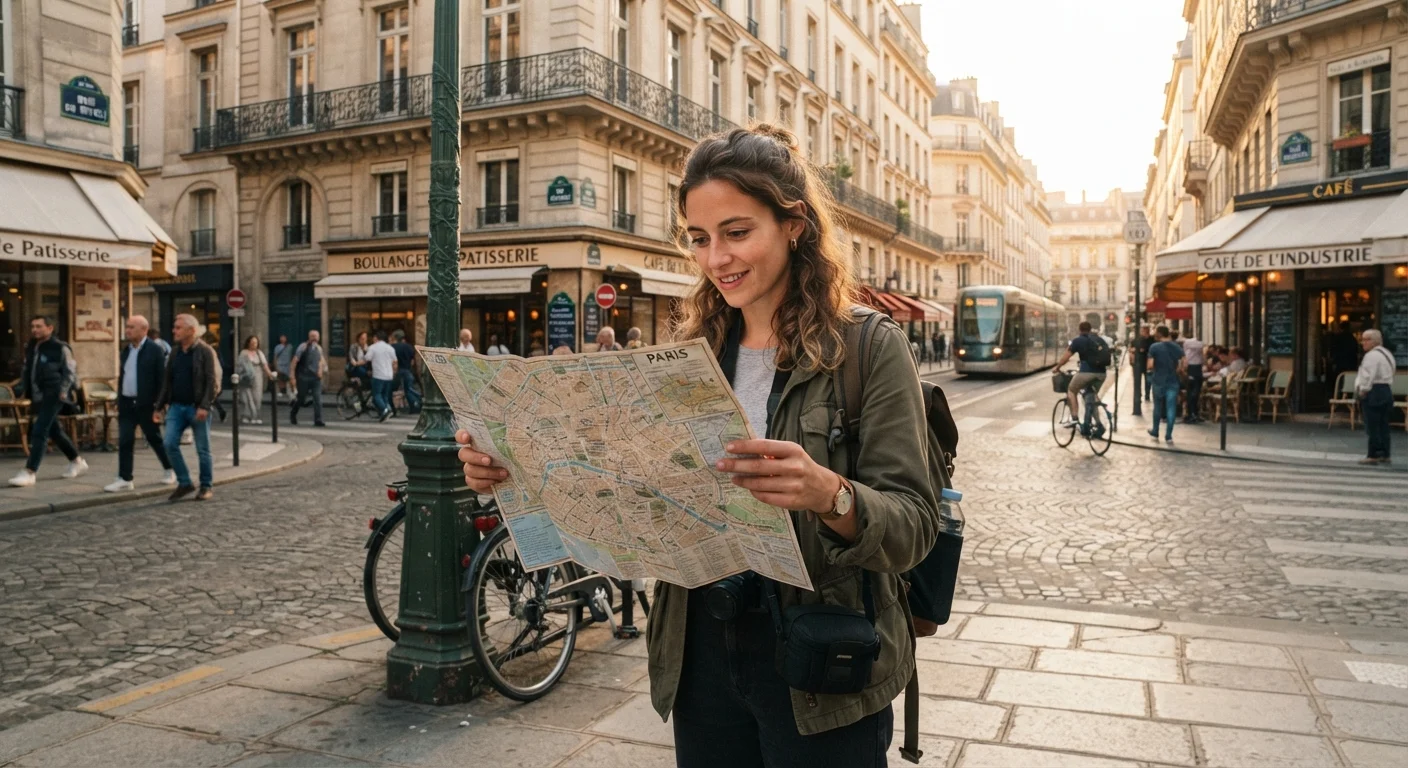
Photo: DockedReads.com | Information Made Easy editorial
Key Takeaways
- Understanding a city's neighbourhood structure before arrival helps you allocate time and energy more effectively.
- Local transit maps reveal how a city is organized spatially, often better than tourist brochures do.
- Observation on foot—markets, cafés, commuter patterns—reveals more than any highlight reel.
- Pre-trip research using street-level mapping tools calibrates walking distances and terrain expectations.
- Cities have rhythms; aligning your schedule to those rhythms reduces friction and increases genuine discovery.
Why Structure Matters More Than Spontaneity
There's a persistent myth that the best urban travel is purely spontaneous — that the ideal traveler wanders freely with no preparation and stumbles upon hidden gems. In practice, total unpreparedness in an unfamiliar city more often produces exhaustion, missed context, and the same tourist loop everyone else follows. Preparation isn't the opposite of discovery; it's what makes genuine discovery possible.
Reading a city without a tour guide means building your own interpretive framework — understanding how the place is organized, how its people move through it, and what texture lies beneath the obvious surface. This is different from pre-scripting every hour. Think of it as learning the grammar of a language before you try to speak it. For deeper context on weaving this kind of research into your overall trip design, see the key stages of a well-planned trip.
What you will need
Tools and Research Before You Go
The most useful pre-trip work happens at the intersection of maps, transit information, and unmediated local voices — not tourism marketing. Before you look at a single "top ten" list, spend time with the city's geography and transit infrastructure. These structural elements reveal how the city actually functions for its residents, which is the perspective most worth understanding.
Digital street-level mapping tool (e.g., a satellite and street-view capable map service)
Virtually walk streets before arrival to understand terrain, scale, and neighbourhood character.
Official city transit authority website or app
Read metro, bus, or tram network maps to understand how districts connect and where tourists are underrepresented.
City-focused travel forum or community (e.g., a destination-specific discussion board)
Find candid, current, resident-facing commentary on neighbourhoods, local customs, and practical logistics.
Offline map app loaded with the destination city
Navigate confidently on the ground without relying on mobile data.
If your destination has a complex or layered history, the way its neighbourhoods are named, arranged, and perceived often reflects that past directly. Approaching destinations with significant political histories offers a thoughtful framework for reading those layers with appropriate awareness and respect.
The Step-by-Step Process
The following steps move from pre-arrival desk research through your first hours on the ground. They're designed to be done sequentially — each builds on the last — though experienced travelers will find ways to adapt the sequence to their own style. Whether you're heading to a major metropolis or a mid-size regional city, this framework applies. If you're visiting a destination that challenges common assumptions, the honest realities of first-time visits to Morocco is a useful parallel read for how prior expectations can mislead even prepared travelers.
Divide the city into its neighbourhoods — not its attractions
Most visitors approach an unfamiliar city through its landmarks. A more grounded method is to start with its neighbourhoods: the distinct zones where residents actually live, shop, and gather. Pull up a general map of your destination and identify four to six named districts. Read a short description of each — not from a tourist site, but from a local newspaper's city section, a resident-run blog, or a city government portal. Note which neighbourhoods are residential, which are commercial, and which have historically been working-class versus gentrified. This spatial understanding becomes the skeleton onto which everything else hangs.
Read the transit map as a document
A city's metro or bus network map is one of the most honest portraits of how that city functions. Lines cluster where density is highest; stations thin out where wealth or infrastructure declines. Spend ten minutes reading the transit map before looking at any hotel or attraction. Where do the main transfer hubs sit? Which areas appear isolated from the network? Does the system radiate from a single centre, or is it a grid? Understanding this helps you think about where to base yourself, how long journeys will realistically take, and which corners of the city are rarely reached by visitors.
Walk streets virtually before you arrive
Use a street-level mapping service to virtually walk the route between your accommodation and two or three places you plan to visit. Notice the street width, the presence or absence of shade trees, the density of pedestrian infrastructure, and the character of surrounding buildings. A ten-minute walk that looks simple on a flat map may cross a steep hill, a large highway, or a neighbourhood with limited footpaths. Calibrating your spatial expectations in advance prevents the disorienting feeling of arriving somewhere that looks nothing like your mental image.
Identify the city's daily rhythm
Every city operates on its own clock. Some are early-rising, with markets and commuter energy peaking before 8 a.m. Others, particularly in Southern Europe and Latin America, build slowly into the afternoon and come alive after 9 p.m. Research what a typical weekday looks like: when do workers commute, when do locals eat lunch, when does street life thin out, when does it return? Aligning your own itinerary to the city's natural tempo — rather than the tourist industry's schedule — is how you encounter a place as it genuinely is. The rhythms of Latin American capitals, for example, differ dramatically from one another even within the same region.
Spend the first hour on arrival in observation, not navigation
Resist the temptation to open your map the moment you step outside. Instead, sit somewhere public — a café, a plaza, a transit platform — and watch for fifteen to thirty minutes. Observe what people are carrying, how they dress, how fast they walk, where they gather. Notice whether strangers make eye contact, how vendors interact with customers, what languages or dialects you hear. This low-pressure observation calibrates your instincts faster than any guidebook. It also anchors you emotionally in the actual city rather than the abstraction you researched.
Ask one local the same question each day
Choose a simple, open-ended question and ask it to one different local person each day: a café worker, a shopkeeper, a fellow transit passenger willing to chat. Something like, "What part of the city do you enjoy most on a day off?" or "Is there something most visitors miss here?" The answers accumulate into a genuinely textured portrait of the city that no travel app can replicate. This approach respects local knowledge without demanding it — and it surfaces recommendations that rarely appear in any published source.
Carrying This Skill Forward
The ability to read an unfamiliar city — to decode its structure, tempo, and texture from first principles — is one of the most transferable skills in travel. It applies equally to a first visit to a domestic city two states away and to a layered destination like Kyoto that carries enormous cultural weight beneath its surface. The process also scales naturally into multi-city trips, where understanding each urban stop on its own terms prevents the blurring that makes extended travel feel rushed or undifferentiated. For that expanded context, planning a multi-destination trip addresses the routing and pacing considerations that arise when more than one city is involved.
Let the City Surprise You Within a Framework
The deeper payoff of this approach is confidence — not just geographic confidence, but the settled sense of being genuinely present in a place rather than consuming a curated version of it. That confidence is hard to acquire from a pre-packaged tour and surprisingly easy to build through patient, curious, structured observation.
The content on this site is for informational purposes only and is not a substitute for professional advice. Always consult a qualified professional for guidance specific to your situation.