
Reading Your Cat's Body Language: A Field Guide

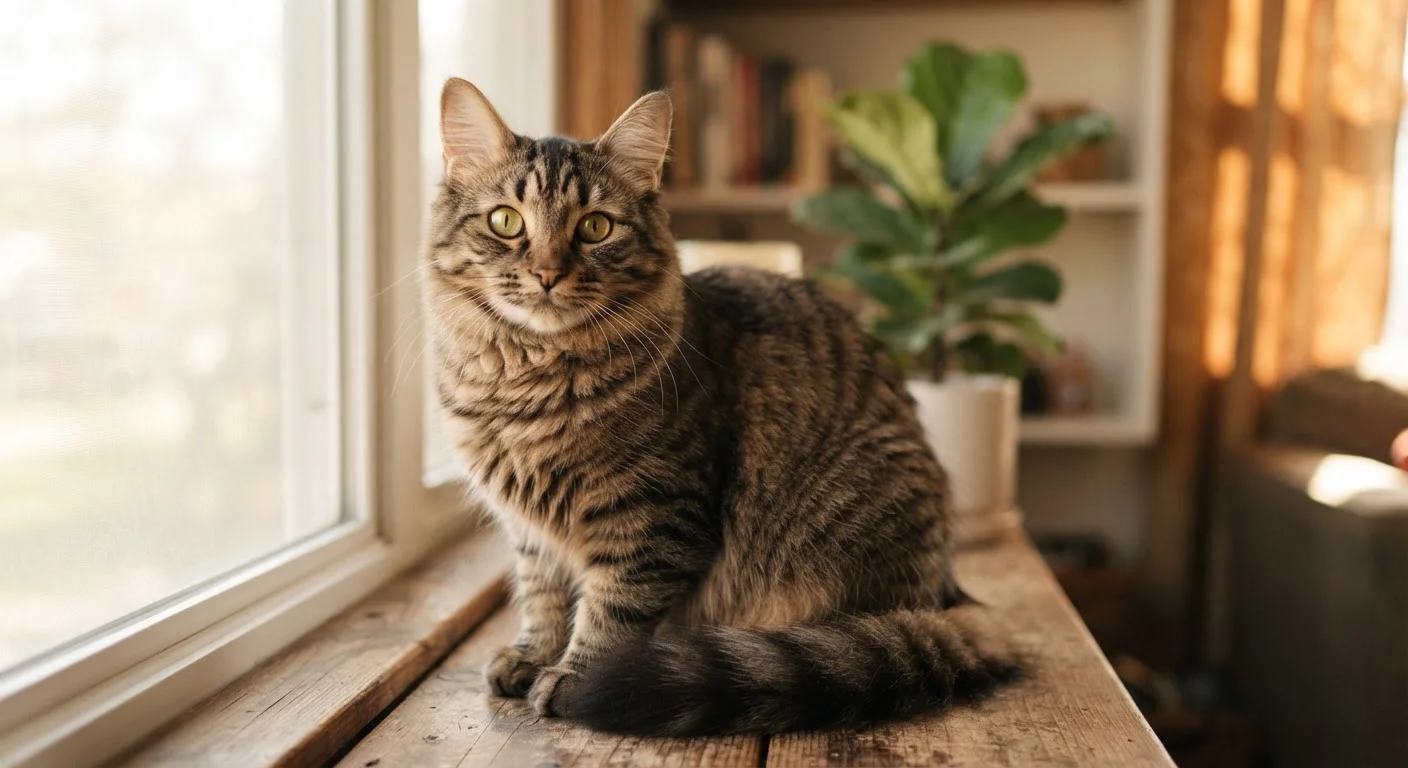
Photo: DockedReads.com | Information Made Easy editorial
Why Cats Communicate Through Body Language
Cats are not silent creatures — they simply speak a different language. While vocalizations like meowing and chirping get most of the attention, the majority of feline communication happens through the body: tail carriage, ear orientation, eye shape, and overall posture. Learning to read these signals is one of the most practical things an owner can do to strengthen their bond with a cat and catch early signs of stress or discomfort.
Because cats are both predators and prey animals, they have evolved a nuanced signaling system that minimizes open conflict. Misreading those signals — for example, confusing a fear-flattened ear for a relaxed one — can lead to unintentional stress or even bites. This reference guide breaks down the key physical signals, region by region, so you can observe your cat with greater confidence.
For a broader look at how stress shows up across multiple species during training, see Signs Your Pet Is Stressed During Training.
| Primary communication mode | Body posture and movement (Feline behavioral research consensus) |
| Key stress indicator | Flattened ears + low tail + hunched posture |
| Friendly greeting signal | Upright tail, often with a curved tip |
| Trust-building gesture | Slow blink (cat-to-human and back) (Humphrey et al., 2020, Scientific Reports) |
| Overstimulation warning | Tail lashing, skin twitching, ear rotation |
Decoding the Major Body Signals
Tail Position
- Upright tail: Confidence and a friendly greeting. A tail held high — sometimes with a slight curl at the tip — is a social invitation.
- Puffed tail: Fear or agitation. The cat is trying to appear larger in response to a perceived threat.
- Low or tucked tail: Submission, anxiety, or pain. Combined with a hunched posture, this warrants closer attention.
- Lashing or thrashing tail: Overstimulation or irritation. This is often a pre-bite warning that owners learn to recognize quickly.
Ear Orientation
- Forward-facing ears: Alert and engaged — the cat is interested in something in its environment.
- Rotated sideways ("airplane ears"): Mild anxiety or uncertainty.
- Flattened against the skull: Active fear or aggression. Do not attempt to pick up or handle a cat showing this signal.
Eyes and Pupils
- Slow blink: A well-documented affiliative signal. Returning a slow blink to a cat is widely considered a trust-building gesture in feline behavior research.
- Dilated pupils: Can indicate excitement, fear, or low lighting — context matters enormously here.
- Constricted pupils in bright light: Relaxed and content. Narrow pupils in dim conditions may indicate arousal or aggression.
Whiskers and Facial Tension
- Whiskers relaxed and fanned sideways: Calm and comfortable.
- Whiskers pinned back against the face: Fearful or defensive.
- Whiskers pushed forward: Alert and actively investigating.
Affiliative signal
A behavior that communicates friendliness or social bonding rather than threat or submission. The slow blink in cats is a classic example of an affiliative signal between cat and human.
Displacement behavior
An out-of-context behavior — such as sudden grooming or yawning — that signals internal conflict or low-level stress. Cats often display displacement behaviors when uncertain about a situation.
Piloerection
The involuntary raising of fur along the spine or tail, commonly called 'puffing up.' It is a reflexive fear or arousal response controlled by the autonomic nervous system.
Overstimulation
A state in which sensory input — typically petting — exceeds a cat's comfort threshold. It often manifests suddenly as tail lashing, skin twitching, or biting, and is not aggression in the traditional sense.
Bunting
The act of pressing the forehead or cheeks against a person or object. Cats have scent glands in these areas, so bunting is both a social bonding behavior and a form of scent marking.
Reading Whole-Body Posture
Individual signals are more meaningful when read together. A cat showing a high tail, forward ears, relaxed whiskers, and soft eyes is clearly at ease. A cat with flattened ears, a puffed tail, dilated pupils, and an arched back is in a state of high distress — approach carefully or give them space entirely.
The "loaf" position — tucked paws, relaxed face — signals contentment. A cat exposing its belly may be expressing comfort, but belly exposure is not always an invitation to touch; many cats will swipe if their abdomen is stroked. Read the surrounding signals before acting.
Chronic postural changes, such as a persistently hunched back or sustained low tail carriage, can sometimes indicate pain or illness rather than behavioral stress. If body language shifts persist without an obvious environmental trigger, it is worth consulting a veterinarian. For a guide to physical symptoms that warrant professional attention, see physical warning signs in cats that warrant a vet visit.
Environmental stressors — new people, layout changes, outdoor wildlife — also shape how a cat holds its body daily. Less obvious stress triggers in cats are worth reviewing alongside this guide for a fuller picture.
Body Language Shifts in Senior Cats
The content on this site is for informational purposes only and is not a substitute for professional advice. Always consult a qualified professional for guidance specific to your situation.