
Clicker Training vs. Marker Words: Which Works Better for Your Pet?

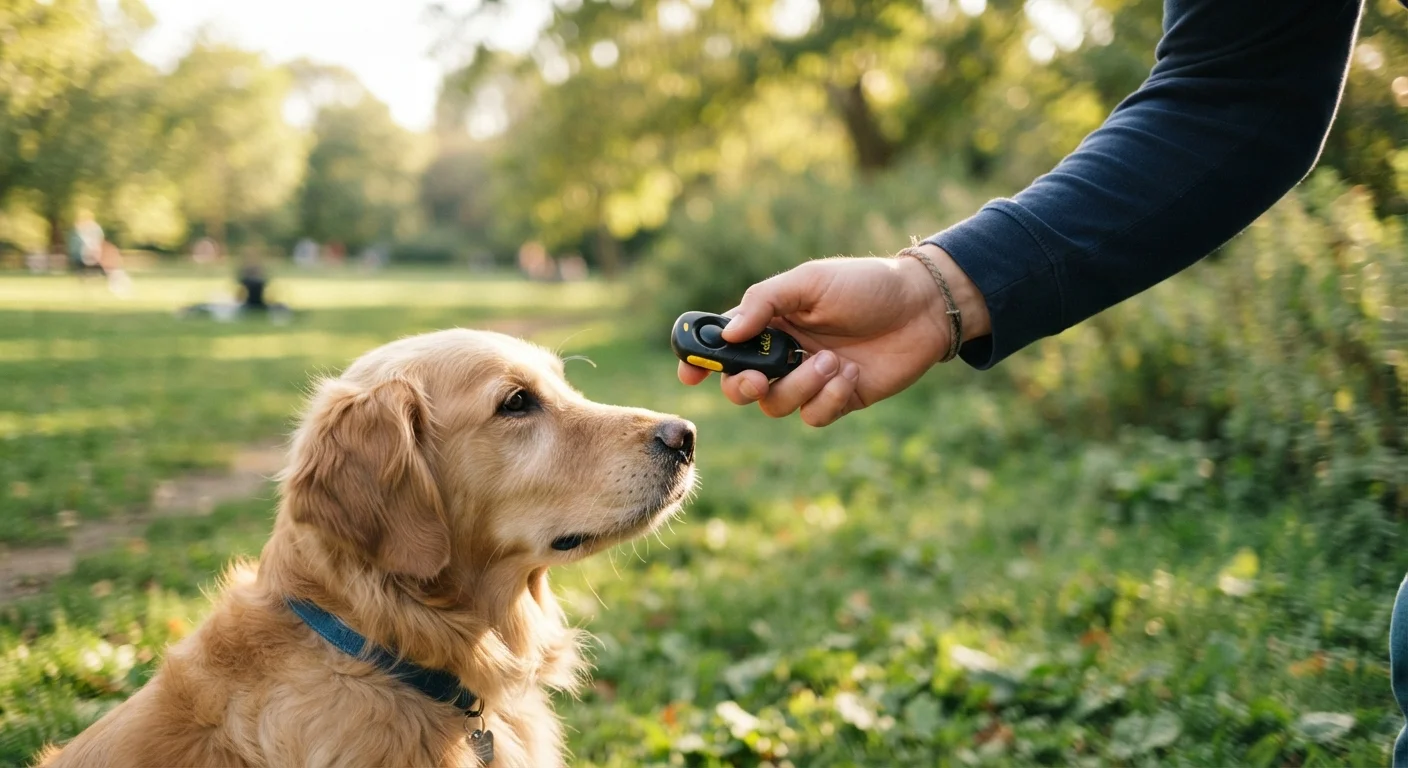
Photo: DockedReads.com | Information Made Easy editorial
Key Takeaways
- Both clickers and marker words are forms of event markers used in positive reinforcement training.
- Clickers offer a uniquely consistent, neutral sound that may sharpen early learning for some animals.
- Marker words are always available but can vary in tone, which may affect clarity for the animal.
- The best marker is the one you apply with the most consistent timing and use most reliably.
- Species, environment, and individual temperament all influence which method works better.
- Neither method works in isolation — reward delivery and training consistency matter equally.
What Is an Event Marker and Why Does It Matter?
At the heart of both clicker training and marker words is a single concept: the event marker. An event marker is a precise signal — sound, word, or other cue — that tells your animal exactly which behavior earned the reward. Because reward delivery itself takes a second or two, the marker bridges the gap, capturing the moment the animal got it right.
Without a marker, your pet receives food or praise several seconds after the target behavior, making it harder for their brain to connect the action with the outcome. Markers sharpen that feedback loop dramatically. Both methods draw on the same foundational principles of reinforcement and timing that underpin all effective training.
| Criterion | Clicker Training | Marker Words |
|---|---|---|
| Consistency of signal | Identical every repetition | Varies with trainer's voice/tone |
| Equipment needed | Clicker device required | No equipment needed |
| Timing precision | High — single press, instant sound | Good — requires practiced delivery |
| Noise sensitivity risk | May startle sensitive animals | Gentler for noise-sensitive pets |
| Hands-free use | No — one hand occupied | Yes — always available |
| Emotional neutrality | Fully neutral, no tone variation | Can convey unintended emotion |
| Species versatility | Widely used across many species | Most natural for dogs; variable for others |
Clicker Training: Strengths and Limitations
A clicker is a small handheld device that produces a sharp, consistent click sound when pressed. Its core advantage is acoustic consistency — every click sounds identical, regardless of the trainer's emotional state, fatigue, or distraction. That uniformity helps animals form a clear, reliable association between the sound and an incoming reward.
Research in animal behavior science supports the clicker's effectiveness, particularly during the early stages of teaching new behaviors. The sound is also tonally neutral — unlike a human voice, it carries no frustration, excitement, or hesitation that might confuse the animal.
The limitations are practical: you need a free hand, you can lose or forget the device, and in noisy environments the click may not carry well. Some animals — particularly those with noise sensitivities — may find the sharp sound startling at first, requiring a brief desensitization period before training begins.
~0.1s
Ideal marker-to-behavior gap for clarity
Behavioral science suggests event markers are most effective when delivered within fractions of a second of the target behavior, underscoring the importance of timing practice.
3–5 reps
Sessions needed to condition a new marker
Most animals require only a small number of pairing repetitions — marker followed by reward — before the signal becomes a reliable predictor of reinforcement.
Marker Words: Strengths and Limitations
A marker word — commonly "yes," "good," or a short, crisp syllable — functions identically to a clicker in principle: it marks the exact moment of correct behavior. Its chief advantage is availability. You always have your voice, which makes it practical for reinforcing spontaneous good behavior outside formal training sessions.
The challenge is human variability. Your voice changes with mood, tiredness, and context. A "yes" delivered enthusiastically one session and flatly the next sends a subtly inconsistent signal. This doesn't make verbal markers ineffective — many trainers and their pets achieve excellent results with them — but it does demand conscious effort to maintain a consistent, upbeat tone. Practice your marker word as deliberately as you would any training skill.
For species other than dogs, a verbal marker drawn from human speech may blend into background noise more easily than a clicker's distinct sound, though individual response varies.
Timing, Consistency, and What Actually Drives Results
Both methods succeed or fail on the same variables: the precision of your timing, the value of the reward you deliver, and the consistency with which you train. A perfectly timed marker word will outperform a poorly timed click every session. The debate between clicker and verbal marker is secondary to the question of how well you execute either.
Whichever marker you choose, the principles in humane, effective training apply equally — short sessions, clear criteria, and reward schedules that maintain motivation. These same principles support skill-building exercises like teaching a reliable stay cue, where precise marking of each correct increment is essential.
You Can Use Both Methods Together
It's also worth noting that both methods sit firmly within positive reinforcement approaches, which behavioral science generally associates with lower stress and stronger long-term learning compared to correction-based methods.
The content on this site is for informational purposes only and is not a substitute for professional advice. Always consult a qualified professional for guidance specific to your situation.