
Lawn Care Through the Seasons: A Month-by-Month Overview

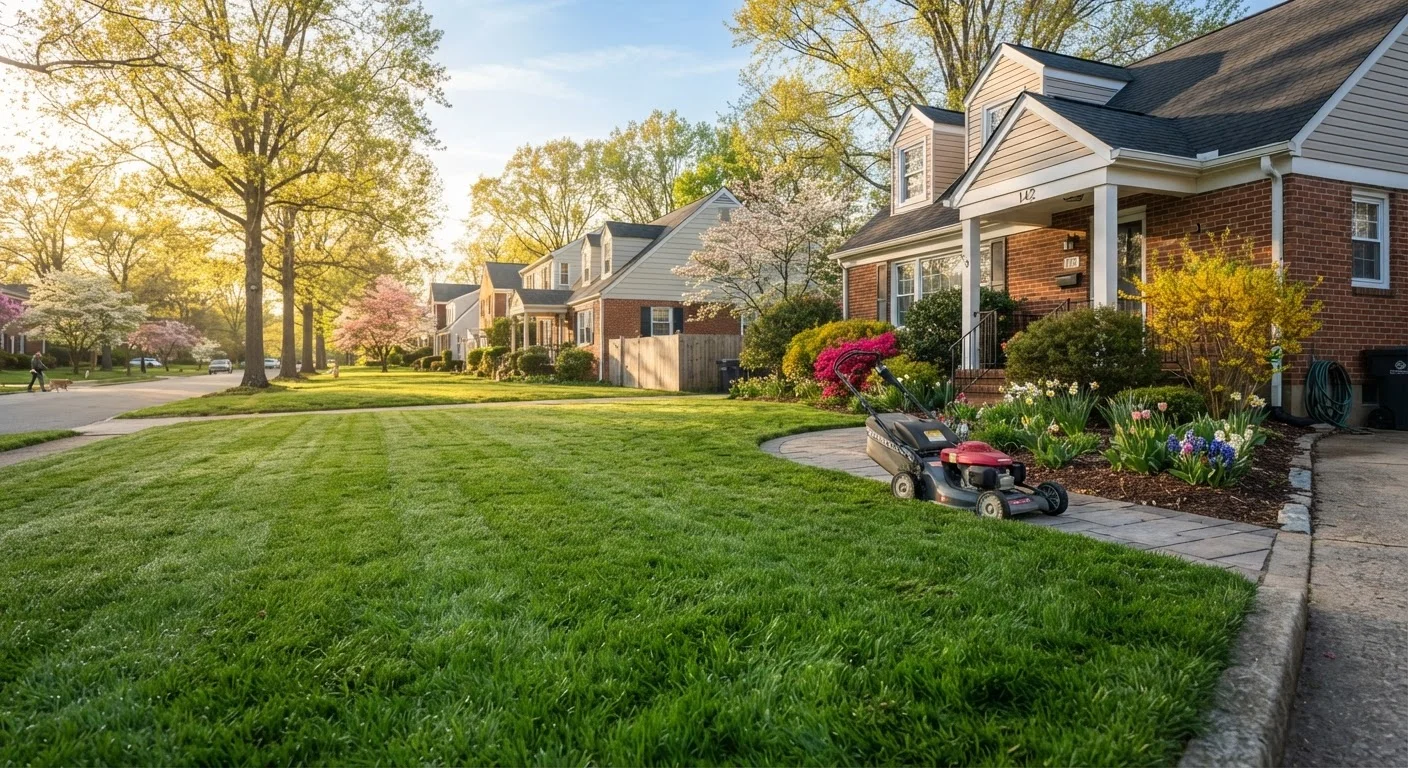
Photo: DockedReads.com | Information Made Easy editorial
Spring (March–May): Wake Up and Feed
Spring is the most active period for lawn care. As soil temperatures climb above 50°F, cool-season grasses like Kentucky bluegrass and fescue break dormancy and begin rapid growth. Warm-season grasses such as Bermuda and zoysia need slightly warmer soil — typically above 65°F — before they show real green-up.
| Best time to overseed (cool-season grasses) | Late August to mid-October (University cooperative extension services, general guidance) |
| Ideal mowing height (cool-season grasses) | 3–4 inches |
| Ideal mowing height (warm-season grasses) | 1.5–2.5 inches |
| Recommended weekly watering depth | 1 inch (including rainfall) |
| Optimal soil pH for most lawn grasses | 6.0–7.0 |
| Soil temperature for cool-season grass activity | Above 50°F |
March
Wait until the ground is no longer saturated before walking on the lawn. Rake out winter debris and dead thatch lightly. Avoid heavy foot traffic — wet soil compacts easily.
April
Apply a balanced, slow-release nitrogen fertilizer once the grass has broken dormancy and been mowed at least once. Over-fertilizing too early pushes leaf growth before root systems are ready. Test your soil pH if you haven't done so recently — most grasses thrive between 6.0 and 7.0.
May
Begin mowing consistently, keeping cool-season grasses at 3–4 inches and warm-season types at 1.5–2.5 inches. Taller blades shade the soil, reducing weed germination and retaining moisture. Apply pre-emergent herbicide early in the month if crabgrass was a problem the previous year — timing to soil temperature is critical.
Summer (June–August): Protect and Conserve
Heat and drought stress are the main threats during summer. Cool-season grasses may go semi-dormant in peak heat, which is a natural survival mechanism — resist the urge to over-water or over-fertilize during this period.
30–50%
Water saved by watering deeply once vs. shallowly daily
Deep, infrequent watering encourages deeper root growth and is widely cited by turf specialists as more efficient than frequent shallow watering.
1 inch
Ideal weekly water depth for most lawn grasses
This figure includes natural rainfall and is a general guideline from US cooperative extension turf management resources.
⅓ Rule
Maximum grass height to remove per mowing session
Never remove more than one-third of the blade length at once — doing so stresses the grass and can inhibit root development.
June
Water deeply and infrequently: about 1 inch per week, including rainfall. Water early in the morning to minimize evaporation and fungal risk. Raise your mower height by half an inch to help grass handle heat. Avoid applying nitrogen fertilizer to cool-season grasses in June or July — it stresses already-struggling turf.
July
Watch for signs of grub damage — irregular brown patches that lift like loose carpet indicate root feeding. If confirmed, targeted treatment is most effective in mid-to-late summer when grubs are young and near the soil surface. Consult your local cooperative extension service for region-specific guidance.
August
Begin preparing for fall overseeding. Reduce foot traffic on heat-stressed areas. For warm-season grasses still actively growing, a light fertilizer application is acceptable. Keep mower blades sharp — dull blades tear grass, opening it to disease.
Fall (September–November): Strengthen for Winter
Fall is the single most important season for cool-season lawns. Cooler temperatures and reliable moisture create ideal growing conditions, making this the best window for seeding, aerating, and fertilizing.
September
Aerate compacted soil using a core aerator — this pulls small plugs from the ground and allows air, water, and nutrients to reach the root zone more effectively. Overseed thin or bare areas immediately after aerating so seed-to-soil contact is maximized. See our end-of-season tidy-up checklist for complementary tasks to tackle around the same time.
October
Apply a fall fertilizer higher in potassium to support root development and winter hardiness. Keep mowing until growth genuinely stops — cutting dormant grass too early can leave it susceptible to disease. Mulch fallen leaves with your mower rather than bagging them; finely shredded leaf material breaks down and improves soil structure. Learn more about this approach in our guide on how mulching transforms soil.
November
Give the lawn a final mow, lowering the height slightly to discourage snow mold. Store fuel-stabilized mowers properly. Drain and store garden hoses before the first hard freeze.
Winter (December–February): Rest and Plan
For most of the US, winter means lawn dormancy. Turf grasses enter a rest period and require no active feeding or mowing. Your main jobs are protection and planning.
Avoid walking repeatedly across dormant grass — frozen or frost-covered blades are brittle and can be damaged by foot traffic. Keep the lawn clear of heavy objects like furniture or debris piles that block light and air circulation over an extended period.
Winter is the ideal time to sharpen mower blades, service your equipment, and review last year's results. Order grass seed for spring overseeding, and consider having a soil test done through your local cooperative extension office — results take time, and having them ready for spring means you can act early. For a broader view of seasonal home upkeep, see our seasonal home maintenance guide.
Aeration
The process of perforating the soil with small holes or removing soil cores to reduce compaction and allow air, water, and nutrients to penetrate the root zone more effectively.
Overseeding
Spreading grass seed over an existing lawn without removing the current turf. Used to thicken thin areas, fill bare patches, or improve overall lawn density.
Thatch
A layer of dead and living organic matter — mainly stems and roots — that accumulates between the soil surface and the green grass blades. A thin layer is normal, but excessive thatch (over ½ inch) can block water and nutrients.
Pre-emergent herbicide
A lawn treatment applied before weed seeds germinate. It creates a chemical barrier in the soil that prevents seeds from establishing, targeting weeds like crabgrass without affecting established grass.
Dormancy
A natural rest state in which grass slows or halts active growth in response to extreme heat or cold. Dormant grass appears brown but is not dead — it resumes growth when conditions improve.
If you're also planning your broader garden beds this winter, understanding perennials vs. annuals can help you design plantings that complement a healthy lawn with minimal extra effort.
The content on this site is for informational purposes only and is not a substitute for professional advice. Always consult a qualified professional for guidance specific to your situation.