
Tyre Rotation, Balancing, and Alignment: Three Jobs That Are Easy to Confuse

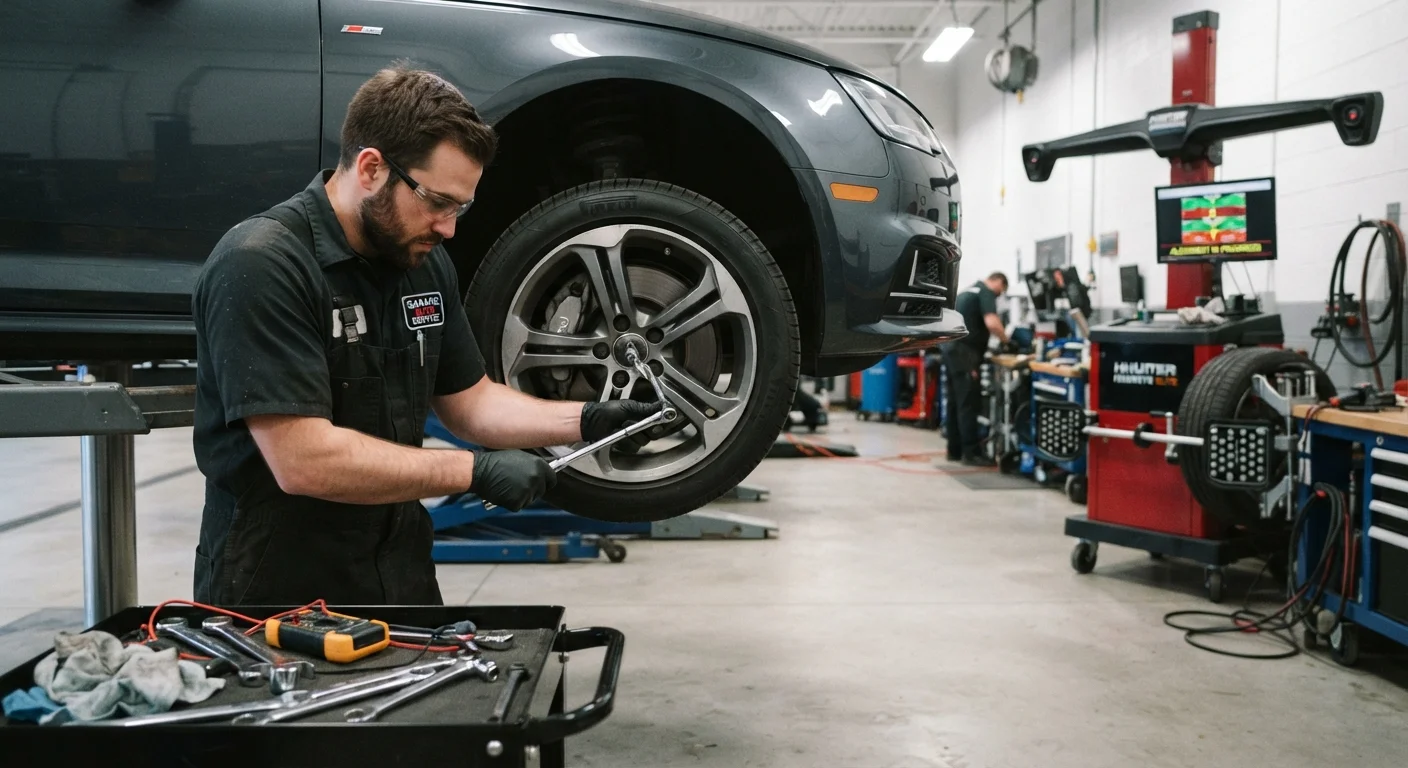
Photo: DockedReads.com | Information Made Easy editorial
Key Takeaways
- Tyre rotation moves tyres between positions to even out tread wear across all four.
- Wheel balancing corrects uneven weight distribution in a tyre-and-wheel assembly.
- Wheel alignment adjusts the angles of your wheels relative to the vehicle and road.
- Each service has a different interval and addresses a completely different problem.
- Skipping any one of these can accelerate tyre wear, reduce fuel efficiency, or compromise handling.
Why These Three Services Get Confused
Ask most drivers what the difference is between wheel balancing and wheel alignment, and you'll get a hesitant answer — or none at all. The confusion is understandable: all three services involve your tyres and wheels, they're often offered at the same shops, and they can share some overlapping symptoms like vibration or uneven wear. But each one addresses an entirely different mechanical issue, operates on a different service interval, and uses different equipment to perform.
Getting clear on the distinction matters because the wrong service won't fix the actual problem — and could mean spending money while the real issue continues unchecked. For a broader look at how tyre condition affects safety, see our guide on tyre pressure and tread.
Tyre Rotation: Spreading the Load Evenly
Tyre rotation means physically moving tyres from one wheel position to another — front-left to rear-right, for example — following a pattern suited to your vehicle's drivetrain and tyre type. The goal is to equalize wear across all four tyres, since front and rear tyres carry different loads and perform different jobs depending on whether a car is front-, rear-, or all-wheel drive.
Front tyres on a front-wheel-drive vehicle do the work of both steering and delivering engine power, so they tend to wear faster, particularly on the outer edges. Without rotation, you'd need to replace the front pair well before the rears, losing value from a full set of tyres.
Typical interval: Every 5,000–7,500 miles, or as specified in your owner's manual. Many shops perform rotation at each oil change as a matter of routine.
Combine Rotation With Oil Changes
Wheel Balancing: Correcting Weight Distribution
A wheel-and-tyre assembly is never perfectly uniform in weight around its circumference. Small imperfections in the rubber compound, the wheel casting, or even the valve stem can create a heavier spot. When that imbalance is significant enough, the wheel wobbles slightly as it spins — a vibration that typically becomes noticeable through the steering wheel or seat at highway speeds, usually between 55 and 70 mph.
Balancing is performed on a dedicated machine. The wheel is spun at speed, sensors detect where the heavy spot is, and a technician attaches small lead or zinc weights to the rim at the correct position to counteract it.
Typical interval: When new tyres are mounted, any time you notice vibration at speed, or approximately every 12,000–15,000 miles as a precaution. Hitting a pothole or curb can knock a wheel out of balance immediately. Vibration can sometimes be confused with brake-related symptoms — our article on brake pads and rotors explains how to tell the difference.
Wheel Alignment: Correcting Steering Geometry
Alignment has nothing to do with weight or tyre position — it refers to the angles at which your wheels contact the road, as set by the vehicle's suspension geometry. Three primary angles are measured and adjusted: camber (inward or outward tilt of the wheel), toe (whether the fronts of the tyres point inward or outward), and caster (the angle of the steering axis).
When alignment is off, tyres scrub against the pavement rather than rolling cleanly. The result is accelerated, uneven tread wear — often showing as wear on one edge of the tyre — and a vehicle that pulls to one side or requires constant steering correction to drive straight.
Typical interval: Every 12,000 miles or once a year, after any significant impact (pothole, curb strike), or when uneven tyre wear is noticed. Alignment is also recommended whenever new tyres or suspension components are fitted.
| Tyre Rotation | Wheel Balancing | Wheel Alignment | |
|---|---|---|---|
| What it addresses | Uneven tyre wear from position | Weight imbalance in wheel-tyre assembly | Incorrect wheel angles in suspension |
| Primary symptom | One pair wears faster than the other | Vibration at highway speeds | Pulling to one side; edge wear |
| Typical interval | Every 5,000–7,500 miles | With new tyres; every 12–15k miles | Annually or every 12,000 miles |
| Equipment needed | Lift and basic tools | Computerized balancing machine | Laser/computerized alignment rack |
| DIY possible? | Sometimes, with proper tools | No — requires shop machine | No — requires shop machine |
| Triggered by impact? | No | Yes — potholes, curbs | Yes — potholes, curbs, accidents |
How to Tell Which Service You Actually Need
The symptoms from these three issues can overlap, but there are useful patterns to look for:
- Vibration at highway speed — most likely a balancing issue, especially if it's felt in the steering wheel or seat at a consistent speed range.
- Vehicle pulling left or right — a strong indicator of alignment being off, though tyre pressure differences can mimic this. Check pressure first with guidance from our piece on tyre pressure and its hidden costs.
- Uneven tread wear across the tyre's width — points to alignment problems.
- Faster wear on front vs. rear tyres — a rotation issue; tyres haven't been moved often enough.
If you're unsure whether a task is within DIY scope or requires professional equipment, our comparison of DIY versus mechanic servicing offers a practical framework. Balancing and alignment both require shop equipment — neither is a home-garage job.
This article is for general informational purposes. Always consult your vehicle's owner's manual and a qualified mechanic for guidance specific to your car's make, model, and condition.
The content on this site is for informational purposes only and is not a substitute for professional advice. Always consult a qualified professional for guidance specific to your situation.