
Brake Pads, Rotors, and the Difference Between Normal Wear and a Real Problem

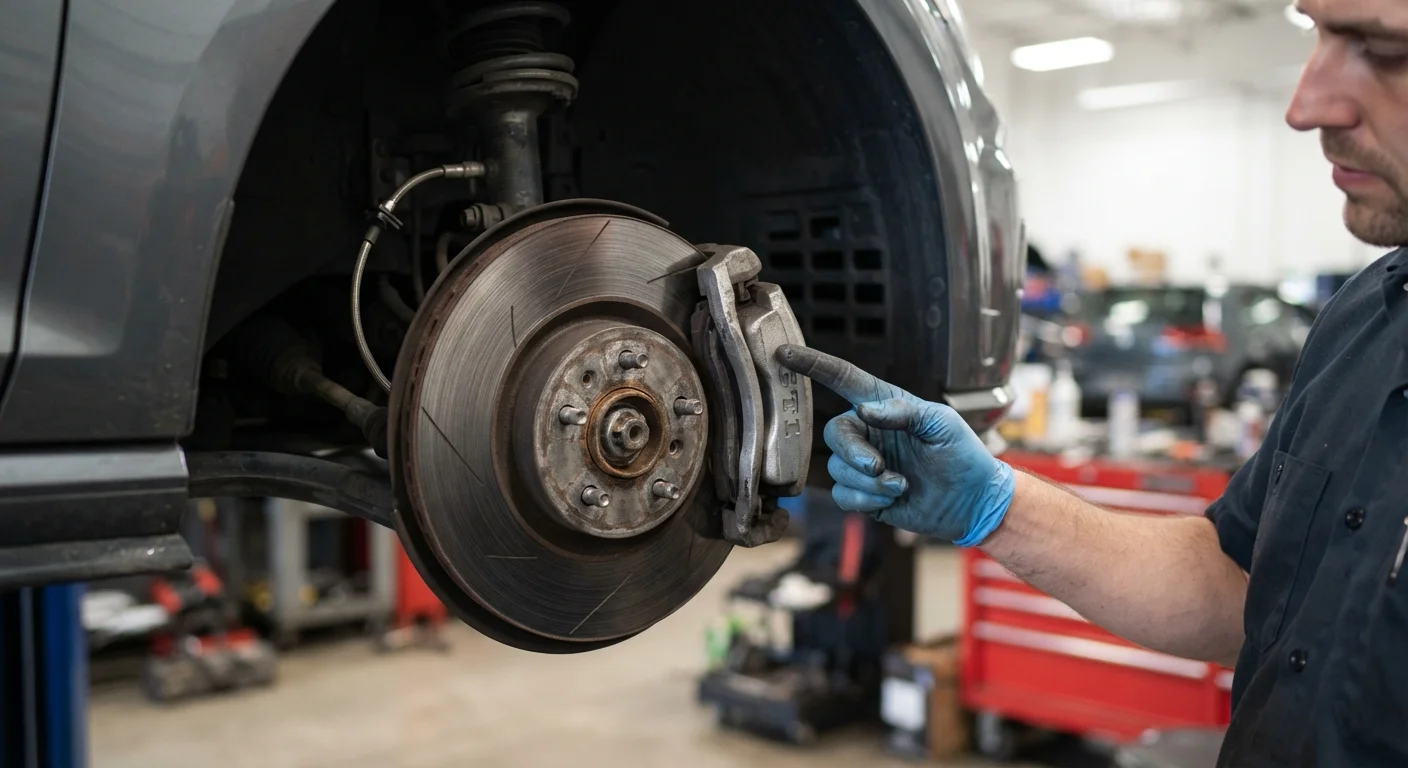
Photo: DockedReads.com | Information Made Easy editorial
Key Takeaways
- Brake pads wear down over time; most last between 25,000 and 65,000 miles depending on driving habits.
- A high-pitched squeal is often the built-in wear indicator signaling it's time for new pads.
- Grinding, vibration, or a pulling sensation while braking usually indicate a more serious problem.
- Rotors can warp or develop grooves, especially if worn pads are left in place too long.
- Brake performance directly affects stopping distance — compromised brakes are a genuine safety risk.
- A qualified mechanic should inspect brakes whenever symptoms are unclear or persistent.
How Brake Pads and Rotors Work Together
Every time you press the brake pedal, hydraulic pressure pushes the brake caliper's pistons inward, squeezing the brake pads against the rotor — the flat metal disc attached to the wheel hub. The friction between pad and rotor converts kinetic energy into heat, slowing the vehicle. It's an elegantly simple system, but that friction means every stop gradually wears down both components.
Brake pads are the consumable element. They're made of friction material bonded to a metal backing plate, and they're designed to wear so that the more expensive rotor is preserved. Rotors, meanwhile, are built to tolerate thousands of heat cycles, but they're not indestructible. Understanding this relationship helps you recognize when something is merely at the end of its service life versus when it's behaving abnormally.
25,000–65,000 mi
Typical brake pad lifespan range
General industry guidance; actual life varies with driving style, vehicle weight, and pad compound type.
~30%
Of brake jobs also require rotor replacement
Industry estimates suggest a significant share of rotor replacements result from delaying pad service too long.
4 components
Per axle in a standard disc brake system
Each axle has two pads and one rotor per wheel — pads are almost always replaced in axle pairs for balanced braking.
What Normal Wear Looks and Sounds Like
Normal brake wear is gradual and relatively predictable. Pads thin evenly across their surface, and rotors develop a very slight groove where the pad tracks. Neither of these is cause for alarm — they're the expected result of thousands of brake applications.
The most common normal-wear signal is a high-pitched squeal when you apply the brakes. Most pads are manufactured with a small metal wear indicator that begins to contact the rotor surface once the friction material reaches minimum safe thickness. The resulting squeal is intentional — it's the system telling you it's time for new pads, not that something has gone wrong.
Some minor brake dust accumulation on wheel faces is also normal. Light surface rust on a rotor that's been sitting overnight typically clears itself after the first few brake applications. Neither is a symptom of a problem.
Check Brake Pads at Every Tire Rotation
Symptoms That Signal a Real Problem
Several brake symptoms go beyond routine wear and warrant prompt attention:
- Grinding or metal-on-metal sound: When the friction material wears away completely, the metal pad backing contacts the rotor directly. This causes a harsh grinding noise and can rapidly score the rotor surface. Continuing to drive risks expensive rotor damage and reduced braking effectiveness.
- Vibration or pulsing in the pedal or steering wheel: This typically points to a warped rotor. Rotors can warp from sustained overheating — towing heavy loads, prolonged downhill braking, or aggressive driving. A warped rotor creates uneven contact with the pad, causing the brake pedal or steering wheel to pulse under braking. This is not normal wear.
- Vehicle pulling to one side when braking: If the car drifts left or right under braking pressure, one brake may be applying more force than the other. This can result from a sticking caliper, uneven pad wear, or a brake fluid issue.
- Soft or spongy brake pedal: A pedal that travels further than usual before engaging, or feels mushy underfoot, may indicate air in the brake lines or a fluid leak — neither is a wear issue, and both require immediate professional attention.
For context on other warning signals your vehicle may be sending, understanding dashboard warning lights can help you interpret your car's built-in alert systems alongside what you feel and hear.
Rotors: When They Can Be Saved and When They Can't
Rotors don't always need replacing when pads do. A rotor that is within its minimum thickness specification and hasn't developed deep grooves or warping can often be resurfaced — machined on a lathe to restore a flat, even contact surface. This is a cost-effective option when rotors are otherwise structurally sound.
However, a rotor that has worn below the manufacturer's minimum thickness specification must be replaced — not resurfaced — because further material removal would compromise its ability to dissipate heat safely. Deep grooves caused by metal-on-metal contact, scoring from debris, or rotor warping that can't be corrected within thickness limits also mean replacement is necessary.
Always Replace Pads in Axle Pairs
Delaying pad replacement is the most common reason rotors end up needing replacement too. A pad replaced on time usually preserves the rotor. Your braking system's condition also has direct consequences for stopping distances — the physics of stopping distances illustrates why even marginal brake degradation matters more than most drivers assume.
Knowing When to Handle It Yourself — and When Not To
Brake pad replacement is within the skill set of many confident home mechanics and is one of the more approachable DIY maintenance tasks on a vehicle. However, it requires proper safety equipment, the right tools, and a clear understanding of the procedure. Any step performed incorrectly — improperly compressed caliper pistons, incorrectly torqued lug nuts, or omitting brake-in (bedding) procedures — can compromise braking performance.
For most drivers, having brakes inspected and serviced by a qualified mechanic is the safer and more reliable path, especially if you're hearing unfamiliar sounds, noticing uneven wear, or dealing with symptoms beyond a simple squeal. Brakes are a safety-critical system with little margin for error. For a broader look at where DIY maintenance makes sense versus where professional expertise is worth it, DIY car maintenance vs. letting a mechanic handle it outlines practical considerations to help you decide.
Frequently Asked Questions
The content on this site is for informational purposes only and is not a substitute for professional advice. Always consult a qualified professional for guidance specific to your situation.