
Tyre Pressure and Why Getting It Wrong Costs More Than You Think

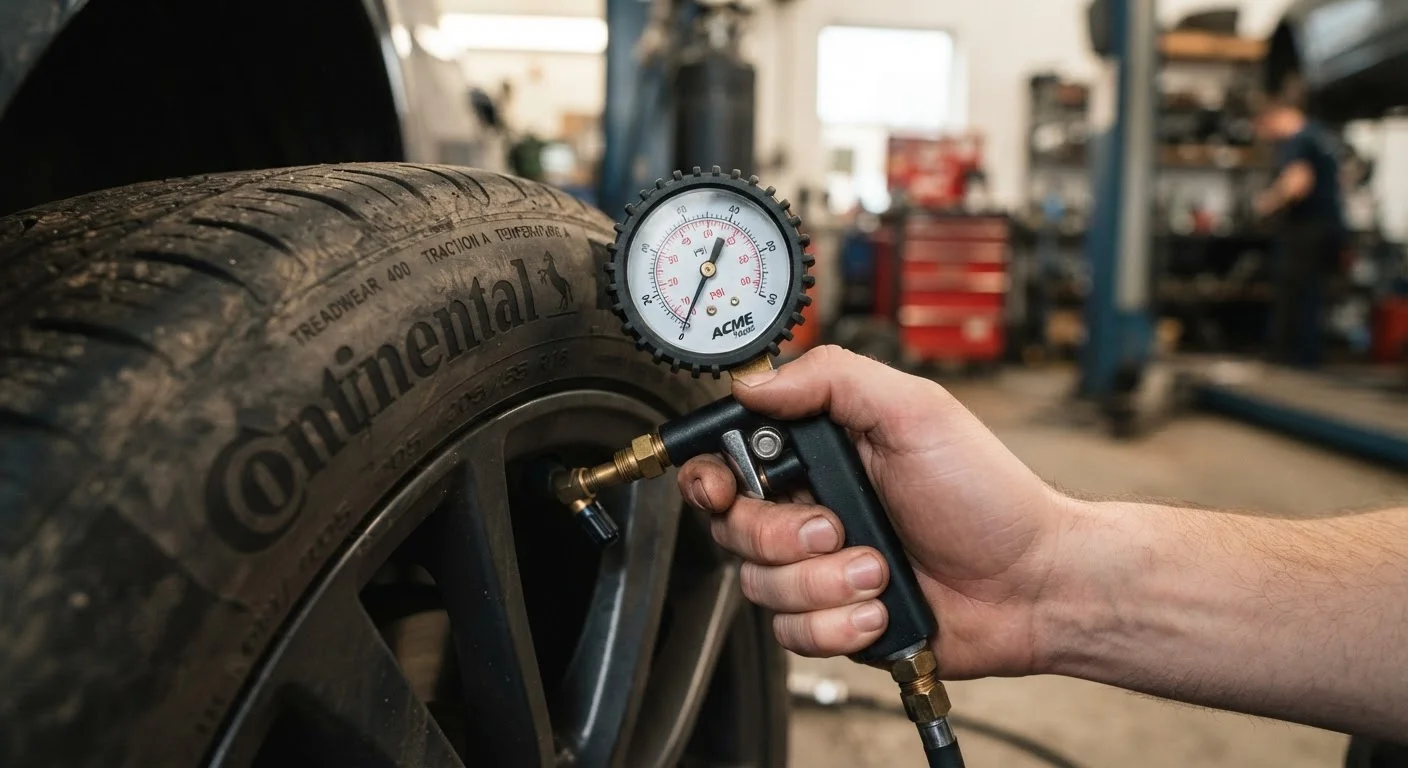
Photo: DockedReads.com | Information Made Easy editorial
Key Takeaways
- Under-inflation is the most common tyre pressure problem and increases fuel consumption and tread wear.
- The correct PSI for your vehicle is on the door jamb sticker — not on the tyre sidewall.
- Tyre pressure drops roughly 1 PSI for every 10°F decrease in ambient temperature.
- Checking pressure monthly, and before long trips, is considered best practice.
- Both over- and under-inflation reduce traction and increase stopping distances.
The Hidden Drain on Your Wallet
Most drivers only think about their tyres when something goes visibly wrong. But tyre pressure works silently in the background, and when it's off — even slightly — it compounds costs in ways that rarely get attributed to the real cause.
Under-inflated tyres flex more with every rotation. That extra flexing builds heat, increases rolling resistance, and forces the engine to burn more fuel just to maintain speed. The US Department of Energy estimates that for every 1 PSI drop across all four tyres, fuel economy decreases by roughly 0.2%. Multiply that across thousands of miles and the dollar figure grows quickly. This is one of the more overlooked line items covered in the true annual cost of owning a car.
Uneven or accelerated tread wear is the other financial penalty. An under-inflated tyre wears heavily on its outer edges; an over-inflated tyre wears down the center strip. Either pattern shortens tyre life significantly — replacing a set of tyres prematurely is a far bigger expense than the occasional two minutes spent checking pressure.
~1 PSI
Pressure lost per 10°F temperature drop
A widely cited rule of thumb used by tyre manufacturers and automotive safety organizations.
0.2%
Fuel economy loss per 1 PSI under-inflation
Estimate from the US Department of Energy based on rolling resistance data.
1–3 PSI
Natural pressure loss per month
Tyres lose air through normal permeation even without any puncture or valve leak.
Why Pressure Changes Without a Puncture
Many drivers assume that if they haven't had a flat, their pressure must be fine. In reality, tyres lose air continuously through a process called permeation — gas molecules slowly migrate through the rubber compound even in a perfectly sealed tyre. The typical loss is around 1–3 PSI per month under normal conditions.
Temperature is the bigger wild card. Air contracts in cold weather and expands in heat. As a rule of thumb, tyre pressure drops approximately 1 PSI for every 10°F fall in ambient temperature. A tyre at the correct pressure on a warm fall day may read 4–5 PSI low after the first cold snap of winter — without any leak involved.
TPMS Doesn't Replace Manual Checks
This matters especially when transitioning between seasons. It's worth checking pressure in the autumn when temperatures first dip, and again in spring. Because tyre performance is closely linked to road conditions, it's also worth reading about how wet roads affect tyre grip — the combination of low pressure and wet surfaces compounds risk significantly.
Over-Inflation: The Less Obvious Problem
Drivers who have heard that under-inflation is bad sometimes compensate by running tyres slightly over the recommended PSI, believing firmer is safer. It isn't. Over-inflated tyres have a smaller contact patch with the road — less rubber touching the surface means less grip. Braking distances increase, ride quality deteriorates, and the tyre becomes more vulnerable to impact damage from potholes or road debris.
Over-inflation also causes the tyre to wear disproportionately in the center of the tread, shortening its useful life in a different pattern than under-inflation but with the same financial result.
Check Pressure When Tyres Are Cold
The correct approach is simple: inflate to the PSI specified on the vehicle's door jamb sticker — not the number on the tyre sidewall, which indicates the tyre's maximum rated pressure. For context on how tyre condition connects to broader road safety, tyre pressure and tread depth both affect safety in ways most drivers underestimate.
How to Check and Correct Tyre Pressure
Checking pressure is a straightforward task that requires only a tyre pressure gauge, available at any auto parts store for a modest cost. For the most accurate reading, check tyres when they are cold — meaning the vehicle has been parked for at least three hours, or driven fewer than a mile. Heat from driving temporarily increases pressure and can produce a misleading reading.
- Remove the valve cap from the tyre's valve stem.
- Press the gauge firmly and squarely onto the valve stem.
- Read the PSI displayed and compare it to the door jamb recommendation.
- Add air if below the target, or release air using the small pin inside the valve stem if over.
- Recheck after adjusting and replace the valve cap.
This task pairs naturally with other routine checks. Tyre pressure, tread depth, and rotation intervals are interconnected — tyre rotation, balancing, and alignment all interact with how evenly and safely a tyre wears over its lifespan. Performing these checks together takes less than ten minutes and eliminates a surprising number of unnecessary expenses.
Frequently Asked Questions
The content on this site is for informational purposes only and is not a substitute for professional advice. Always consult a qualified professional for guidance specific to your situation.