
Coolant, Antifreeze, and the Engine Temperature System Demystified

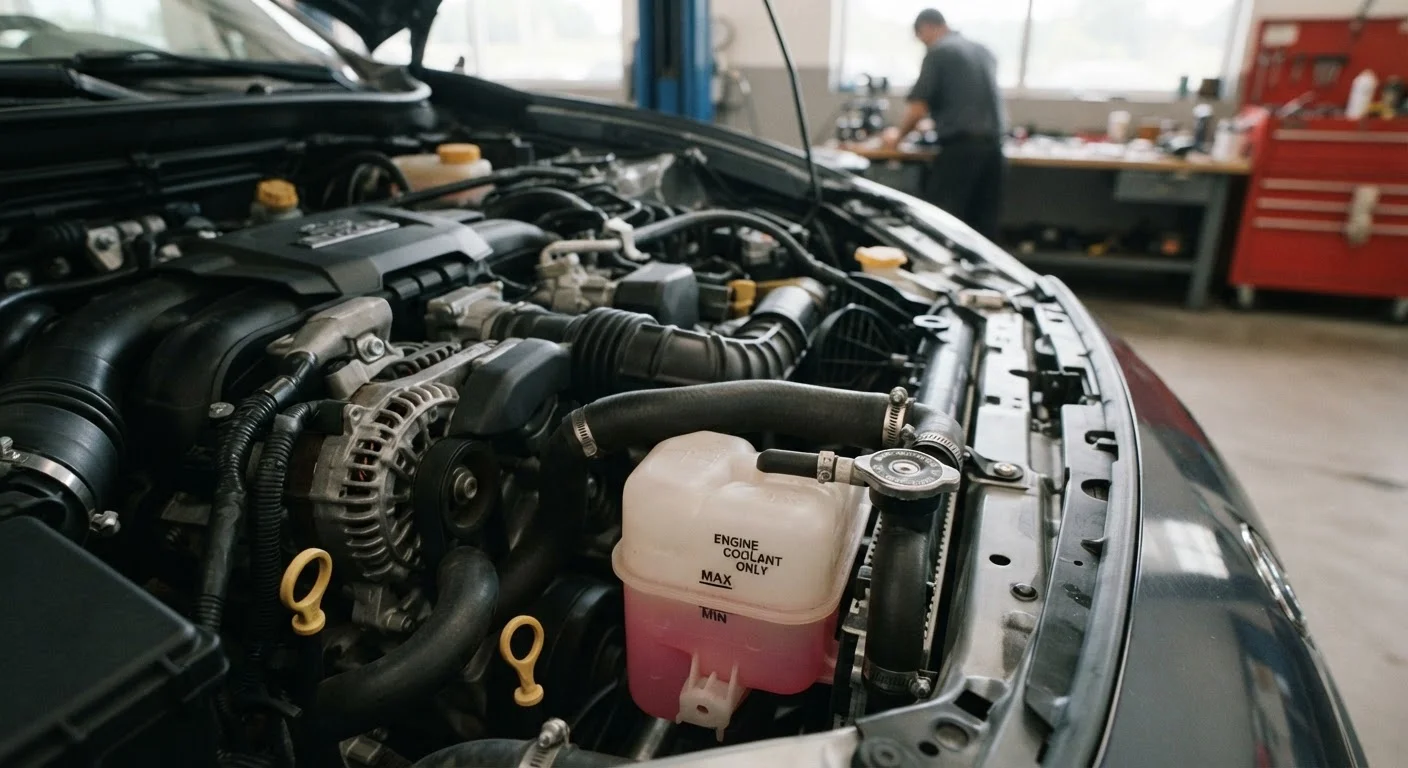
Photo: DockedReads.com | Information Made Easy editorial
Key Takeaways
- Coolant and antifreeze refer to the same fluid — antifreeze is the concentrated form, coolant is the diluted mixture.
- The cooling system includes the radiator, water pump, thermostat, hoses, and the coolant reservoir.
- Low coolant is one of the most common causes of engine overheating and is easy to check yourself.
- Never open a hot radiator cap — pressurized coolant can cause serious burns.
- Most manufacturers recommend flushing and replacing coolant every 30,000 to 50,000 miles, but always check your owner's manual.
What Coolant Actually Does
Gasoline combustion generates enormous heat — far more than the engine's metal components can safely absorb on their own. Coolant is the fluid that continuously moves through the engine block, absorbing that heat and carrying it away to the radiator, where it dissipates into the surrounding air before the cycle repeats.
The term antifreeze refers to the concentrated chemical — most commonly ethylene glycol — that is mixed with distilled water to create coolant. The blend lowers the freezing point of the fluid (protecting the system in winter) and raises its boiling point (preventing the fluid from vaporizing under high engine heat). A standard 50/50 mix protects against freezing down to about -34°F and raises the boiling point to around 265°F under pressure.
Beyond temperature management, coolant also contains corrosion inhibitors — additives that protect the metal surfaces of your engine, water pump, and radiator from rust and scale buildup. These inhibitors degrade over time, which is why coolant requires periodic replacement even if the fluid level appears adequate.
50/50
Recommended antifreeze-to-water mix ratio
A standard 50/50 blend is the industry-accepted starting point for most climates, offering freeze protection to approximately -34°F and a raised boiling point of around 265°F under pressure.
195–220°F
Normal engine operating temperature range
Most passenger vehicle engines are designed to run within this band; the thermostat actively regulates coolant flow to maintain this range during normal operation.
30,000–50,000 mi
Typical coolant flush interval
Most manufacturers recommend a coolant flush within this mileage range, though long-life formulations in newer vehicles may extend beyond this — always check your owner's manual.
The Major Components Working Together
The cooling system is a pressurized closed loop. Understanding each part helps you recognize where problems originate:
- Radiator: The front-mounted heat exchanger that dissipates heat from hot coolant passing through its fins. Airflow — from driving or from the electric cooling fan — does the actual cooling work.
- Water pump: Driven by the engine (via a belt or chain), the water pump circulates coolant through the entire system. A failing pump is a common cause of overheating and typically produces a whining noise or coolant leak near the front of the engine.
- Thermostat: A small valve that stays closed while the engine warms up — keeping coolant in the engine to reach operating temperature faster — then opens to allow flow to the radiator once the target temperature is reached.
- Coolant reservoir (overflow tank): The translucent plastic tank where you check fluid level. As the system heats and pressurizes, excess coolant flows here; it returns to the radiator as the engine cools.
- Radiator cap: More than a simple lid — it maintains system pressure, which raises the coolant's boiling point. A worn cap can cause coolant loss and overheating.
- Hoses: Rubber hoses connect the components. Over time they can harden, crack, or develop soft spots, each of which can cause leaks.
For a broader look at how seasonal temperature swings affect these components, see our guide on seasonal car maintenance.
Recognizing Overheating Before Damage Occurs
Engine overheating can cause warped cylinder heads, blown head gaskets, or — in severe cases — complete engine seizure. Catching early warning signs matters.
Act on the Temperature Gauge Early
The most reliable early indicator is the temperature gauge on your dashboard. Under normal conditions it should sit near the middle of its range. A gauge creeping toward the red zone is a warning that should not be ignored. For a complete breakdown of what dashboard signals mean, see our article on dashboard warning lights.
Other signs to watch for include:
- Steam or vapor rising from the hood — this is coolant boiling over
- A sweet, slightly syrupy smell inside or outside the cabin (coolant has a distinctive odor)
- The heater blowing cool air when set to hot — often caused by low coolant level preventing proper heat transfer to the cabin heater core
- A visible puddle under the parked car, especially if it is tinted green, orange, or pink
If your engine begins to overheat while driving, turn off the air conditioning immediately (it adds load to the engine) and, if safe, turn the cabin heater on full blast — this draws heat away from the engine. Pull over as soon as it is safe to do so, turn off the engine, and do not open the radiator cap until the engine has cooled completely — typically at least 30 minutes.
Never Open a Hot Radiator Cap
Checking and Maintaining Your Coolant
Routine coolant maintenance is straightforward and requires no specialist tools. The first step is always the same: only check coolant on a cold engine. The system runs under pressure, and opening the radiator cap on a hot engine can spray scalding fluid.
Most modern vehicles have a translucent plastic overflow reservoir with MIN and MAX markings. A quick visual check tells you whether the level is within range. If it is consistently low, that points to a leak somewhere in the system — not just a need to top off.
Our fluid checks guide covers how to safely inspect coolant alongside other critical fluids. For the coolant flush interval specific to your car, the owner's manual is the definitive reference — intervals typically range from 30,000 to 50,000 miles, but some newer vehicles with long-life coolant formulations extend significantly beyond that.
When adding coolant, use the type specified in your owner's manual. Coolant formulations are not universally interchangeable — mixing incompatible types can compromise the corrosion inhibitors and cause damage. If you are ever unsure about coolant type or system condition, a qualified mechanic can perform a coolant test and visual inspection quickly and affordably.
This article is for general informational purposes. For maintenance specific to your vehicle, consult your owner's manual or a qualified automotive technician.
Frequently Asked Questions
The content on this site is for informational purposes only and is not a substitute for professional advice. Always consult a qualified professional for guidance specific to your situation.