
Car Maintenance Myths That Waste Money and Time

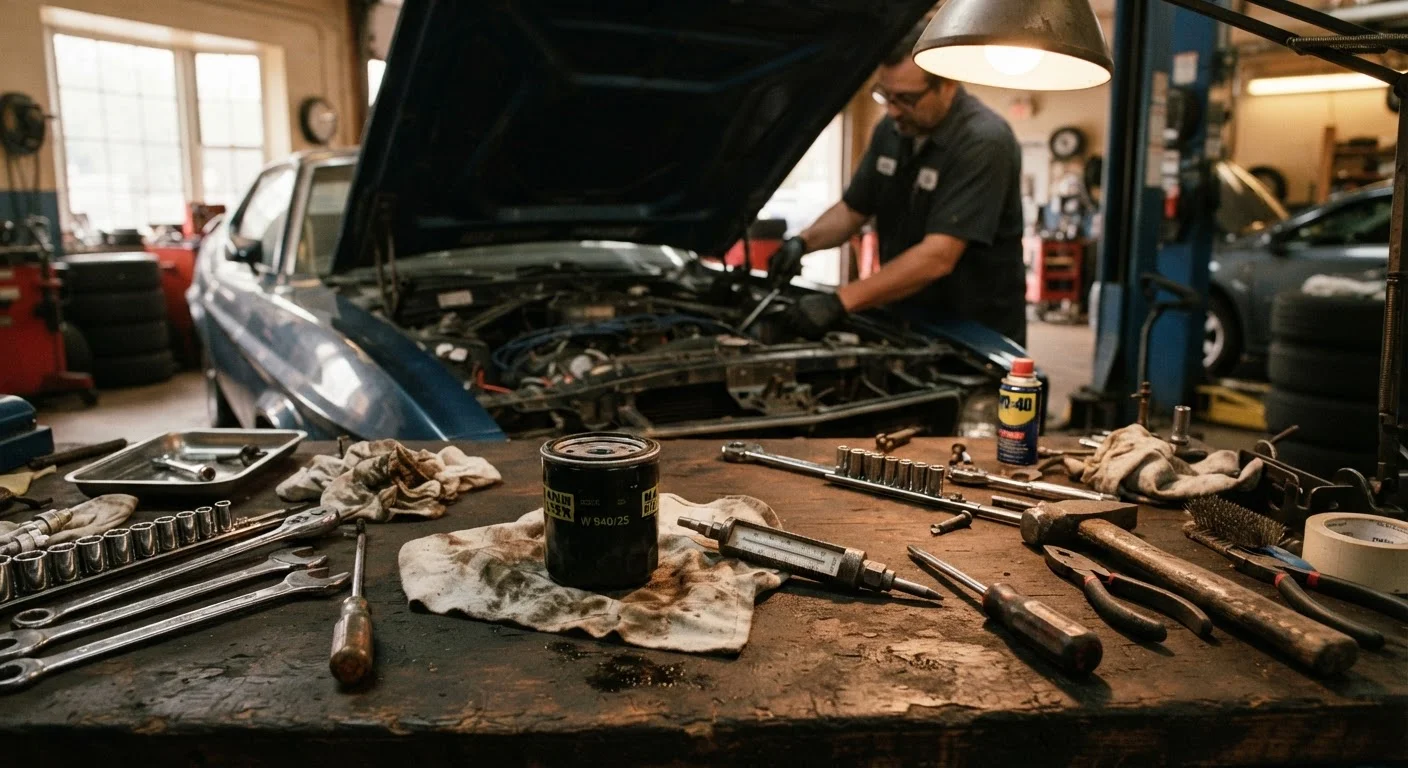
Photo: DockedReads.com | Information Made Easy editorial
Key Takeaways
- Modern engines don't need extended warm-up idling in cold weather — a minute or less is sufficient.
- The 3,000-mile oil change interval is outdated; most vehicles can go 5,000–10,000 miles or more between changes.
- Premium fuel delivers no measurable benefit for engines not specifically engineered to require it.
- Tire pressure should be set using the door jamb sticker, not the number printed on the tire sidewall.
- Skipping dealership servicing doesn't void your warranty under federal consumer protection rules.
Why Car Maintenance Myths Are So Costly
Automotive advice travels fast and sticks around long after it stops being relevant. Folklore passed down from a parent, a well-meaning neighbor, or an old shop manual can feel authoritative — even when the underlying vehicle technology has moved on entirely. The result is that many drivers routinely spend money on unnecessary services, or unknowingly skip genuinely important ones, based on rules of thumb that no longer apply to their car.
Understanding the difference between evidence-based maintenance and outdated convention isn't just about saving money — though that's a real benefit. It also helps you have more productive conversations with mechanics, recognize when a service recommendation is genuinely warranted, and build confidence in the basic decisions that come with owning a vehicle. For a broader look at ownership misconceptions, see our piece on common car ownership myths that can cost you money.
Myth
You need to let your car idle for several minutes to warm up the engine in cold weather.
Fact
Modern fuel-injected engines reach operating temperature faster by being driven gently — idling for more than about 30–60 seconds is unnecessary and wastes fuel.
This advice made practical sense for carbureted engines that could stall when cold, but fuel injection replaced carburetors in mass-market vehicles by the early 1990s. Today's engine management systems adjust the fuel mixture automatically at startup. Prolonged idling in cold weather actually washes oil from cylinder walls with unburned fuel, increasing wear rather than reducing it. A gentle drive at moderate engine load warms the engine, transmission, and wheel bearings simultaneously — none of which benefit from stationary idling.
Myth
Engine oil must be changed every 3,000 miles, no exceptions.
Fact
Most modern vehicles with conventional oil are rated for 5,000–7,500 miles between changes; many synthetic-oil applications extend that interval to 10,000–15,000 miles or further.
The 3,000-mile guideline originated with older engine tolerances and early oil formulations. Modern base stocks, additive packages, and tighter manufacturing tolerances mean oil degrades far more slowly than it once did. The definitive source for your interval is the owner's manual — or the oil life monitoring system fitted to many newer vehicles. Changing oil more frequently than specified wastes money and generates unnecessary waste oil without providing additional engine protection. See our guide to conventional vs synthetic motor oil for a closer look at how oil type affects your ideal interval.
Myth
Premium gasoline gives every car better performance and fuel economy.
Fact
Premium fuel only benefits engines with higher compression ratios specifically designed and tuned to require it — in all other engines, it provides no measurable advantage.
The terms "regular," "mid-grade," and "premium" refer primarily to octane rating — a measure of resistance to pre-ignition (knocking). Engines engineered for regular 87-octane fuel manage combustion timing to suit that rating; introducing higher-octane fuel doesn't change that calibration in a meaningful way. Your fuel cap or door jamb label will state whether premium is required or merely recommended. "Recommended" generally means the engine may extract a small benefit under high-load conditions; "required" means using a lower grade risks engine knock. For most everyday vehicles, premium is simply a more expensive version of what the engine doesn't need.
Myth
Inflate your tires to the pressure printed on the tire sidewall.
Fact
The sidewall number is the maximum pressure the tire can safely hold — the correct inflation target for your vehicle is on the driver's door jamb sticker or in the owner's manual.
Inflating to the sidewall maximum produces a tire that is effectively overinflated for the vehicle's weight and suspension geometry. Overinflated tires wear in the center of the tread, reduce the contact patch with the road, and make the ride harsher and more prone to sudden deflation from road hazards. The door jamb specification is calculated by the automaker to balance load capacity, fuel economy, handling, and comfort for that specific vehicle. Cold-weather pressure drops can cause under-inflation just as easily, so checking monthly is sound practice. Our article on tire pressure and what getting it wrong costs goes deeper on the safety and economic impact.
Myth
Servicing your car at an independent garage instead of the dealership voids the warranty.
Fact
Under the Magnuson-Moss Warranty Act, a manufacturer cannot void your warranty solely because you chose an independent service provider for routine maintenance.
This is one of the most persistently misunderstood areas of car ownership. Federal law prohibits manufacturers from tying warranty coverage to exclusive use of dealership labor or branded parts, provided the work performed meets manufacturer specifications and is documented. What can affect your warranty is using non-conforming parts or fluids, or having work performed that falls below the specified standard — not the choice of workshop itself. Keeping a clear service record with receipts and mileage notes is the practical safeguard. Our overview on keeping a service record explains exactly what documentation matters most.
Myth
A car battery only needs replacing when the engine won't start.
Fact
Battery performance degrades gradually; waiting for a complete failure often means being stranded, and a weakening battery can stress the alternator and starter in the meantime.
Lead-acid batteries typically last three to five years, though climate, driving patterns, and electrical load all affect longevity. Slow cranking on startup, headlights dimming at idle, and the battery warning light appearing are all earlier indicators worth investigating before a full failure occurs. Many auto parts retailers and service shops offer free battery load testing, which measures actual output under demand rather than just resting voltage. Proactive replacement is generally far less disruptive — and potentially less expensive — than an emergency roadside situation.
Applying This to Your Own Maintenance Routine
The most reliable guide to your specific vehicle isn't convention — it's the documentation that came with the car. Owner's manuals specify service intervals, fluid grades, and fuel requirements based on engineering data from the manufacturer. Most public libraries also maintain access to professional service databases if you need to go further than the manual allows.
Your Owner's Manual Is the Authority
If you're unsure whether a mechanic's recommendation reflects genuine need or habit, our guide to reading a mechanic's estimate explains the standard line items and the questions worth asking before authorizing work. And if you're weighing what you can realistically handle yourself, DIY car maintenance vs professional servicing lays out the practical limits clearly. The goal isn't distrust of service professionals — most are straightforward — but informed participation in decisions about your own vehicle.
~5,000–10,000 mi
Typical modern oil change interval
Most vehicle manufacturers now specify intervals well beyond 3,000 miles; consult your owner's manual or onboard oil-life monitor for the figure that applies to your car.
3–5 years
Average car battery lifespan
Battery longevity varies with climate and usage, but proactive testing after three years is widely recommended by automotive service organizations to avoid unexpected failure.
The content on this site is for informational purposes only and is not a substitute for professional advice. Always consult a qualified professional for guidance specific to your situation.