
Sleep on the Road: What Actually Helps and What Doesn't

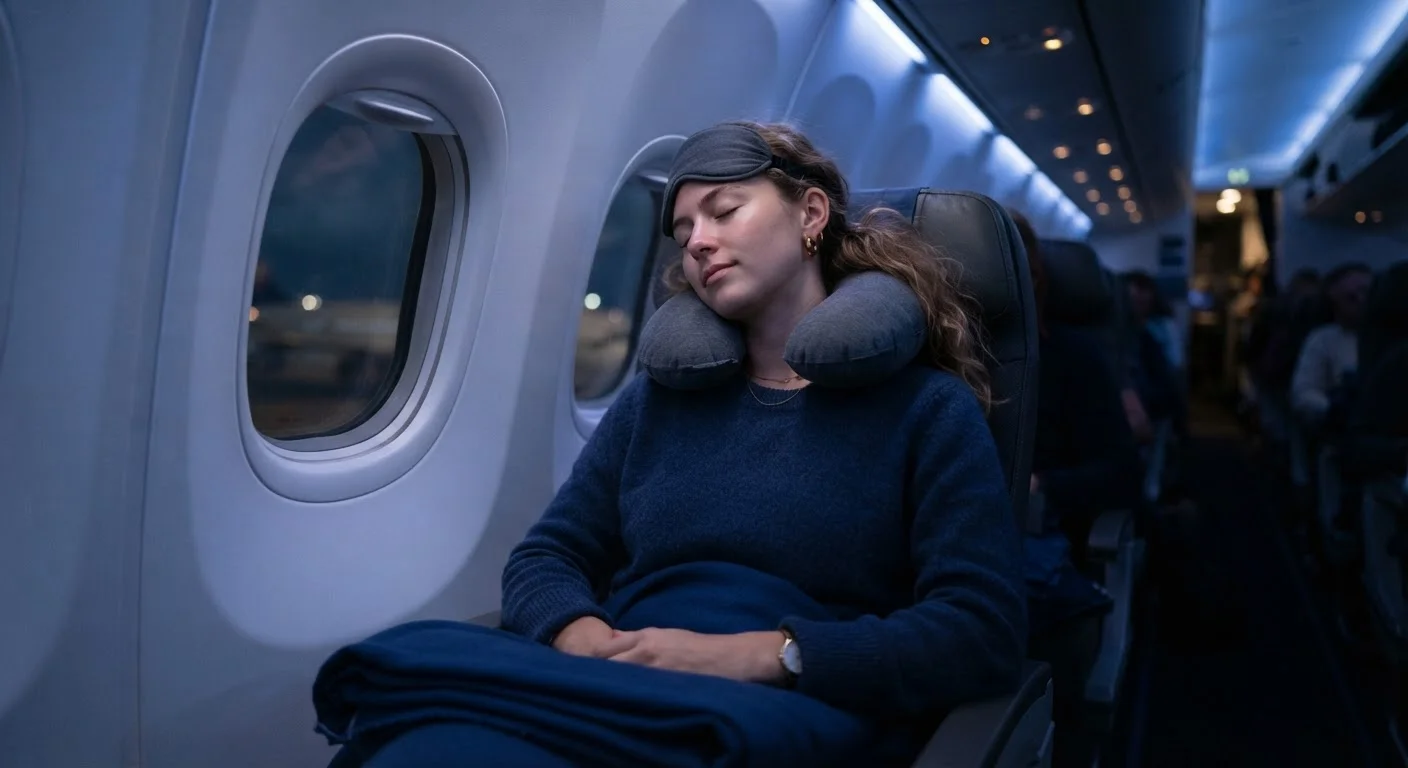
Photo: DockedReads.com | Information Made Easy editorial
Key Takeaways
- Melatonin can help reset your circadian rhythm when timed correctly, but it's not a general sleep aid.
- Alcohol may feel like it helps you sleep, but it consistently reduces sleep quality during travel.
- Environmental tools like eye masks and earplugs have genuine, evidence-supported benefits for travelers.
- Your body's internal clock — not just tiredness — determines how restorative sleep actually is.
- Consult a healthcare provider before using sleep medications or supplements while traveling.
Why Travel Disrupts Sleep in the First Place
Ask most travelers what derails their trip more than a delayed flight or a bumpy transfer, and many will quietly admit it's the sleep — or lack of it. Unfamiliar hotel rooms, time zone crossings, cramped overnight buses: the road has a knack for pulling the rug out from under even the soundest sleeper.
The disruption isn't arbitrary. Sleep is governed partly by the circadian rhythm — your body's roughly 24-hour internal clock, calibrated by light, temperature, and routine. Travel interrupts all three simultaneously. Add in noise, anxiety, and the neurological novelty of a new environment (what researchers sometimes call the "first-night effect," where one hemisphere of the brain stays more alert in unfamiliar surroundings), and it becomes clearer why the usual tricks don't always work.
Understanding what's actually going on physiologically is the first step. The second is separating the sleep advice that holds up from the folklore that doesn't. For a deeper look at how fatigue affects your judgment on the road, see our guide to driver fatigue.
Myth
A glass of wine or a nightcap will help you sleep better on a plane or in a new hotel.
Fact
Alcohol may help you fall asleep faster, but it significantly reduces sleep quality — particularly REM sleep — in the second half of the night.
This is one of the most persistent travel sleep myths, partly because alcohol genuinely does have a sedating effect initially. But research shows it suppresses REM sleep and causes more fragmented, lighter sleep overall. On a long-haul flight, that can mean waking up groggy after what felt like hours of rest. Dehydration from alcohol compounds the problem further. If you struggle to sleep on planes, hydration and relaxation techniques are more reliable starting points than the drink cart.
Myth
Melatonin is a sleep aid — take it when you want to sleep.
Fact
Melatonin is a timing signal for your circadian clock, not a sedative. Its effectiveness depends almost entirely on when you take it relative to your destination's time zone.
Melatonin is widely misunderstood as a general sleeping pill. In reality, it works by signaling to your body that darkness has arrived — nudging your internal clock in a particular direction. Taking it at the wrong time (say, mid-afternoon at your destination when your body thinks it's evening at home) can make jet lag worse, not better. Timing guidance varies depending on the direction of travel and the number of time zones crossed. A healthcare provider or a pharmacist familiar with travel medicine can offer personalized guidance on timing and dose.
Myth
If you're tired enough, you'll sleep fine anywhere.
Fact
Physical exhaustion doesn't override the circadian rhythm or the brain's alertness response to unfamiliar environments.
Many travelers assume that sheer tiredness is enough to guarantee sleep. But the brain's alert systems — particularly in novel or uncertain environments — can override the sensation of physical fatigue. This is sometimes called the "first-night effect": studies have found that one brain hemisphere remains more active during initial nights in an unfamiliar place, functioning as a kind of sentinel. Heavy fatigue can still lead to sleep, but it won't necessarily be restorative. Managing your environment (darkness, quiet, temperature) matters even when you're exhausted.
Myth
Sleeping pills are a safe, effective fix for travel insomnia.
Fact
Prescription and over-the-counter sleep medications carry real risks in travel contexts, including next-day impairment and reduced awareness in emergency situations.
This isn't an argument against sleep medications — for some travelers, they're medically appropriate and can be genuinely helpful. But they aren't without tradeoffs. Some common formulations can cause residual drowsiness that persists well into the next day, which matters enormously if you're driving, hiking, or navigating a new city. On overnight flights, certain sleep aids have been associated with immobility that increases deep vein thrombosis risk. Anyone considering sleep medication for travel should discuss options, timing, and risks with a healthcare provider beforehand — not pick something up at the airport pharmacy without guidance.
Myth
Catching up on sleep during travel days fully compensates for nights of poor rest.
Fact
"Sleep debt" is real, but it doesn't resolve with a single long nap or one good night — and the effects of chronic short sleep accumulate in ways travelers often underestimate.
The idea that you can bank sleep before a trip or erase a week of poor rest with one long lie-in is appealing but not well supported. Research suggests that while recovery sleep does reduce some of the performance deficits from sleep loss, cognitive function — especially attention and reaction time — can remain impaired longer than travelers expect. This has real consequences for road trips and adventure activities. The honest approach is to prioritize consistent sleep throughout a journey rather than trying to recover it at the end. Poor sleep on the road also has a measurable effect on mood — something explored in detail in our piece on sleep and mood.
What the Evidence Actually Says About Common Sleep Strategies
Beyond the myths, a handful of approaches do have meaningful support. Eye masks and earplugs — unglamorous as they are — work by targeting the most direct disruptors of sleep architecture: light and noise. Even partial light exposure during sleep can suppress melatonin production, and research consistently shows that noise fragmentation reduces slow-wave and REM sleep, the most restorative stages.
White noise and ambient sound apps function on a similar principle: not by inducing sleep, but by masking irregular sounds that cause micro-arousals. They're particularly useful in hotels near busy streets or in shared accommodation.
~77%
Travelers reporting disrupted sleep abroad
A survey published in the Journal of Travel Medicine found that a large majority of international travelers reported sleep disturbance during travel, with noise and unfamiliar environments as the leading causes.
1.5–2 hrs
Typical REM sleep lost after alcohol consumption
Studies reviewed in Sleep Medicine Reviews found that even moderate alcohol intake before sleep reduces REM sleep duration substantially, affecting memory consolidation and mood the following day.
Temperature is another underappreciated lever. The body naturally cools during sleep onset, and a room that's too warm actively interferes with that process. When you can, adjusting the thermostat — or requesting an extra blanket to keep the room cool while staying warm — is a small but genuinely useful move.
For those crossing multiple time zones, the distinction between jet lag and general travel fatigue matters more than most people realize. They feel similar but respond to different strategies. Our article on jet lag versus travel fatigue breaks that down in detail. And because disrupted sleep on the road doesn't always resolve the moment you get home, it's worth reading about mental recovery after intense travel if you're returning from a demanding trip.
Don't Self-Prescribe Sleep Aids for Long-Haul Travel
This article is for general informational purposes only and does not constitute medical advice. Always consult a qualified healthcare professional before using sleep medications, supplements, or making changes to your sleep routine — especially when traveling with a health condition or across time zones.
The content on this site is for informational purposes only and is not a substitute for professional advice. Always consult a qualified professional for guidance specific to your situation.