
Coastal Portugal or the Algarve: Choosing the Right Stretch of Shoreline

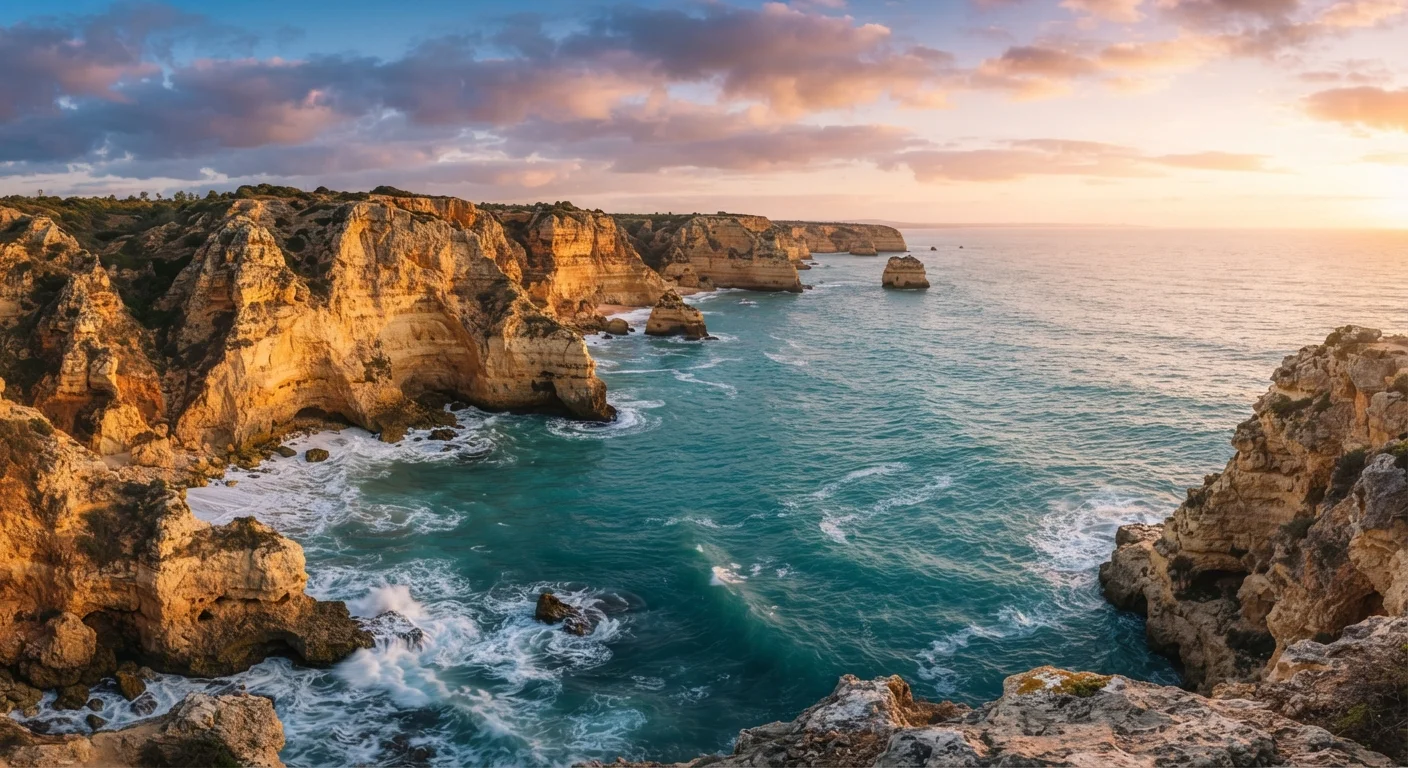
Photo: DockedReads.com | Information Made Easy editorial
Key Takeaways
- The Algarve offers warmer, calmer beaches with well-developed tourism infrastructure from late spring through early autumn.
- Coastal Portugal north of Lisbon features wilder surf beaches, greener scenery, and a more authentically local atmosphere year-round.
- Algarve prices and crowds peak sharply in July and August; shoulder seasons offer meaningful tradeoffs worth considering.
- The Silver Coast and Costa Verde suit road-trippers and cultural travelers more than dedicated beach-holiday seekers.
- Both regions are accessible from Lisbon, but the Algarve requires more travel time and planning from northern Portugal.
Two Coasts, One Country — but Very Different Trips
Portugal is small enough to drive end-to-end in a day, yet its coastline shifts character dramatically as you move from the warm southern tip to the rain-washed northwest. Most American travelers arrive having heard of the Algarve — the postcard stretch of amber cliffs and turquoise coves that lines the country's southern hem — and assume the choice is simply which Algarve town to stay in. But the rest of Portugal's Atlantic shore is equally compelling, and for certain kinds of travelers, far more rewarding.
Understanding what separates these two coasts isn't just about weather or scenery. It comes down to what kind of trip you want to take: a genuine beach holiday built around sun and relaxation, or something more exploratory that uses the shoreline as a backdrop for wider discovery. Both are valid. Neither is objectively better. But they serve fundamentally different traveler profiles, and conflating them leads to mismatched expectations.
| Criterion | Coastal Portugal (Centro & Norte) | The Algarve |
|---|---|---|
| Water temperature | Cool to cold year-round | Warm in summer (June–Sept) |
| Wave conditions | Strong Atlantic swells, surf-friendly | Sheltered coves, calmer swimming |
| Summer crowds | Moderate, mostly Portuguese visitors | High; heavy international tourism in peak season |
| Tourism infrastructure | Basic to moderate; varies by town | Extensive; resort-grade facilities widely available |
| Scenery style | Green hills, wide dune beaches, fishing ports | Golden limestone cliffs, coves, rock formations |
| Cultural immersion | High; working towns with local character | Lower in peak season; quieter towns retain more |
| Best travel style | Road trip, surf, cultural exploration | Beach holiday, family trip, relaxation |
What the Algarve Actually Delivers
The Algarve's appeal is earned. From Lagos in the west to Tavira in the east, the region offers something genuinely rare in northern Europe: reliably warm, sunny summers paired with a coastline of extraordinary visual drama. The ochre sea stacks, hidden grottos, and soft-sand beaches around Lagos and the Ponta da Piedade are legitimately spectacular — not just photogenic, but physically arresting in person.
Infrastructure here has been built over decades specifically to serve international visitors. English is widely spoken. Transport connections from Faro Airport are simple. Beach towns like Albufeira, Vilamoura, and Lagos offer a full spectrum of accommodation, from budget guesthouses to upscale resorts. For families, couples on honeymoon, or anyone who simply wants to switch off and be warm, this consistency has genuine value.
The honest caveat is the peak-season reality. July and August bring serious crowds and prices that reflect them. If you're considering shoulder timing — May, June, or September — the shoulder season dynamics in a tourist-dependent region like the Algarve are worth understanding before you book. Prices drop, beaches breathe, and the quality of experience often improves markedly.
The Character of Coastal Portugal Further North
North of the Setúbal Peninsula — where the Atlantic starts to assert itself with more force — the coast changes register entirely. The Silver Coast (Costa de Prata) stretches from just north of Lisbon up through Peniche and Nazaré to Figueira da Foz. Further north still, the Costa Verde runs through Porto and into the Minho, blending into a greener, cooler, emphatically un-Mediterranean landscape.
The water is colder here — genuinely cold, even in summer — and the swells are powerful. These aren't beaches designed for passive relaxation; they're working coastlines where fishing culture remains visible and surf breaks draw wave-chasers from across Europe. Nazaré earned global attention for the monstrous winter waves that break off its northern headland; Peniche hosts international surf competitions. For those drawn to that energy, there's nothing comparable in the Algarve.
~100 ft
Typical recorded wave height off Nazaré
Nazaré's Praia do Norte is documented as the site of some of the largest waves ever surfed, driven by an underwater canyon that amplifies Atlantic swells.
3,000+
Annual sunshine hours in the Algarve
The Algarve consistently ranks among the sunniest regions in mainland Europe, with southern Portugal averaging more sunny days per year than much of the Mediterranean coast.
The tradeoff is logistical roughness and less predictable conditions. Accommodation outside surf hotspots is simpler, dining options are more limited, and the coast doesn't hold your hand the way the Algarve does. Some travelers find that an asset. If you're considering how basing yourself in one place versus moving around affects how you experience a destination, the northern coast lends itself naturally to a road-trip structure rather than a fixed resort base.
Making the Call: Which Shore Fits Your Trip
The decision simplifies once you're honest about your priorities. If warm, swimmable water, reliable weather, and easy logistics are non-negotiable, the Algarve delivers them with less effort. If cultural texture, surf, fewer fellow tourists, or a sense of authentic Portuguese life matter more, the center and north reward the extra planning they require.
There's also the hybrid approach worth noting: fly into Lisbon, spend a few days exploring the capital and the nearby Arrábida coast — one of Portugal's least-visited and most beautiful shorelines — and then decide whether to head south toward the Algarve or north toward Nazaré and Porto. Portugal's scale makes this kind of loose, direction-dependent itinerary surprisingly feasible, even on a ten-day trip.
Verify Entry and Travel Conditions Before You Book
What matters is arriving with accurate expectations. Portugal's coastline is extraordinary across its full length — but it isn't uniform, and the Algarve's fame can create a distorted impression of what the rest of the country's shore looks and feels like.
The content on this site is for informational purposes only and is not a substitute for professional advice. Always consult a qualified professional for guidance specific to your situation.