
Raw vs. Cooked Pet Food: What the Evidence Currently Shows

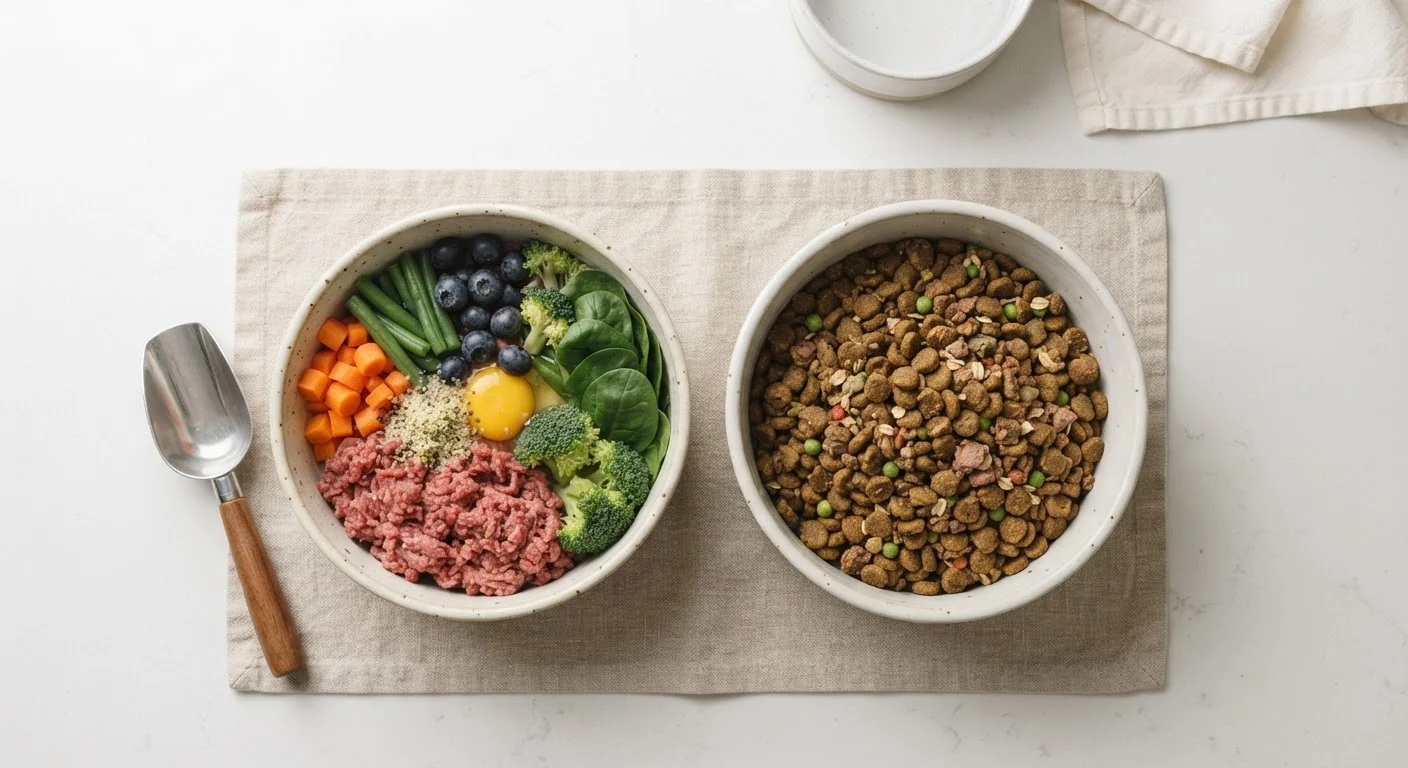
Photo: DockedReads.com | Information Made Easy editorial
Key Takeaways
- Raw diets carry documented pathogen risks including Salmonella and Listeria, which can affect both pets and their owners.
- Many raw feeding benefits — such as shinier coats or better digestion — are anecdotally reported but not yet firmly proven in controlled studies.
- Commercially cooked and balanced diets typically meet AAFCO nutritional standards, reducing the risk of deficiencies.
- Home-prepared raw meals are frequently nutritionally incomplete without careful formulation by a veterinary nutritionist.
- Immunocompromised pets and humans in the household face elevated risk with raw food handling.
- Consult a veterinarian or board-certified veterinary nutritionist before making significant changes to your pet's diet.
Higher moisture content than most dry kibble
Raw diets, like wet commercial foods, naturally contain high water content, which may support urinary tract health in cats and dogs prone to dehydration-related issues.
Minimal processing and fewer additives
Commercial raw and home-prepared diets avoid the preservatives and binding agents found in some ultra-processed pet foods, which appeals to owners concerned about ingredient transparency.
Potential palatability advantage for picky eaters
Many pet owners report that dogs and cats who refuse kibble readily accept raw food, though individual variation is significant and palatability alone does not indicate nutritional quality.
Possible microbiome differences worth studying
Preliminary research has found differences in gut microbiome composition between raw-fed and kibble-fed dogs, though whether these differences translate to health benefits remains unresolved.
High pathogen contamination risk for pets and humans
Salmonella, Listeria, and E. coli have been repeatedly detected in commercial raw pet foods. These pathogens can infect pet owners through food handling and indirect contact with pets.
Frequent nutritional imbalance in home-prepared recipes
Studies indicate the majority of home-prepared raw diet recipes found online do not meet AAFCO minimum nutritional requirements, putting pets at risk of deficiency-related disease over time.
Bone fragments pose choking and injury risk
Raw bones — though softer than cooked — can still splinter, causing esophageal or gastrointestinal injury, intestinal obstruction, or broken teeth in some animals.
Inadequate evidence base for most claimed benefits
Despite widespread anecdotal reports of improved coats, dental health, and digestion, large-scale controlled clinical trials supporting these outcomes are lacking in the peer-reviewed literature.
Elevated risk for immunocompromised animals
Pets on immunosuppressive medications, those with cancer, or very young and very old animals are more vulnerable to foodborne pathogens and should not be fed raw diets, per AVMA guidance.
The Core Debate: What Raw Feeding Actually Claims
Raw pet food diets — sometimes called BARF (Biologically Appropriate Raw Food) or prey-model diets — typically consist of uncooked muscle meat, organ meat, raw bones, and sometimes vegetables or eggs. Proponents argue that cooking destroys beneficial enzymes and nutrients, and that dogs and cats evolved eating whole, unprocessed prey. These claims have driven growing consumer interest, but veterinary and food safety bodies have consistently urged caution.
It's worth distinguishing between commercial raw diets (frozen or freeze-dried products sold through pet retailers), home-prepared raw meals, and cooked homemade diets. Each carries different nutritional and safety profiles. For context on how these compare to other commercial formats, see our article on dry kibble vs. wet food nutritional trade-offs.
Higher moisture content than most dry kibble
Raw diets, like wet commercial foods, naturally contain high water content, which may support urinary tract health in cats and dogs prone to dehydration-related issues.
Minimal processing and fewer additives
Commercial raw and home-prepared diets avoid the preservatives and binding agents found in some ultra-processed pet foods, which appeals to owners concerned about ingredient transparency.
Potential palatability advantage for picky eaters
Many pet owners report that dogs and cats who refuse kibble readily accept raw food, though individual variation is significant and palatability alone does not indicate nutritional quality.
Possible microbiome differences worth studying
Preliminary research has found differences in gut microbiome composition between raw-fed and kibble-fed dogs, though whether these differences translate to health benefits remains unresolved.
Documented Risks: Where the Evidence Is Clearest
The strongest body of evidence in this debate concerns pathogen contamination. Multiple peer-reviewed studies have detected Salmonella, Listeria monocytogenes, and E. coli in commercially available raw pet foods at rates substantially higher than in heat-processed diets. The U.S. Centers for Disease Control and Prevention (CDC) and the American Veterinary Medical Association (AVMA) have both issued formal advisories against raw feeding, specifically citing the zoonotic risk — meaning pathogens can pass from pets to humans through contact with contaminated food, bowls, or pet feces.
Nutritional imbalance is a separate but equally well-documented concern. A 2022 analysis published in veterinary nutrition literature found that a significant proportion of home-prepared raw recipes available online failed to meet AAFCO minimum standards for at least one essential nutrient. Calcium-to-phosphorus ratios are a particular problem in boneless raw diets, and excess vitamin A from heavy organ meat use has been linked to toxicity. Before making any diet change, reviewing how to evaluate a pet food is a practical starting point.
High pathogen contamination risk for pets and humans
Salmonella, Listeria, and E. coli have been repeatedly detected in commercial raw pet foods. These pathogens can infect pet owners through food handling and indirect contact with pets.
Frequent nutritional imbalance in home-prepared recipes
Studies indicate the majority of home-prepared raw diet recipes found online do not meet AAFCO minimum nutritional requirements, putting pets at risk of deficiency-related disease over time.
Bone fragments pose choking and injury risk
Raw bones — though softer than cooked — can still splinter, causing esophageal or gastrointestinal injury, intestinal obstruction, or broken teeth in some animals.
Inadequate evidence base for most claimed benefits
Despite widespread anecdotal reports of improved coats, dental health, and digestion, large-scale controlled clinical trials supporting these outcomes are lacking in the peer-reviewed literature.
Elevated risk for immunocompromised animals
Pets on immunosuppressive medications, those with cancer, or very young and very old animals are more vulnerable to foodborne pathogens and should not be fed raw diets, per AVMA guidance.
AVMA and CDC Position on Raw Feeding
Where the Evidence Remains Incomplete
Honest assessment requires acknowledging that some claimed benefits of raw feeding haven't been thoroughly studied — positively or negatively. Reported improvements in coat quality, stool volume, dental health, and energy are widespread among raw feeders, but most evidence comes from owner surveys rather than controlled clinical trials. This doesn't mean the effects are non-existent; it means the science hasn't yet caught up with the anecdote.
Similarly, the long-term health effects of raw diets on lifespan and disease incidence have not been studied in well-controlled prospective trials. Some preliminary research has explored the gut microbiome differences between raw-fed and kibble-fed dogs, with mixed results. Owners interested in supporting overall nutritional coverage — regardless of diet type — should also consider the role of targeted additions, explored in our piece on supplements in pet diets.
~21%
Commercial raw pet foods testing positive for Listeria
A 2012 FDA survey found Listeria monocytogenes in approximately 21% of commercially available raw pet food products tested.
~60%
Home-prepared raw recipes with nutritional gaps
Research published in veterinary nutrition journals has consistently found that a majority of online homemade pet food recipes do not meet established minimum nutrient requirements.
Practical Guidance for Pet Owners Considering a Change
If you are weighing raw feeding for your pet, the following considerations are grounded in current evidence and professional guidance:
- Consult first: A board-certified veterinary nutritionist (Diplomate ACVN) can formulate or evaluate a diet to meet your pet's life-stage needs.
- Assess household risk: Households with young children, elderly adults, pregnant individuals, or immunocompromised people face heightened zoonotic risk from raw handling.
- Food safety is non-negotiable: Dedicated cutting boards, immediate refrigeration, and thorough handwashing are minimum requirements — not optional steps.
- Verify nutritional completeness: Any diet — raw or cooked — should meet AAFCO nutritional profiles for your pet's life stage. This is just as relevant when reviewing human foods that are toxic to pets, since some raw-diet add-ins fall into that category.
This article provides general educational information about pet nutrition and is not a substitute for personalized veterinary advice. Always consult a qualified veterinarian or board-certified veterinary nutritionist before making significant changes to your pet's diet.
The content on this site is for informational purposes only and is not a substitute for professional advice. Always consult a qualified professional for guidance specific to your situation.