
Dry Kibble vs. Wet Food: Nutritional Trade-offs for Dogs and Cats

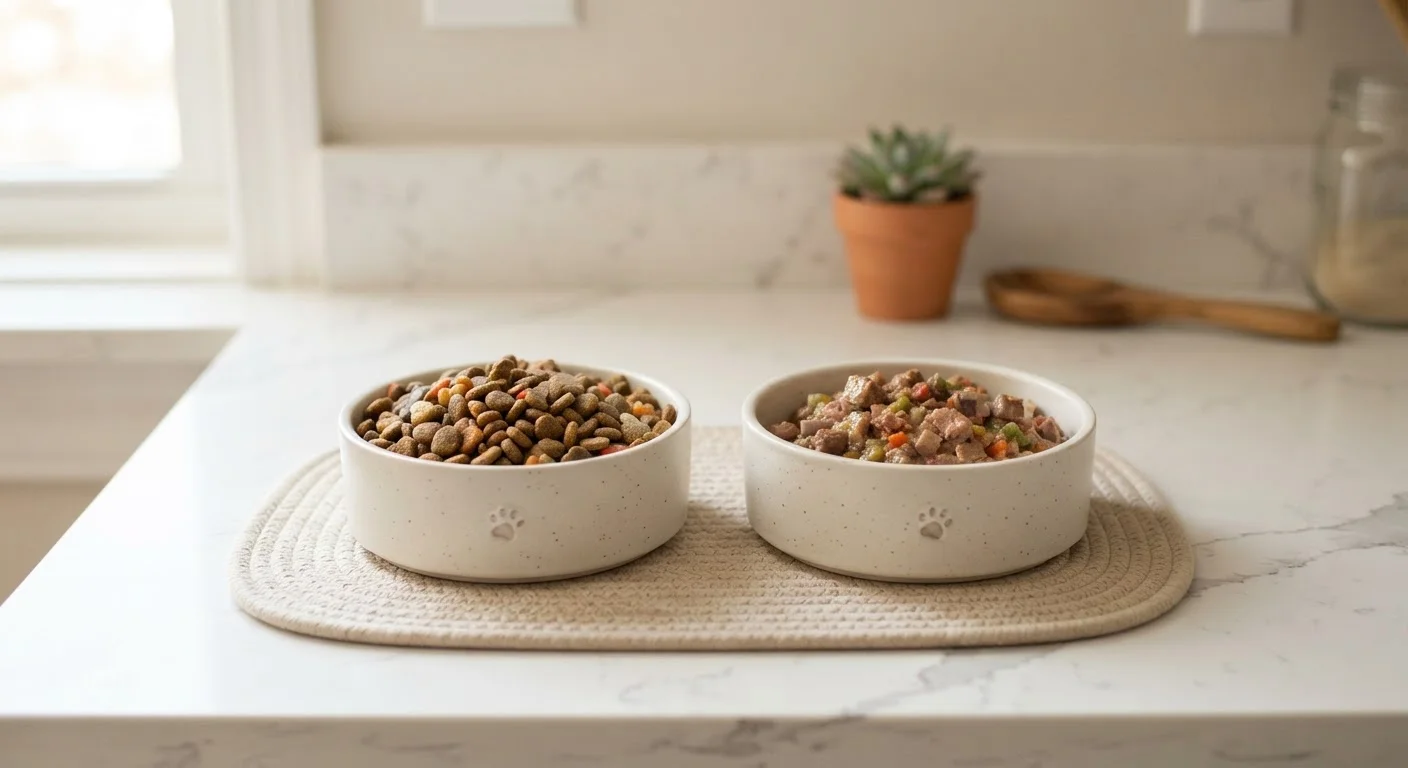
Photo: DockedReads.com | Information Made Easy editorial
Key Takeaways
- Wet food contains roughly 70–80% moisture versus approximately 10% in dry kibble, making it a meaningful hydration source.
- Dry kibble is more calorie-dense per gram, so portion control is especially critical to prevent overfeeding.
- Neither format is universally superior — the right choice depends on the individual pet's health status, age, and preferences.
- Cats are particularly vulnerable to chronic dehydration, and wet food can help offset their naturally low thirst drive.
- Combining both formats (mixed feeding) is a common, vet-accepted approach that can balance convenience and hydration.
- Always verify that any food carries an AAFCO nutritional adequacy statement appropriate for your pet's life stage.
Moisture Content: The Most Significant Nutritional Divide
The single largest functional difference between dry kibble and wet food is water content. Commercially produced dry kibble typically contains around 6–10% moisture, while canned or pouched wet food averages 70–80% moisture by weight. This gap has real physiological consequences, especially for cats.
Cats evolved as desert-adapted predators with a naturally weak thirst drive. They are biologically inclined to obtain most of their water through prey rather than drinking from a bowl. A cat fed exclusively dry kibble may chronically consume less water than its kidneys and urinary tract require. Numerous veterinary studies have linked low dietary moisture intake to higher rates of feline lower urinary tract disease (FLUTD) and chronic kidney disease (CKD). Wet food does not cure these conditions, but it meaningfully increases daily fluid intake, which can support urinary dilution.
Dogs are generally more willing drinkers and less vulnerable to this specific deficit, but senior dogs, dogs with kidney disease, or those in hot climates may also benefit from the added hydration wet food provides. For a deeper look at how diet intersects with conditions like kidney disease, see our overview of pet nutrition for common health conditions.
| Criterion | Dry Kibble | Wet Food |
|---|---|---|
| Moisture content | ~6–10% | ~70–80% |
| Calories per gram | Higher (more dense) | Lower (less dense) |
| Typical cost per calorie | Generally lower | Generally higher |
| Shelf life after opening | Several weeks (sealed) | 24–48 hours (refrigerated) |
| Palatability for picky eaters | Moderate | High (stronger aroma) |
| Dental abrasion benefit | Minimal (except dental-specific kibble) | Negligible |
| Hydration support | Low | High |
| Ease of portion control | Requires careful measuring | Pre-portioned packaging helps |
Calorie Density, Portion Control, and Weight Management
Because dry kibble has most of its water removed during manufacturing, it packs significantly more calories per gram than wet food. A cup of dry kibble might deliver 300–400 kilocalories, while the same weight of wet food could provide 80–120 kilocalories. This matters enormously for portion accuracy.
Owners who switch between formats without recalculating portions risk consistent overfeeding or underfeeding. Measuring by volume (cups) rather than by weight is a common source of error with kibble, since kibble density varies between brands and formulations. Wet food is generally sold in pre-portioned cans or pouches, which can make meal-size management more intuitive — though multi-pet households or large dogs may still need to combine multiple units.
~70–80%
Moisture in typical wet pet food
Compared with roughly 6–10% in dry kibble, per standard AAFCO compositional data — a difference that directly affects daily fluid intake.
~3–4×
Calorie density difference (dry vs. wet)
Dry kibble can deliver three to four times more calories per gram than equivalent wet food, making accurate portioning critical for weight management.
For pets managing obesity or diabetes, the lower caloric density of wet food can make it easier to offer a satisfying meal volume with fewer total calories. However, owners should not assume this advantage applies universally — always calculate actual caloric needs based on the pet's weight and activity level, ideally with veterinary input.
Dental Health: Separating Fact from Marketing Claims
One of the most persistent claims in pet food marketing is that dry kibble mechanically cleans teeth through chewing friction. The evidence is more nuanced. Some studies suggest that certain kibble textures can reduce plaque accumulation compared with soft foods, but most standard kibble shatters on contact rather than scrubbing the tooth surface in any meaningful way. Only specially designed dental diets — typically with a specific kibble size, matrix, and texture — have demonstrated documented plaque-reduction benefits, and these are distinct products from everyday kibble.
Wet food is sometimes characterized as causing faster dental disease, but the relationship is not straightforward. Dental health in pets is primarily driven by genetics, chewing behavior, and active dental hygiene practices (such as tooth brushing), rather than food format alone. The Veterinary Oral Health Council (VOHC) maintains a list of products that have met scientific efficacy standards for dental claims — this is a more reliable reference than general format assumptions.
What the VOHC Seal Actually Means
In short: neither format is a substitute for active dental care. If your pet has existing dental disease, wet food may be easier to chew, but the underlying dental condition needs veterinary attention regardless of diet format.
Cost, Shelf Life, and Practical Feeding Considerations
On a cost-per-calorie basis, dry kibble is almost always less expensive than wet food. A bag of kibble, when stored properly in a sealed container, can remain fresh for several weeks after opening. Wet food, once opened, must be refrigerated and used within 24–48 hours to prevent spoilage, which can increase waste — particularly for single-cat households using large cans.
Mixed feeding — offering a base of kibble supplemented with a measured portion of wet food — is a widely used approach that attempts to balance cost, hydration, and palatability. It is nutritionally acceptable, provided total daily caloric intake is carefully tracked across both formats and both foods carry appropriate AAFCO nutritional adequacy statements. Our guide on evaluating a pet food before you commit covers exactly what those label statements mean and what else to look for.
Species-specific nutritional requirements should always underpin any feeding decision. Cats and dogs have fundamentally different metabolic needs — a point explored in detail in our article on why cats and dogs cannot share the same diet. For pets with diagnosed health conditions, dietary format decisions should involve your veterinarian, and a therapeutic or prescription diet may be appropriate.
This article provides general educational information about pet nutrition and is not a substitute for personalized veterinary advice. Always consult a licensed veterinarian regarding your individual pet's dietary needs, health conditions, and feeding regimen.
The content on this site is for informational purposes only and is not a substitute for professional advice. Always consult a qualified professional for guidance specific to your situation.