
Grout vs. Caulk: Knowing Which One Belongs Where

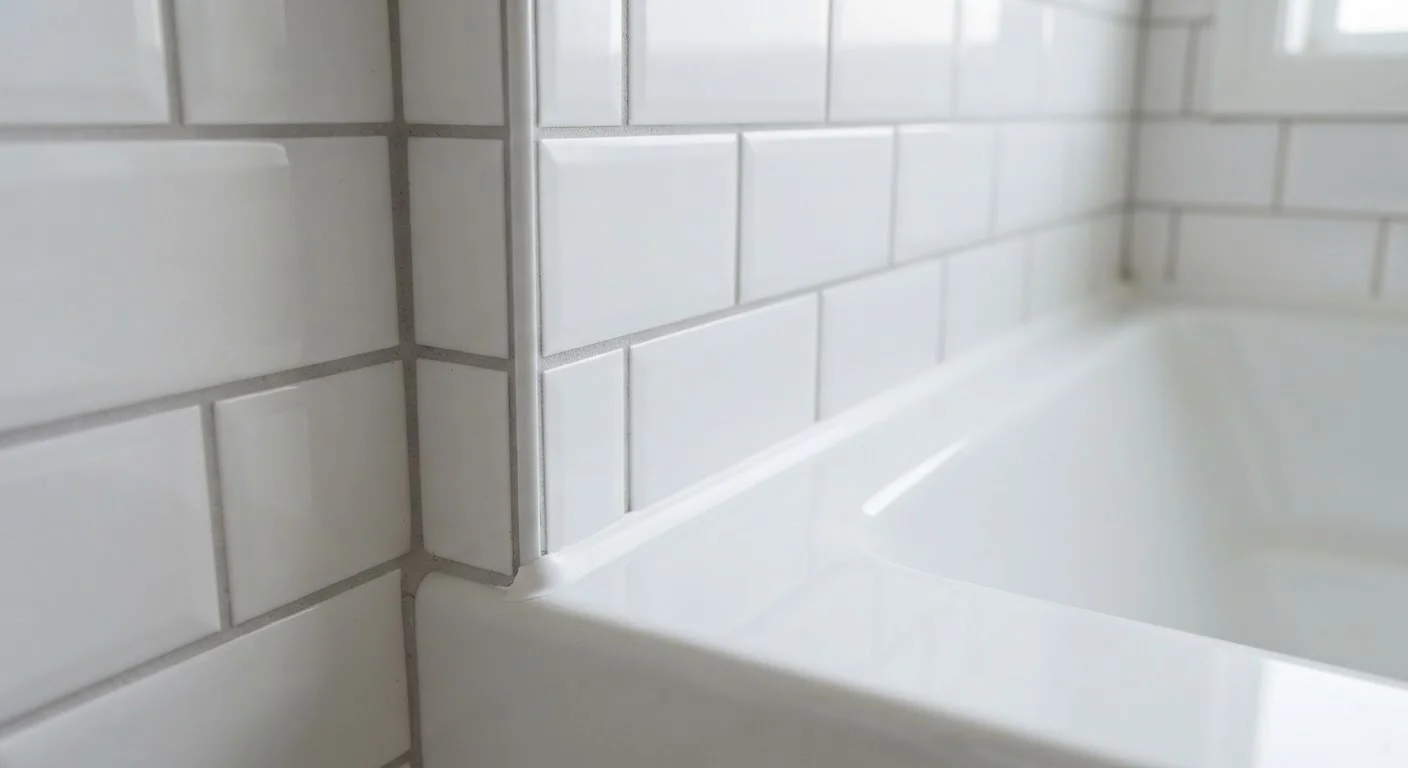
Photo: DockedReads.com | Information Made Easy editorial
Key Takeaways
- Grout is rigid and designed for tile-to-tile joints on stable, flat surfaces.
- Caulk is flexible and belongs anywhere two different surfaces meet or movement can occur.
- Using grout at corners or tub edges invites cracking because those areas flex with temperature and use.
- Caulk is the correct choice at inside corners, along tub and shower bases, and where tile meets a different material.
- Both materials require a clean, dry surface to bond and seal properly.
- Choosing the wrong material is a leading cause of water intrusion in bathrooms and kitchens.
What Makes Grout and Caulk Different
At a glance, grout and caulk can look nearly identical once applied — both fill gaps, both come in white and a range of colors, and both are available in tubes or buckets at any hardware store. But their formulations and performance characteristics are fundamentally different, and using one where the other belongs is one of the most common causes of failed tile work.
Grout is a cement- or epoxy-based compound mixed to a paste and packed into the joints between tiles. Once it cures, it becomes rigid and stone-hard. That hardness is a feature: it resists abrasion from foot traffic, holds tiles in alignment, and can be cleaned aggressively without breaking down. However, because it cannot flex, grout will crack wherever surfaces move — even slightly.
Caulk is a flexible, polymer-based sealant (most commonly silicone or latex/acrylic) that remains somewhat pliable after it cures. That elasticity is its defining advantage: it can stretch and compress as surfaces expand, contract, or vibrate without losing its seal. It is not as hard or scrubbable as grout, but in the right location it outlasts grout significantly.
| Criterion | Grout | Caulk |
|---|---|---|
| Base material | Cement or epoxy | Silicone, latex, or acrylic polymer |
| Flexibility after curing | Rigid — does not flex | Elastic — stretches and compresses |
| Primary use | Tile-to-tile joints on stable fields | Transitions, corners, fixture edges |
| Water resistance | Good (better when sealed) | Excellent at sealed joints |
| Sandable / smoothable | Yes, once fully cured | No — tool-smooth when wet |
| Typical lifespan | 10–20 years on stable surfaces | 5–10 years before reapplication |
| Fails when used wrong | Cracks at moving joints | Collects dirt, loses adhesion in tile fields |
Where Each One Actually Belongs
The simplest rule of thumb: grout fills tile-to-tile joints on flat, stable fields; caulk seals every change-of-plane and change-of-material joint.
Use grout here
- The joints between tiles across a floor or wall field
- Tile-to-tile joints on a backsplash where the entire surface is tile
Use caulk here
- The perimeter joint where a tub or shower floor meets the tile wall — every time
- All inside corners in a shower or tub surround (where two walls meet)
- Where tile meets a countertop, wood trim, window sill, or any non-tile material
- The joint at the base of a toilet or vanity where tile meets the fixture
If you're working through a full bathroom tile project, our guide to tiling a bathroom floor walks through how to plan these material boundaries before you ever set a tile — which makes the grout-vs.-caulk decision much cleaner.
Color Matching Grout and Caulk
Why the Wrong Choice Causes Problems
When grout is used at a tub-to-wall joint, it typically looks fine for a few months. Then small hairline cracks appear. Water seeps behind the tile, saturates the substrate (often cement board or drywall), and over time causes mold, soft spots in the wall, or structural damage — all invisible until serious. The root cause is simple physics: the bathtub flexes under the weight of water and shifts seasonally with temperature. Rigid grout cannot follow that movement.
The reverse mistake — using caulk across a tile field instead of grout — is less structurally dangerous but causes its own headaches. Caulk stays slightly tacky, attracts dirt, discolors faster than grout, and cannot be sanded smooth. It also lacks the compressive strength to keep tiles from shifting under load.
If your caulk is already failing at a joint, that's a separate issue worth understanding. See our article on why caulk keeps cracking for the most common application mistakes and how to fix them before reapplying.
~70%
Bathroom water damage traced to failed seals
Industry estimates from tile and waterproofing professionals suggest a large majority of bathroom water-intrusion claims originate at perimeter joints — exactly where caulk should be used instead of grout.
5–10 yrs
Typical caulk service life before reapplication
Most flexible sealants in wet areas should be inspected annually and replaced roughly every five to ten years, depending on product type and conditions.
The content on this site is for informational purposes only and is not a substitute for professional advice. Always consult a qualified professional for guidance specific to your situation.