
Small Bathroom Upgrades That Make the Room Feel Larger

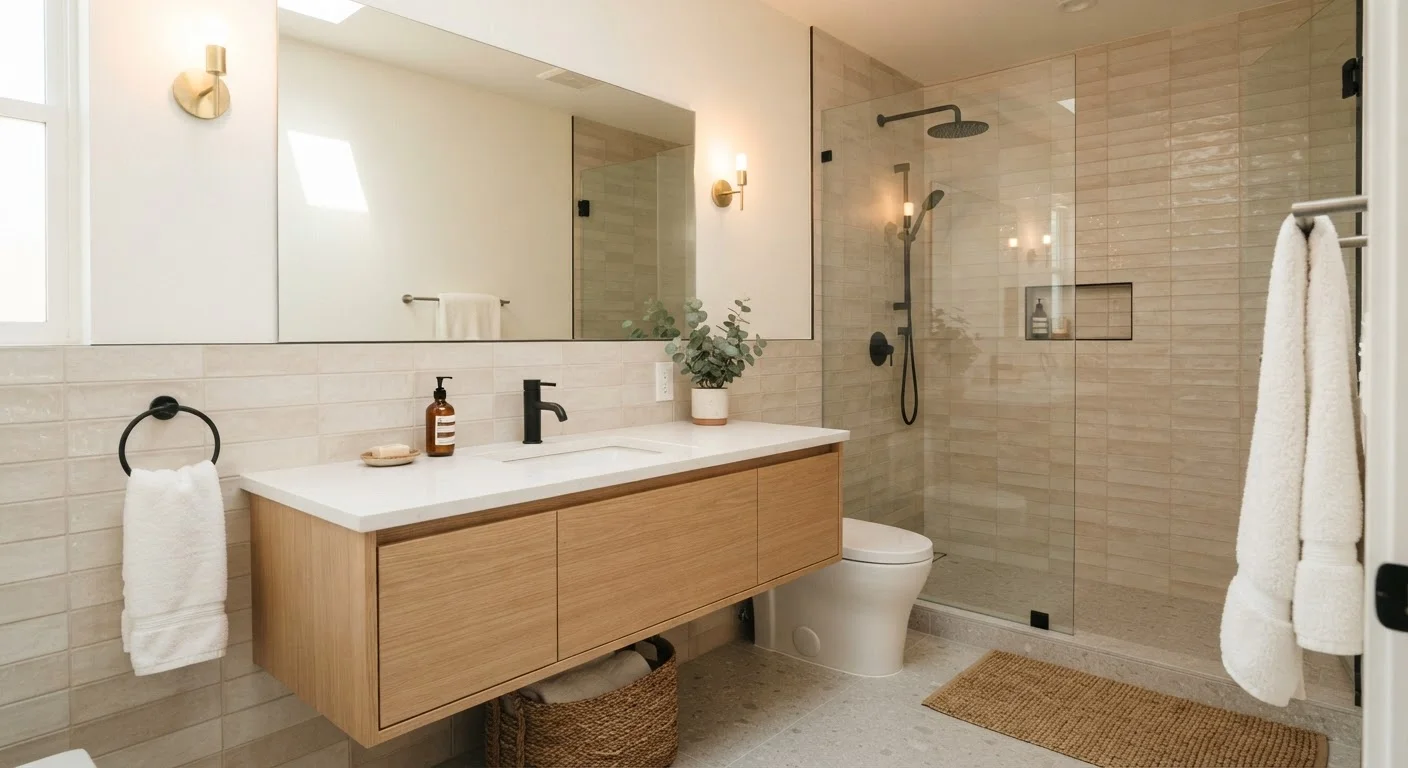
Photo: DockedReads.com | Information Made Easy editorial
Key Takeaways
- Large mirrors and strategic lighting are among the most effective tools for visually expanding a small bathroom.
- Floating vanities and wall-mounted storage free up floor space, making the room feel less crowded.
- Light, cohesive color palettes and large-format tiles reduce visual fragmentation and increase perceived size.
- Frameless glass shower enclosures allow sightlines to travel uninterrupted across the room.
- Decluttering and concealed storage have an outsized impact on how spacious any small bathroom feels.
Why Small Bathrooms Feel Smaller Than They Are
Most compact bathrooms don't lack square footage as much as they lack visual breathing room. Bulky fixtures, dark finishes, and cluttered surfaces all signal confinement to the eye — even when the underlying floor plan is perfectly workable. The good news: a handful of targeted upgrades, most of them DIY-friendly, can meaningfully change how the space reads without touching the plumbing or load-bearing walls.
This list draws on established interior design principles — sightlines, light reflection, visual continuity — rather than trend-driven cosmetic changes. Whether you're refreshing a primary bathroom or a narrow half-bath, these upgrades offer real impact per dollar and hour invested. For a broader framework on scoping home upgrades, see the complete home renovation resource.
Install a large, full-width mirror
A mirror that spans most of the vanity wall — or even extends to the ceiling — is one of the single most effective space-expanding moves in a small bathroom. Mirrors double the perceived depth of a room by reflecting both light and the space itself. A frameless or thin-framed design keeps the visual effect clean. If wiring permits, a backlit mirror adds ambient light without requiring an additional fixture.
A full-width mirror can effectively double a bathroom's perceived depth at relatively low cost.
Switch to a floating vanity
Floor-mounted vanity cabinets visually anchor — and interrupt — the floor plane, making a room feel smaller than it is. A wall-hung (floating) vanity exposes the floor beneath it, allowing the eye to travel further and making cleaning easier as a practical bonus. Pair it with an open shelf or two rather than closed lower cabinets to maintain the airy effect. Note that wall-mounting a vanity involves securing it to studs and, depending on your setup, may require a plumber for drain repositioning — consult a licensed professional if you're unsure about either.
Exposing floor space beneath a floating vanity makes the room feel noticeably less cramped.
Choose large-format, light-colored tiles
Smaller tiles mean more grout lines, and more grout lines mean more visual fragmentation — which reads as busyness and confinement. Large-format tiles (typically 12×24 inches or larger) reduce grout lines and create a calmer, more continuous surface. Light colors — whites, soft creams, pale grays — reflect more light and recede visually. Running floor tile in a diagonal or continuing the same tile from floor to wall in a wet area adds further visual depth. If you're planning a tile refresh, the guide to tiling a bathroom floor covers layout and installation in detail.
Large-format tiles with minimal grout lines create a calmer, more expansive visual field.
Maximize and layer your lighting
A single overhead fixture creates unflattering shadows and uneven brightness — both of which make a room feel smaller and less inviting. Layered lighting — overhead ambient light combined with vanity side lighting or a backlit mirror — eliminates shadows around the face and brightens corners that overhead fixtures miss. LED strips behind a floating vanity or under cabinets add a sense of depth. Dimmer switches let you adjust intensity for different times of day without additional fixtures.
Layered lighting eliminates shadows in corners and dramatically brightens how a small bathroom feels.
Replace a shower curtain with a frameless glass enclosure
A shower curtain — especially a dark or patterned one — creates a visual wall that cuts the bathroom in half. A frameless glass panel or sliding glass door allows sightlines to extend through the shower zone, keeping the room visually unified. Semi-frameless options cost less than fully frameless and still deliver most of the spatial benefit. Clear glass requires regular squeegee maintenance to avoid soap-scum buildup; low-iron glass offers a crisper, less greenish transparency if budget allows. Installation typically involves some tile drilling and waterproofing work — if you're not confident in those skills, a professional installer is a worthwhile investment.
Frameless glass shower enclosures remove visual barriers and let sightlines travel across the full room.
Declutter and add concealed storage
Visual clutter is one of the fastest ways to make any room feel smaller. Recessed medicine cabinets, over-toilet shelving with doors, and drawer organizers all reduce countertop and surface clutter without sacrificing storage capacity. A recessed niche in the shower wall — tiled flush with the surround — eliminates the need for hanging caddies or corner shelves. The goal is clear sightlines and unbroken surfaces, so the eye can move freely rather than snagging on objects. Even modest decluttering efforts have a noticeable effect on perceived room size.
Clear countertops and concealed storage allow the eye to move freely, making the space feel open.
Taking the Next Step
None of these upgrades require gutting the room, and most can be approached in stages as budget and time allow. A useful starting point is to address the upgrades that cost the least and deliver the most: lighting, mirrors, and a paint refresh can often be completed in a single weekend and immediately transform the feel of the space.
Start with Paint and Lighting
If your bathroom refresh surfaces any plumbing concerns — a dripping faucet or slow drain you've been ignoring — it's worth addressing them before finishing work. The hidden risks of small plumbing leaks article explains why minor drips are worth taking seriously. The same incremental approach works well in other rooms too — the kitchen refresh without a full renovation guide shows how targeted changes can deliver outsized results elsewhere in your home.
The content on this site is for informational purposes only and is not a substitute for professional advice. Always consult a qualified professional for guidance specific to your situation.