
When a Small Plumbing Leak Is Not Actually Small

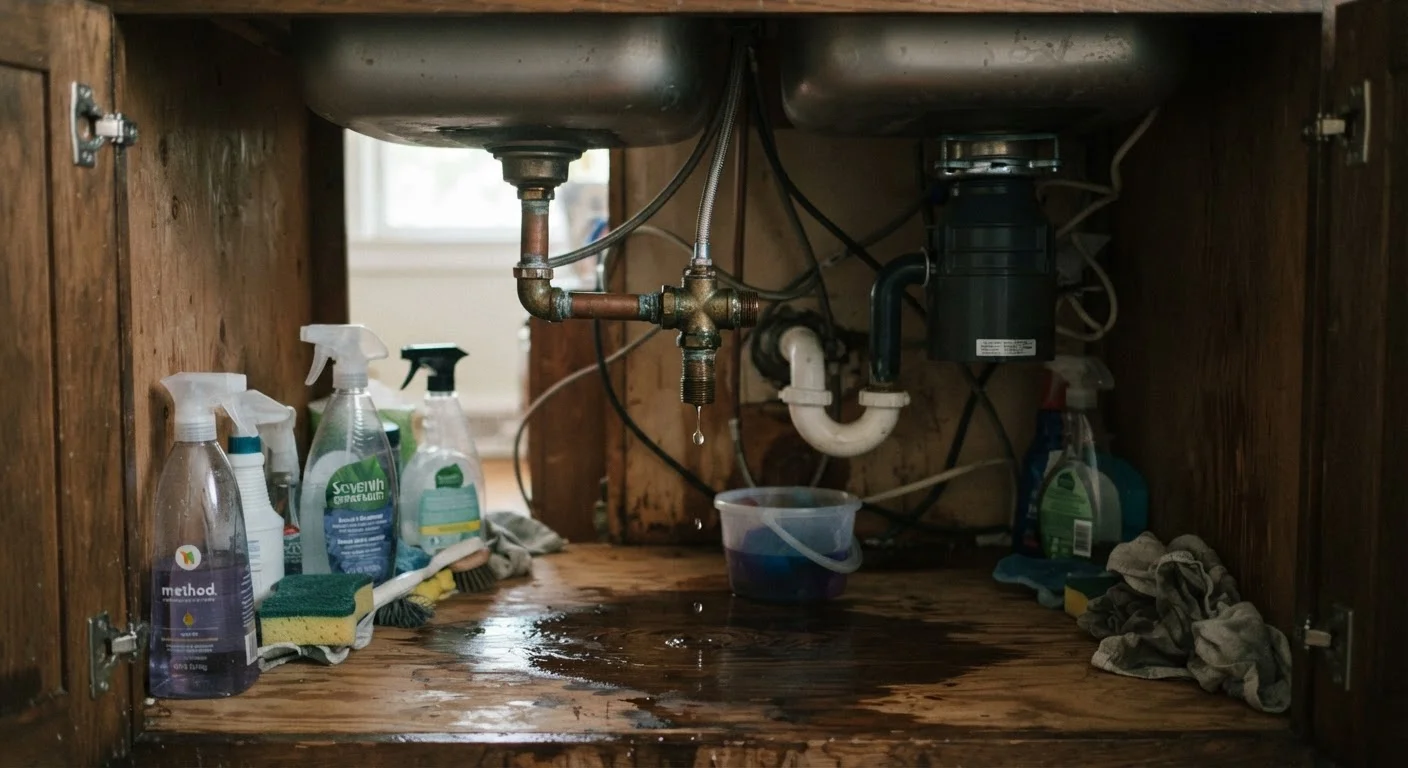
Photo: DockedReads.com | Information Made Easy editorial
Key Takeaways
- A small visible leak is often a symptom of a larger underlying plumbing issue.
- Moisture trapped inside walls and subfloors can lead to mold within 24–48 hours.
- Water stains, musty odors, and soft flooring near fixtures are warning signs of hidden damage.
- Many small leaks involve connections or supply lines that are inexpensive to fix early but costly to ignore.
- Knowing when to call a licensed plumber — rather than DIY — is a critical part of leak assessment.
Why "Small" Is Relative in Plumbing
A thin bead of moisture at a pipe joint or a slow drip from a supply line can feel like a minor inconvenience — something to deal with eventually. But in plumbing, the size of what you can see rarely reflects the size of what's happening behind it.
Water follows the path of least resistance. A drip originating at a sink drain fitting may be traveling along the pipe before it falls, meaning the wet spot you see isn't necessarily where the problem started. More importantly, any sustained moisture in an enclosed space — a cabinet base, a wall cavity, a subfloor — creates conditions for structural decay and mold that develop independent of whether the drip continues.
The Visible Drip Is Just the Starting Point
The real cost of a small leak is almost never the water itself — it's the secondary damage that accumulates before the leak is repaired.
Signs That a Leak Has Already Gone Deeper
Before assuming a drip is isolated, check for these indicators that moisture has moved beyond the visible source:
- Soft or stained cabinet floors: Particleboard and plywood absorb water quickly and begin to delaminate. Press the surface — if it gives, it's compromised.
- Discolored drywall or baseboards: Yellow-brown staining or paint that bubbles near plumbing walls suggests water is wicking through the structure.
- Musty odor in enclosed spaces: A persistent earthy smell inside a cabinet or under a vanity is a reliable early signal of mold activity.
- Warped flooring near fixtures: Hardwood and laminate floors near toilets, dishwashers, or under-sink areas that buckle or lift are absorbing moisture from below.
If you observe more than one of these signs, the situation warrants a more thorough inspection — not just a quick tighten of the fitting.
Check Under Sinks on a Regular Schedule
Common Sources and What They Signal
Understanding where a leak originates helps you gauge its likely scope:
3,000+
Gallons wasted per year by one dripping faucet
According to the U.S. Environmental Protection Agency's WaterSense program, a faucet dripping once per second wastes over 3,000 gallons annually.
24–48 hrs
Time for mold to begin growing on wet materials
The EPA notes that mold can begin developing on damp building materials — including wood and drywall — within one to two days of sustained moisture exposure.
~10%
U.S. homes with leaks wasting 90+ gallons daily
The EPA estimates that roughly one in ten U.S. homes has leaks that collectively waste 90 gallons or more per day.
- Supply line connections
- The braided or plastic lines running from shutoff valves to faucets and toilets are a frequent failure point. Loose fittings cause seeping; cracked lines can fail suddenly. These are relatively inexpensive to replace but should be inspected regularly.
- Drain basket or P-trap joints
- Leaks here are often caused by worn putty, loose slip-joint nuts, or cracked plastic fittings. They tend to appear only when water is actively draining, making them easy to miss.
- Shutoff valves
- Older compression-style shutoff valves — especially in homes built before the 1980s — can develop slow weeps around the packing nut. These may worsen if the valve is turned for the first time in years.
- Supply or drain lines inside walls
- These are the highest-concern category. A leak inside a wall may only become visible after significant damage has occurred. If you can't identify an external source but notice signs of moisture damage, a licensed plumber should inspect the lines.
For repairs that involve supply lines, drain connections, or shutoff valves in accessible locations, many homeowners with basic tools can make the fix. But work that involves cutting into walls, soldered copper, or any gas-adjacent plumbing should always go to a licensed professional. Just as you'd call an expert for water damage that's reached the drywall — similar to how patching drywall after moisture damage requires its own careful approach — plumbing inside walls is not a shortcut situation.
Taking Stock Before You Act
When you find a leak, a few minutes of methodical assessment before reaching for a wrench can save significant time and cost:
- Shut off the supply. Use the fixture's local shutoff valve. If it doesn't fully stop the flow, note that the valve itself may need replacement.
- Dry the area completely so you can identify the exact drip point when water is running again.
- Inspect surrounding materials for the signs described above — softness, staining, odor.
- Photograph the area before and after any repair. This creates a record useful for insurance purposes if damage has occurred.
- Evaluate whether the fix is within your skill level. Tightening a slip-joint nut is basic maintenance. Replacing a corroded shutoff valve on older copper supply is a different task entirely.
Leaks that appear small have a habit of signaling bigger system wear. A home's plumbing operates as an interconnected network — pressure, pipe age, and joint integrity all interact. Addressing the visible drip is the right first step, but understanding what it might be telling you about the broader system is what separates a quick fix from a lasting one.
This article is for general home maintenance information only. For plumbing work involving structural damage, permits, or work inside walls, consult a licensed plumber in your area and verify local code requirements before proceeding.
Frequently Asked Questions
The content on this site is for informational purposes only and is not a substitute for professional advice. Always consult a qualified professional for guidance specific to your situation.