
Liability vs. Full Coverage: Choosing the Right Auto Insurance Level

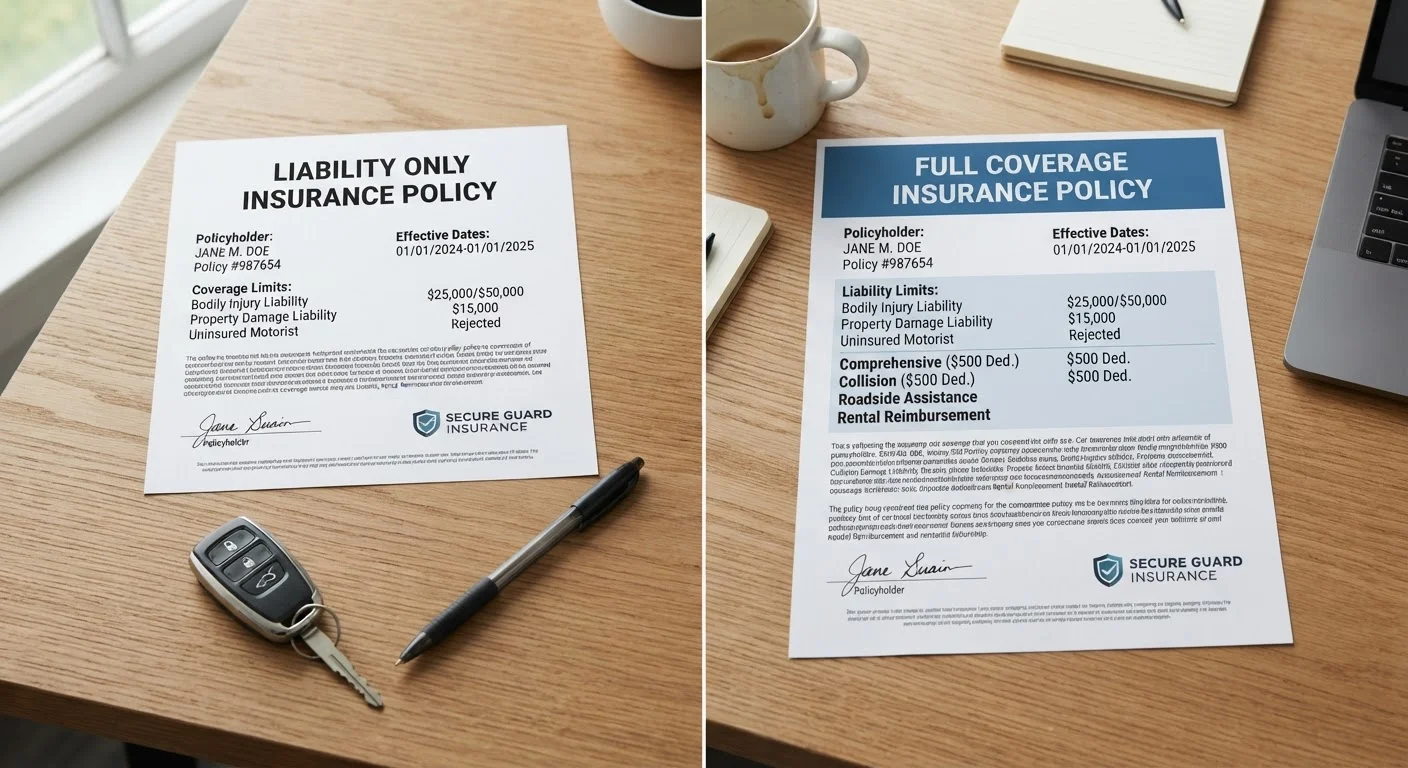
Photo: DockedReads.com | Information Made Easy editorial
Key Takeaways
- Liability-only coverage pays for damage or injuries you cause to others — not your own vehicle.
- Full coverage typically bundles liability, collision, and comprehensive into one policy.
- Lenders almost always require full coverage on financed or leased vehicles.
- Your vehicle's current market value is one of the most important factors in this decision.
- Neither option automatically means the cheapest or most expensive policy — context matters.
What Each Coverage Level Actually Includes
Auto insurance isn't a single product — it's a collection of coverages bundled in different combinations. Understanding what each level actually pays for is the starting point for any informed decision.
Liability-only coverage is the legal minimum required in nearly every U.S. state. It pays for bodily injury and property damage that you cause to other people in an accident. Critically, it does not pay to repair or replace your own vehicle — that cost falls entirely on you. Most states set minimum liability limits, though those minimums are often lower than what experts consider adequate protection against serious accidents.
Full coverage is not a single, standardized policy type — it's an informal term describing a package that typically includes liability plus two additional components: collision coverage (which pays to repair your vehicle after an accident, regardless of fault) and comprehensive coverage (which covers non-collision events like theft, fire, flooding, hail, or hitting an animal). For a closer look at how those two components differ from each other, see our side-by-side breakdown of comprehensive vs. collision.
Full coverage policies may also include personal injury protection (PIP) or medical payments coverage depending on your state, though requirements vary. For a thorough explanation of every section in a standard auto policy, Car Insurance Decoded walks through each component in plain language.
| Criterion | Liability-Only | Full Coverage |
|---|---|---|
| Covers damage to others | Yes | Yes |
| Covers your own vehicle damage | No | Yes (via collision) |
| Covers theft, weather, fire | No | Yes (via comprehensive) |
| Required by lenders/lessors | No | Typically yes |
| State legal minimum | Meets minimum | Exceeds minimum |
| Typical premium cost | Lower | Higher |
| Best vehicle age fit | Older, lower-value cars | Newer or higher-value cars |
The Factors That Should Drive Your Decision
Choosing between liability-only and full coverage isn't simply about finding the cheapest premium. Several practical factors should shape that choice.
Your Vehicle's Current Market Value
This is typically the most decisive variable. If your car's actual cash value is low — say, under $4,000 — the math on full coverage often doesn't favor paying higher premiums for coverage that, after your deductible, might yield a modest payout. A general rule of thumb many financial planners cite is that if the annual cost of collision and comprehensive exceeds 10% of your vehicle's value, it may be worth reconsidering those coverages.
Whether You Have a Loan or Lease
If a lender has a financial stake in your vehicle, they have the authority — and routinely exercise it — to require full coverage. This isn't optional. Dropping to liability-only on a financed car can violate your loan terms and expose you to forced-placed insurance, which lenders purchase on your behalf at significantly higher rates.
Your Personal Financial Cushion
Assessing your own risk tolerance and capacity is essential here. Someone who could comfortably replace a totaled vehicle from savings is in a different position than someone for whom an unexpected $10,000 expense would be financially devastating. Understanding risk tolerance vs. risk capacity — concepts borrowed from personal finance — applies directly to this kind of decision.
~13%
U.S. drivers estimated to be uninsured
The Insurance Research Council has estimated that roughly 1 in 8 U.S. drivers carries no auto insurance, underscoring why liability coverage exists as a mandatory floor.
~$800–$1,200+
Average annual full coverage premium (U.S.)
National average estimates from industry sources suggest full coverage runs several hundred dollars more per year than liability-only, though rates vary widely by state, driving history, and vehicle.
Where and How Much You Drive
High-mileage drivers who commute daily in areas with heavy traffic, severe weather, or elevated vehicle theft rates face meaningfully greater exposure than someone who drives occasionally in low-risk conditions. Geographic risk factors are a legitimate part of the calculation.
It's also worth noting that some common assumptions about insurance — like the idea that newer cars always make full coverage worthwhile — don't hold universally. Our article on common car ownership myths unpacks several of these misconceptions.
State Minimums Are a Floor, Not a Recommendation
The content on this site is for informational purposes only and is not a substitute for professional advice. Always consult a qualified professional for guidance specific to your situation.