
Comprehensive vs. Collision Coverage: A Side-by-Side Breakdown

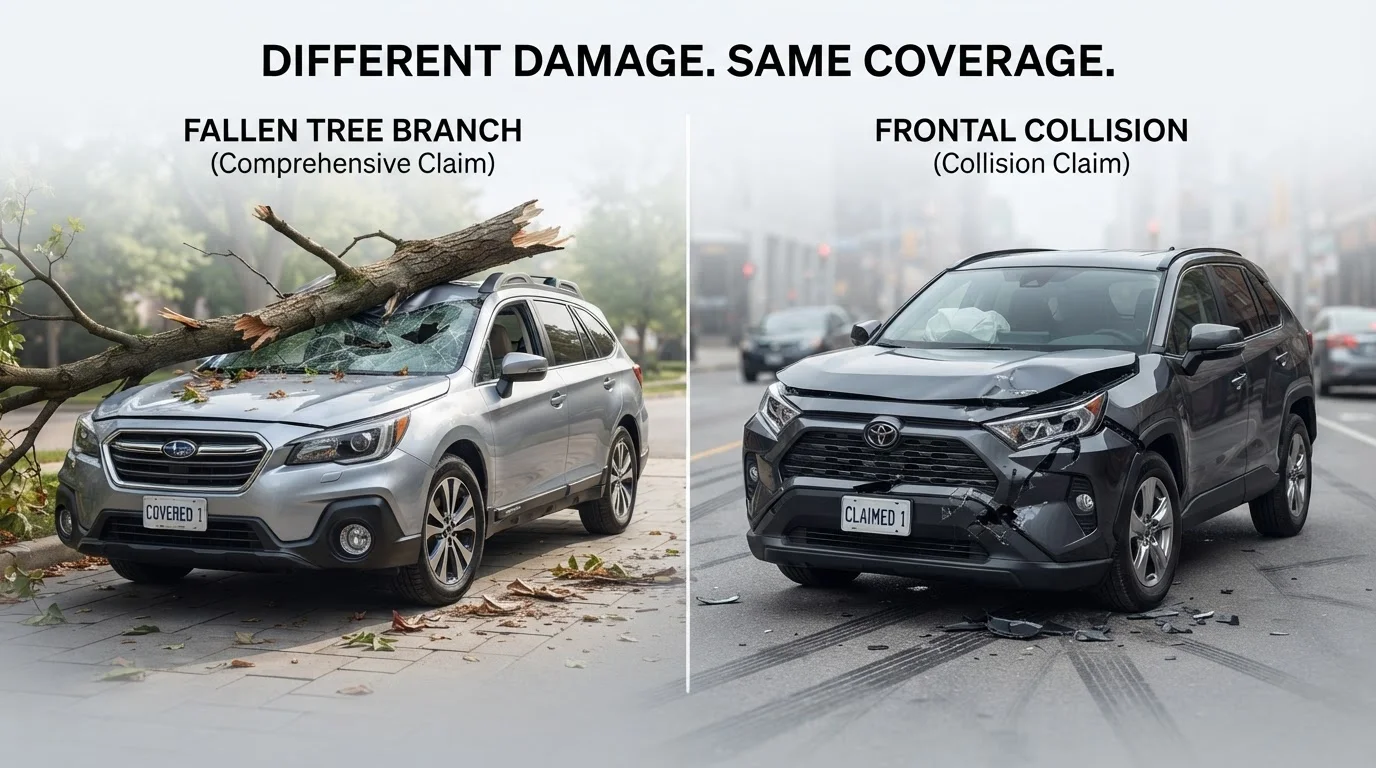
Photo: DockedReads.com | Information Made Easy editorial
Key Takeaways
- Comprehensive covers damage from events like theft, hail, fire, and animal strikes — not crashes.
- Collision covers damage to your vehicle from hitting another car, object, or rolling over.
- Neither coverage is required by law, but lenders typically require both when financing or leasing a vehicle.
- Both carry separate deductibles that directly affect your premium and out-of-pocket costs.
- Older vehicles with low market value may not justify the added cost of carrying both coverages.
What Each Coverage Actually Pays For
The confusion between these two coverage types is understandable — both deal with physical damage to your vehicle, and both are often bundled together under the informal term "full coverage." But they respond to entirely different triggers.
Comprehensive coverage pays for damage caused by events that are generally outside your control while driving. That includes theft, vandalism, fire, floods, hailstorms, falling objects (like a tree branch), and collisions with animals such as deer. If you wake up to a cracked windshield from overnight hail, comprehensive is what applies.
Collision coverage pays for damage to your vehicle resulting from a physical impact — hitting another vehicle, striking a guardrail, or rolling your car. The critical distinction: collision applies regardless of fault. If you cause an accident, the other driver's liability coverage won't repair your own car. Collision is what steps in for your side of that equation.
For a broader look at how these fit within your overall policy, see our guide to what every policy section actually means.
| Criterion | Comprehensive | Collision |
|---|---|---|
| Damage trigger | Non-collision events (theft, weather, animals) | Physical impact with vehicle or object |
| At-fault accidents | Not covered | Covered |
| Theft of vehicle | Covered | Not covered |
| Hail or flood damage | Covered | Not covered |
| Single-car rollover | Not covered | Covered |
| Animal strike (e.g., deer) | Covered | Not covered |
| Required by law | No | No |
| Required by lenders/lessors | Typically yes | Typically yes |
| Separate deductible | Yes | Yes |
Deductibles, Premiums, and the Financial Tradeoff
Each coverage carries its own deductible — the amount you pay out of pocket before the insurer covers the rest. Common deductible choices range from $250 to $1,500. Choosing a higher deductible lowers your premium but increases your exposure when you file a claim. These two coverages often have separate deductible elections, so you might carry a $500 comprehensive deductible and a $1,000 collision deductible simultaneously.
~75%
US insured drivers carrying comprehensive
According to the Insurance Research Council, roughly three-quarters of insured US drivers carried comprehensive coverage in recent years.
~72%
US insured drivers carrying collision
The Insurance Research Council has estimated a similar share of insured drivers carry collision coverage, reflecting its widespread use among financed vehicles.
$500
Most common collision deductible chosen
Industry data consistently shows $500 as the most frequently selected collision deductible, balancing manageable out-of-pocket cost with premium savings.
The practical question isn't just whether to carry these coverages, but whether the math supports it. A general rule of thumb: if your vehicle's actual cash value (ACV) is less than 10 times your combined annual premium for both coverages, the financial benefit of maintaining them diminishes significantly. ACV accounts for depreciation, not what you originally paid — a five-year-old sedan that cost $28,000 new might have a current ACV of $12,000.
Keep in mind that if another driver causes an accident, their liability coverage should pay for your repairs — but only up to their policy limits. If they're uninsured or underinsured, collision coverage on your own policy becomes a critical fallback. This intersects with broader coverage decisions covered in our breakdown of liability vs. full coverage.
When Lenders and Leases Change the Equation
While neither comprehensive nor collision coverage is mandated by state law, they're almost universally required by lenders when you finance a vehicle and by lessors when you lease one. This requirement protects the lender's financial interest in a vehicle they technically still own until the loan is repaid.
Lenders may also require a maximum deductible (often $500 or $1,000) and will typically be listed as a lienholder on your policy — meaning any claim payment for a total loss goes to them first, with any remaining balance returned to you. If you drop these coverages mid-loan without notifying your lender, they are generally permitted to purchase force-placed insurance on your behalf — a more expensive policy that protects only the lender, not you.
First-time car owners navigating these requirements can find a thorough overview in our guide to insurance, costs, and paperwork for new owners.
Gap Insurance and Total Loss Situations
This article provides general educational information about auto insurance concepts. Coverage terms, requirements, and costs vary by insurer, state, and individual circumstances. Consult a licensed insurance professional for guidance specific to your situation.
The content on this site is for informational purposes only and is not a substitute for professional advice. Always consult a qualified professional for guidance specific to your situation.