
How Rain Changes the Road Beneath Your Tyres

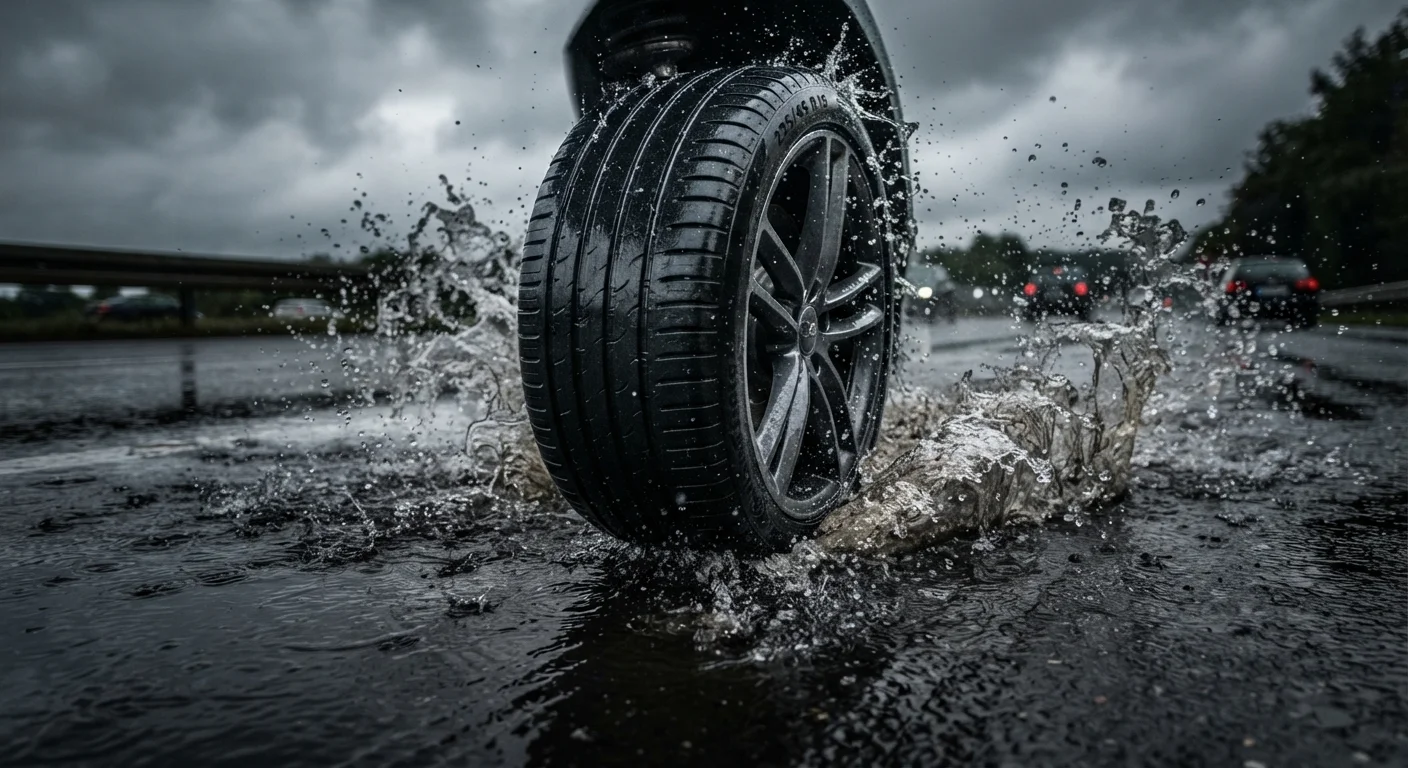
Photo: DockedReads.com | Information Made Easy editorial
Key Takeaways
- Wet roads reduce tyre grip significantly, even before aquaplaning fully occurs.
- Aquaplaning can begin at speeds as low as 45 mph on standing water.
- Worn or under-inflated tyres dramatically increase aquaplaning risk.
- Steering and braking lose effectiveness during aquaplaning — sharp inputs can worsen a skid.
- Reducing speed before reaching standing water is more effective than reacting after the fact.
- Tyre condition is your most important defence against wet-road accidents.
Why Wet Roads Are More Complex Than They Look
Most drivers understand that rain makes roads slippery — but the reason goes deeper than a simple wet surface. When rain falls, it doesn't just coat the road evenly. It interacts with existing road materials, drainage conditions, surface texture, and whatever residues have accumulated since the last downpour.
Asphalt is designed with a rough texture to promote tyre grip, but that same texture collects oil drips, tyre rubber, and road dust over time. When the first rain arrives after a dry spell, water mixes with these deposits before washing them away, briefly creating a surface that can be more slippery than ice in localized patches. Once heavier or sustained rain sets in, roads become cleaner — but the depth of standing water becomes the new hazard.
Braking distances on wet roads are roughly double those on dry roads under typical conditions. This isn't just about the road surface — it's about how tyres interact with water at speed. Understanding that relationship is what separates reactive driving from genuinely safe wet-weather technique.
~2x
Braking distance increase on wet roads
Road safety agencies generally estimate that braking distances roughly double on wet roads compared to dry conditions at equivalent speeds.
45 mph
Speed at which aquaplaning can begin
On standing water, aquaplaning can occur from around 45 mph — lower if tyre tread is worn or tyres are under-inflated.
4/32"
Tread depth at which many experts recommend replacement
While the US legal minimum is 2/32 of an inch, many road safety professionals suggest replacing tyres at 4/32 for adequate wet-road performance.
How Aquaplaning Forms — and Why It's Hard to Predict
A tyre's tread pattern exists primarily to solve one problem: moving water out from under the contact patch quickly enough to maintain rubber-to-road contact. Tread channels act as drainage grooves, directing water sideways and rearward as the tyre rolls forward. When water arrives faster than the tyre can expel it, a pressurised wedge of water forms at the front of the tyre, lifting it off the surface. That's aquaplaning.
What makes it difficult to predict is that it's influenced by several variables simultaneously — speed, tyre condition, water depth, road camber, and even tyre width. Wider tyres, for instance, cover more surface area, which can make water displacement harder. A vehicle that handles wet roads confidently at 50 mph may reach its aquaplaning threshold just a few miles per hour faster.
Drivers often don't feel aquaplaning coming. The steering wheel may suddenly feel unusually light, the engine note may change, or the vehicle may drift subtly before control is fully lost. Recognising these early signals — rather than reacting after full aquaplaning — is critical.
Early Warning Signs of Aquaplaning
The Role Tyre Condition Plays in Wet Grip
No aspect of vehicle preparation influences wet-weather safety more directly than tyre condition. Two factors matter most: tread depth and inflation pressure.
As tread wears down, the tyre's ability to channel water away from the contact patch diminishes. At the US legal minimum of 2/32 of an inch, a tyre's wet-road performance is considerably compromised compared to a new tyre. Many road safety professionals suggest considering replacement at 4/32 of an inch, particularly for drivers in regions with frequent rainfall.
Under-inflation is equally problematic. A tyre with insufficient pressure deforms under load, reducing the effectiveness of the contact patch and making it harder to maintain water displacement at speed. Checking tyre pressure monthly — and especially before long trips in wet weather — is a simple habit with measurable safety returns. For a broader look at how tyre condition affects your safety on the road, see our guide to tyre pressure and tread.
Tyre Age Also Matters
How to Drive Safely When Rain Changes the Road
Safe wet-weather driving centres on anticipation rather than reaction. The most effective adjustments are made before a hazard is encountered, not during it.
- Reduce speed before standing water: Slowing down gives tyres more time to displace water and shortens braking distance. Speed reduction is the single most effective tool against aquaplaning.
- Increase following distance: Double your usual gap from the vehicle ahead. Wet braking distances mean the safety margins you'd rely on in dry conditions are insufficient.
- Avoid sudden inputs: Sharp steering, hard braking, and aggressive acceleration all reduce the tyre's ability to maintain grip on a wet surface. Smooth, progressive inputs are the goal.
- Disable cruise control: On wet or flooded roads, cruise control can maintain or increase speed at exactly the moment you need to slow. Turn it off in rain.
- Follow tyre tracks when possible: On multi-lane roads, the vehicle ahead may have partially cleared water from a track. Driving in existing tyre tracks can marginally reduce water depth under your tyres.
If aquaplaning does occur, ease off the accelerator without stamping the brake, hold the wheel steady, and allow the vehicle to decelerate naturally until grip returns. For context on how these skills translate across different road types, our article on motorway versus urban driving habits covers how speed and environment interact differently in each setting.
Frequently Asked Questions
The content on this site is for informational purposes only and is not a substitute for professional advice. Always consult a qualified professional for guidance specific to your situation.