
Conventional vs Synthetic Motor Oil: What the Difference Actually Means for Your Engine

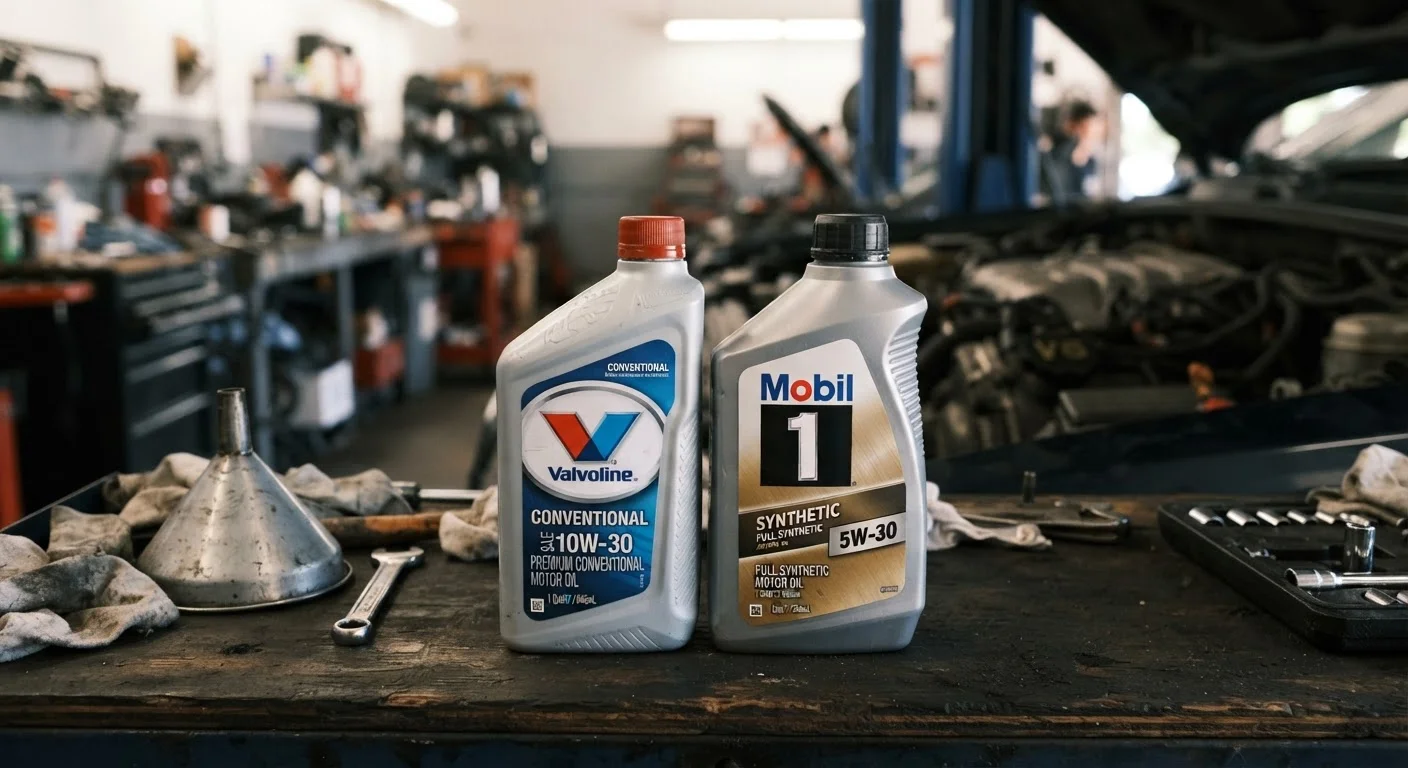
Photo: DockedReads.com | Information Made Easy editorial
Key Takeaways
- Conventional oil is refined from crude petroleum; synthetic oil is chemically engineered for uniformity and performance.
- Synthetic oil generally lasts longer between changes and performs better at temperature extremes.
- Your vehicle manufacturer's owner manual is the most reliable guide for which oil type to use.
- Switching from conventional to synthetic is usually safe, but check your specific vehicle's requirements first.
- Higher upfront cost of synthetic oil can be offset by longer drain intervals.
What Each Oil Actually Is
Motor oil's core job is straightforward: lubricate moving metal parts, reduce friction, carry away heat, and help keep the engine clean. Where conventional and synthetic oils diverge is in how they're made — and that manufacturing difference has real downstream effects on performance.
Conventional motor oil is derived directly from crude petroleum through a refining process. Refining removes many impurities, but the resulting molecules are still varied in size and structure. This inconsistency is a minor limitation — irregular molecules don't flow as uniformly or hold up under stress as well as engineered alternatives.
Synthetic motor oil is built in a laboratory. Chemists start with base molecules (often derived from petroleum or other carbon sources) and assemble them into a uniform, purpose-designed structure. The result is oil with consistent molecular size, fewer impurities, and properties that can be fine-tuned for specific performance targets — including how it behaves in cold starts or under sustained high heat.
There's also a middle ground: synthetic blend oil, which mixes conventional base stock with synthetic components. It offers a partial performance upgrade at a lower cost than full synthetic, and is a common choice for trucks and SUVs operating under moderate towing or load conditions.
| Criterion | Conventional Oil | Synthetic Oil |
|---|---|---|
| Source | Refined from crude petroleum | Chemically engineered base molecules |
| Molecular consistency | Variable molecular sizes | Uniform, purpose-designed structure |
| Cold-weather flow | Slower, thickens more readily | Flows faster at low temperatures |
| Heat resistance | Lower oxidation resistance | Higher thermal stability |
| Typical drain interval | Shorter (varies by vehicle) | Longer (varies by vehicle) |
| Cost per quart | Generally lower | Generally higher |
| Suitability for turbo engines | Often not recommended | Commonly required or preferred |
Performance Differences That Actually Matter Day to Day
The composition gap between conventional and synthetic oil translates into real-world differences most drivers will encounter at some point.
Cold-Weather Starting
Oil thickens in cold temperatures, which means your engine runs on reduced lubrication for the first moments after a cold start. Synthetic oil flows more readily at low temperatures, reaching critical engine components faster. This matters most in regions with harsh winters, where cold-start wear is a genuine long-term concern.
Heat Resistance and Thermal Stability
Conventional oil breaks down more readily under sustained high heat — a process called oxidation. This produces sludge and varnish deposits that can restrict oil passages over time. Synthetic oil resists oxidation more effectively, which is particularly relevant for turbocharged engines (turbochargers run extremely hot) and for stop-and-go urban driving where engines rarely fully cool between trips.
Drain Intervals
Because synthetic oil degrades more slowly, many manufacturers specify longer oil change intervals for vehicles using full synthetic. The old universal 3,000-mile rule, largely a holdover from an era of older conventional oils, doesn't apply to many modern vehicles. See The Logic Behind Oil Change Intervals for a fuller explanation of how degradation and driving style affect timing.
~30°F
Temperature advantage in cold-start flow
Synthetic oils are generally formulated to maintain pumpability at temperatures roughly 30°F lower than comparable conventional oils, according to oil engineering literature.
2x–3x
Longer typical drain interval vs. conventional
Many full-synthetic formulations are specified by manufacturers for intervals two to three times longer than traditional conventional oil schedules, though this varies by vehicle and driving conditions.
Cost Consideration
Synthetic oil costs more per quart. However, if it legitimately extends your change interval, the per-mile cost often works out comparably — or even lower. The key is following manufacturer guidance rather than defaulting to either extreme.
How to Know Which Oil Your Engine Actually Needs
The most reliable source for this decision isn't a quick-lube technician or a general rule of thumb — it's your vehicle's owner's manual. Manufacturers engineer engines to specific oil tolerances and specify the viscosity grade (such as 5W-30 or 0W-20) and, in many cases, whether conventional or synthetic is required.
Some key situations where the choice is largely made for you:
- Many newer vehicles require synthetic. Engines with variable valve timing, direct injection, or turbocharging are commonly designed around synthetic oil's properties. Using conventional in these engines may void warranty coverage or accelerate wear.
- High-mileage vehicles may benefit from specialized formulas. Oils marketed for high-mileage engines often contain seal conditioners and additional detergents — available in both conventional and synthetic versions.
- If your car currently uses conventional oil, switching to synthetic is generally safe for most modern engines. The persistent myth that switching causes leaks has been widely debunked. For more on common oil-related misconceptions, see Car Maintenance Myths That Waste Money and Time.
Viscosity Grade Still Matters Most
When in doubt, a qualified mechanic familiar with your specific vehicle is the right person to consult — particularly if you're driving an older, modified, or high-performance engine with non-standard requirements.
The content on this site is for informational purposes only and is not a substitute for professional advice. Always consult a qualified professional for guidance specific to your situation.