
Car Battery Health: What Drains It, What Restores It, and When It's Done

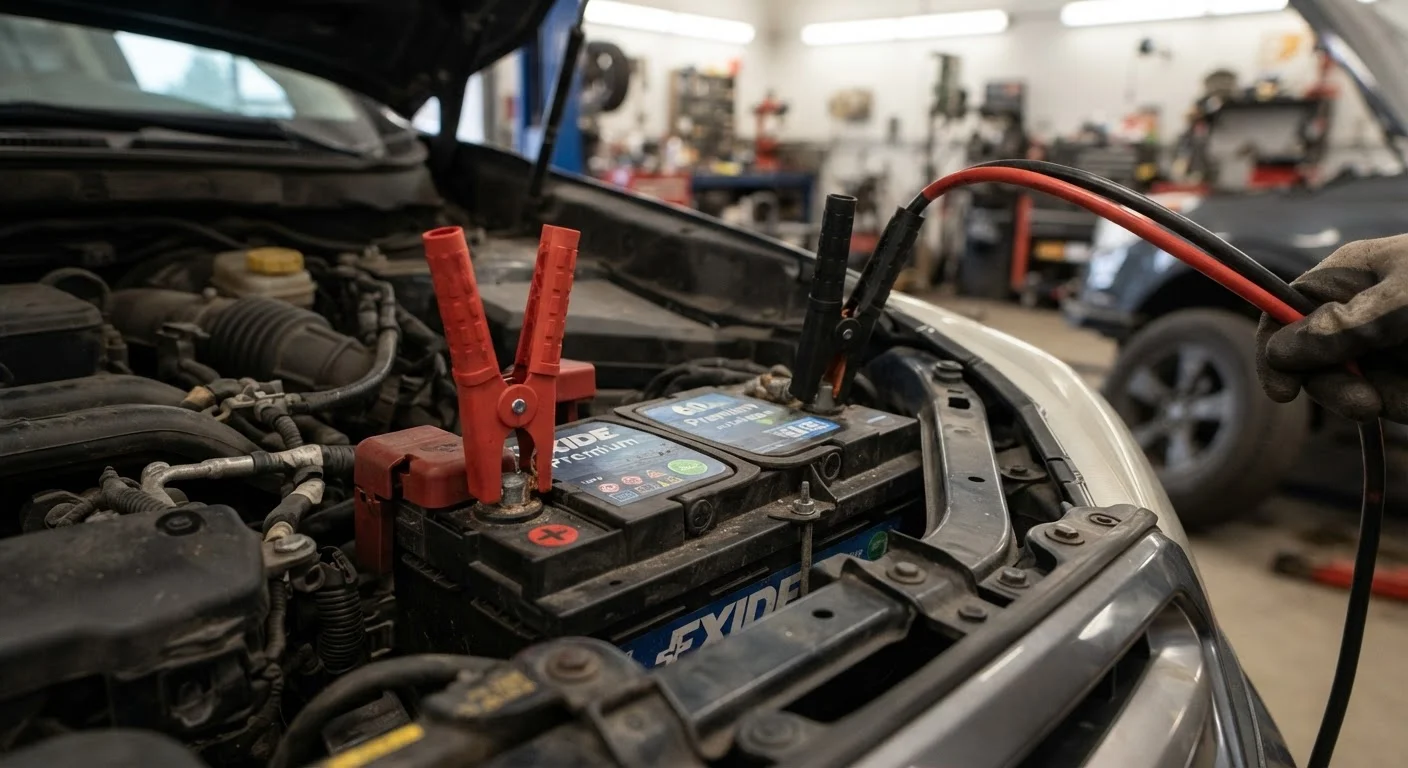
Photo: DockedReads.com | Information Made Easy editorial
Key Takeaways
- Most car batteries last three to five years under typical driving conditions.
- Extreme temperatures, short trips, and parasitic draws are the leading causes of premature battery failure.
- A voltage test is a useful starting point but cannot measure a battery's true capacity or health under load.
- Warning signs like slow cranking and dimming lights often appear weeks before a complete failure.
- Regular driving and keeping connections clean are the simplest ways to extend battery life.
How a Car Battery Works
Your car battery is a lead-acid electrochemical device. It stores chemical energy and converts it into electrical current on demand. Its primary job is supplying the short, powerful burst of electricity that starts the engine. Once the engine is running, the alternator — a generator driven by the engine — takes over, powering the car's electronics and simultaneously recharging the battery.
This division of labor matters: the battery is a sprinter, not a marathon runner. It is engineered for brief, high-current discharge followed by immediate recharging. Understanding this explains why the habits that seem harmless — idling with the radio on, repeatedly making short trips — are actually damaging over time.
Lead-acid battery
The standard battery type found in most conventional gasoline-powered vehicles, using lead plates submerged in a sulfuric acid solution to store and release electrical energy.
Alternator
A generator driven by the engine that produces electrical current while the car is running, powering vehicle systems and recharging the battery.
Parasitic drain
A continuous, low-level draw of electrical current from a battery when the vehicle is switched off, caused by a component that fails to fully power down.
Cold cranking amps (CCA)
A rating that measures how much current a battery can deliver for 30 seconds at 0°F without dropping below a minimum voltage — a standard indicator of starting power in cold conditions.
Load test
A diagnostic test that applies a controlled electrical load to a battery and measures how well it maintains voltage, revealing internal plate degradation that resting voltage alone cannot detect.
Battery maintainer
A device that delivers a small, regulated charge to a stored battery to keep it at full capacity without overcharging, ideal for vehicles that sit unused for extended periods.
What Drains a Car Battery
Battery drain falls into two broad categories: acute drain (something draws power suddenly and obviously) and parasitic drain (a slow, continuous draw that depletes the battery while the vehicle sits).
- Leaving lights or accessories on: Interior lights, headlights, or phone chargers left running with the engine off are the most common cause of a dead battery the next morning.
- Short trips: If you regularly drive less than 15–20 minutes, the alternator may not fully replenish what the starter motor used. Over weeks, this creates a cumulative deficit.
- Extreme temperatures: Heat accelerates internal corrosion; cold reduces the battery's ability to deliver current. Both shorten overall lifespan.
- Parasitic draws: Faulty relays, improperly installed aftermarket electronics, or malfunctioning modules can draw milliamps continuously. Enough milliamps over enough hours will drain any battery.
- An aging alternator: If the alternator is undercharging, the battery shoulders more of the electrical load than it should — gradually wearing it down.
Much like how standby power quietly consumes electricity in household devices, a vehicle's resting electronics can impose a steady drain that adds up over time.
Don't Ignore Repeated Dead Batteries
Early Warning Signs of a Failing Battery
Battery failures are rarely sudden. Most batteries telegraph distress for days or weeks before they fail entirely. Recognizing these signals early can mean the difference between a planned replacement and a roadside breakdown.
- Slow or labored cranking: If the engine turns over sluggishly before starting, the battery is struggling to deliver adequate current.
- Dimming headlights at idle: Lights that brighten when you rev the engine point to a battery that isn't holding charge well enough to sustain electrical loads at low RPM.
- The battery warning light: This indicator can signal a charging system problem — battery, alternator, or wiring — rather than the battery alone.
- Swollen battery case: Excessive heat can cause the battery casing to bulge. A visibly swollen battery should be treated as a safety concern and inspected by a professional promptly.
- Rotten egg smell: A sulfur odor near the battery suggests the battery is overcharging or has a leaking cell — both require professional attention.
What a Voltage Test Tells You — and What It Doesn't
A multimeter is a useful first tool. With the engine off and the battery rested for at least an hour, a healthy fully-charged battery should read approximately 12.6 volts. A reading below 12.4 volts suggests partial discharge; below 12.0 volts indicates a significantly depleted battery.
However, resting voltage is not the same as battery health. A battery can show a normal resting voltage and still fail to start the car when temperatures drop or the load increases. What matters operationally is capacity under load — how well the battery sustains voltage when the starter motor draws hundreds of amps.
A load test, conducted with a dedicated battery tester available at most auto parts shops and repair facilities, applies a controlled load and measures voltage drop. This reveals whether the battery's internal plates have degraded even when resting voltage looks fine. If you're relying on a home voltage check alone, you have a useful but incomplete picture.
Get a Load Test Before Winter
How to Extend Battery Life
Battery longevity comes down to a handful of consistent habits:
- Drive regularly and for adequate distances. Sustained drives of 20 minutes or more give the alternator time to fully recharge the battery. Vehicles that sit idle for weeks should be connected to a battery maintainer (sometimes called a trickle charger), which delivers a low, regulated current to keep the battery at full charge without overcharging it.
- Keep terminals clean. Blue-white corrosion on battery terminals increases resistance and reduces charging efficiency. A mixture of baking soda and water, applied with a brush when the battery is disconnected, removes buildup safely.
- Minimize electrical load at idle. Running the air conditioner, heated seats, and infotainment system while idling — especially in traffic — puts sustained demand on a battery that isn't being efficiently recharged at low RPM.
- Avoid deep discharges. Repeatedly draining a lead-acid battery deeply damages the internal plates. If you frequently find yourself jump-starting the same vehicle, the underlying cause needs diagnosis rather than repeated jumps.
The same principle of avoiding full depletion cycles applies across battery chemistry — similar habits extend the life of rechargeable batteries in phones and laptops as well.
AGM Batteries Have Different Care Needs
When It's Time to Replace
Even with ideal care, no lead-acid battery lasts indefinitely. As a general guideline, batteries older than three years are worth having tested annually. By five years, proactive replacement is reasonable regardless of whether obvious symptoms have appeared — particularly before a winter season, when diminished capacity becomes most consequential.
Replacement is clearly warranted when:
- A load test confirms the battery fails to hold voltage under load.
- The battery case is physically damaged, swollen, or leaking.
- The vehicle fails to start despite a fully charged battery and a healthy alternator.
- The battery has been deeply discharged multiple times and no longer takes a full charge.
When having a battery replaced, it is worth asking the shop to test the alternator at the same time. A failing alternator that is left in place will shorten the life of the new battery — sometimes within months.
This article is for general informational purposes. For diagnosis of specific electrical or charging system issues, consult a qualified automotive technician.
Frequently Asked Questions
The content on this site is for informational purposes only and is not a substitute for professional advice. Always consult a qualified professional for guidance specific to your situation.