
Travelling as a Group: The Honest Trade-Offs

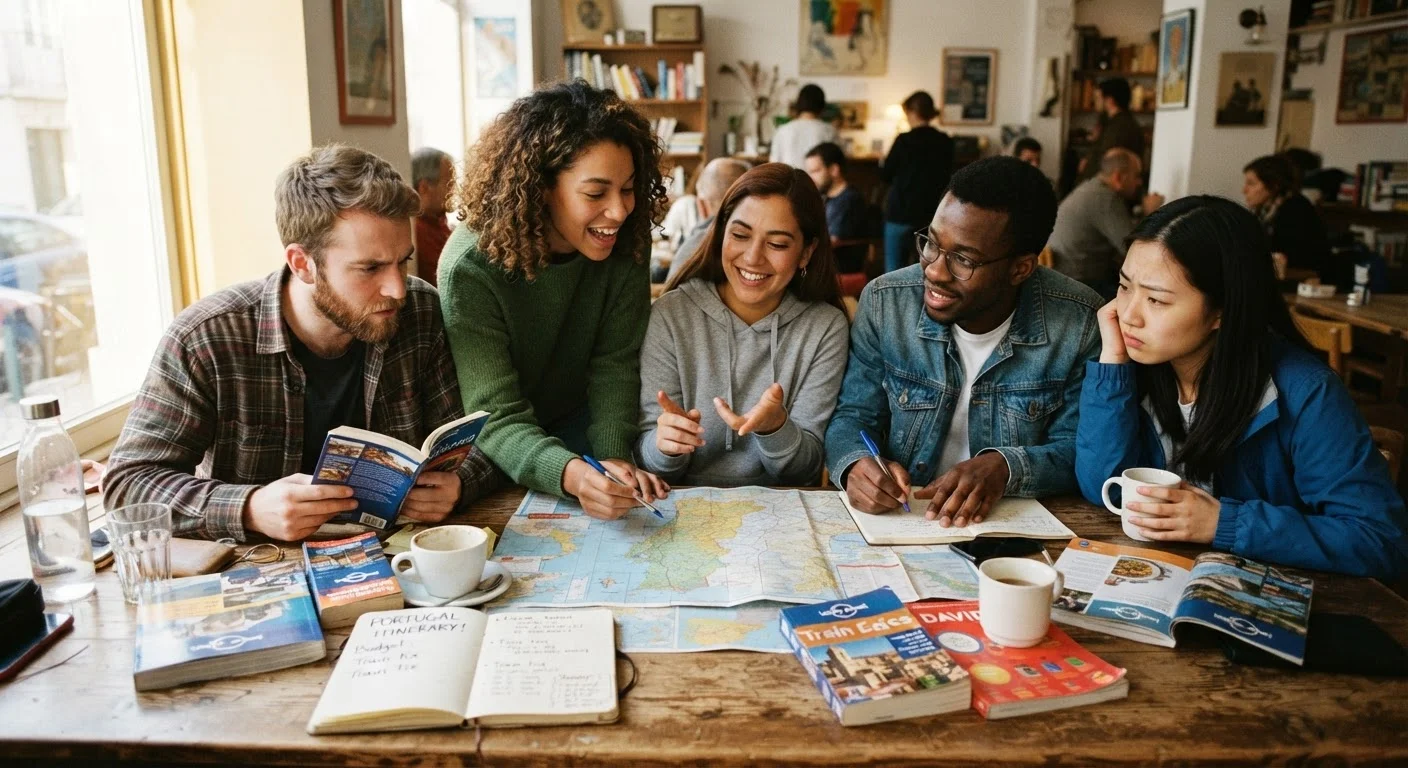
Photo: DockedReads.com | Information Made Easy editorial
Key Takeaways
- Shared costs can meaningfully reduce per-person expenses for accommodation and transport.
- Decision-making becomes slower and more complex as group size increases.
- Built-in companionship adds safety and social richness, especially in unfamiliar places.
- Conflicting travel styles and schedules are among the most common sources of group friction.
- Clear communication and pre-trip planning reduce most coordination problems before they start.
Shared costs reduce per-person accommodation and transport expenses
Splitting a rented house, van, or private transfer across a larger party can deliver meaningful savings compared to individual bookings. This is particularly pronounced for accommodation in popular destinations.
Built-in support network for safety and emergencies
Traveling with others means someone is always nearby if a health issue, navigational problem, or logistical crisis arises. This kind of practical safety net is difficult to replicate when traveling alone.
Richer shared experiences and lasting memories
Shared adventures — good and bad — tend to deepen relationships and create stories that outlast the trip itself. The social dimension of travel is part of what makes it meaningful for many people.
Task and planning responsibilities can be divided
Research, bookings, navigation, and packing logistics can be parceled out across the group, reducing the cognitive load on any one person and drawing on different people's strengths.
Social confidence in unfamiliar environments
A group signals approachability and stability, which can make interactions with locals, guides, and other travelers feel more natural and less isolating, especially in destinations far from home.
Decision-making slows significantly with more people
Every choice — from where to eat to when to leave — requires consensus or a clear leader. As group size grows, the time spent on logistics can chip away at the actual experience of being somewhere.
Conflicting travel styles create ongoing tension
Early risers, night owls, budget-conscious travelers, and free-spenders rarely want the same things. Without upfront alignment, these differences accumulate into friction over the course of a trip.
Individual spontaneity is harder to preserve
Deviating from the group plan — to spend an extra hour at a museum or explore a neighborhood on your own — requires negotiation and can leave travelers feeling constrained rather than free.
Financial disagreements are among the most common sources of conflict
Differing spending comfort levels, unclear expense-splitting arrangements, and informal IOUs can strain friendships. Money conversations are uncomfortable to have before a trip but far more costly to avoid.
Logistics scale in complexity with group size
Booking restaurants, coordinating transport, and managing check-in times for larger parties requires substantially more lead time and planning than the same tasks for one or two people.
Why People Travel in Groups — and What They're Actually Signing Up For
There's something instinctively appealing about gathering a handful of people you like and heading somewhere new together. Shared meals taste better, strange situations become funnier in retrospect, and the logistics of a big trip can feel less daunting when the load is divided. Group travel — whether it's a family reunion trip, a friends' getaway, or an organized tour — has a long, well-earned appeal.
But anyone who has tried to coordinate flights for six people, split a dinner bill fourteen ways, or wait forty-five minutes for the slowest member of the party to pack up each morning knows that group dynamics add a layer of complexity that no amount of enthusiasm fully prepares you for. Understanding the honest trade-offs before you commit is the kind of planning that pays off. See our guide to planning a well-structured trip for a broader look at the stages involved.
Shared costs reduce per-person accommodation and transport expenses
Splitting a rented house, van, or private transfer across a larger party can deliver meaningful savings compared to individual bookings. This is particularly pronounced for accommodation in popular destinations.
Built-in support network for safety and emergencies
Traveling with others means someone is always nearby if a health issue, navigational problem, or logistical crisis arises. This kind of practical safety net is difficult to replicate when traveling alone.
Richer shared experiences and lasting memories
Shared adventures — good and bad — tend to deepen relationships and create stories that outlast the trip itself. The social dimension of travel is part of what makes it meaningful for many people.
Task and planning responsibilities can be divided
Research, bookings, navigation, and packing logistics can be parceled out across the group, reducing the cognitive load on any one person and drawing on different people's strengths.
Social confidence in unfamiliar environments
A group signals approachability and stability, which can make interactions with locals, guides, and other travelers feel more natural and less isolating, especially in destinations far from home.
The Real Costs — Financial and Otherwise
One of the most cited benefits of group travel is cost-sharing, and it's legitimate. Renting a large vacation property divided among eight people often undercuts individual hotel rooms by a significant margin. Private transfers, cooking-focused grocery runs, and even group tour rates can all shift the math in travelers' favor. If you're building a budget, estimating shared versus individual costs is a useful exercise before committing to an arrangement.
But financial savings can be offset by the hidden costs of compromise. When one person wants a splurge dinner and three others are watching their spending, somebody ends up either resentful or overextended. Group itineraries also tend to favor the lowest common denominator — the pace, the activity choices, the accommodation standard — all get negotiated toward what everyone can live with rather than what any individual might choose freely.
Decision-making slows significantly with more people
Every choice — from where to eat to when to leave — requires consensus or a clear leader. As group size grows, the time spent on logistics can chip away at the actual experience of being somewhere.
Conflicting travel styles create ongoing tension
Early risers, night owls, budget-conscious travelers, and free-spenders rarely want the same things. Without upfront alignment, these differences accumulate into friction over the course of a trip.
Individual spontaneity is harder to preserve
Deviating from the group plan — to spend an extra hour at a museum or explore a neighborhood on your own — requires negotiation and can leave travelers feeling constrained rather than free.
Financial disagreements are among the most common sources of conflict
Differing spending comfort levels, unclear expense-splitting arrangements, and informal IOUs can strain friendships. Money conversations are uncomfortable to have before a trip but far more costly to avoid.
Logistics scale in complexity with group size
Booking restaurants, coordinating transport, and managing check-in times for larger parties requires substantially more lead time and planning than the same tasks for one or two people.
4–6
People considered the optimal group travel size
Travel researchers and group tour operators frequently cite groups of four to six as offering the best balance between cost-sharing benefits and manageable decision-making dynamics.
~30%
Potential accommodation savings per person in larger groups
Renting a multi-bedroom vacation property divided among a larger party can reduce individual accommodation costs compared to equivalent hotel bookings, though exact savings vary widely by destination and property.
Safety, Support, and the Value of Not Being Alone
There's a dimension of group travel that rarely makes it into glossy travel content: the genuine comfort of having people around when something goes wrong. A missed connection, a health scare, a late-night navigation problem — all of these are substantially easier to manage with trusted travel companions. This is one area where group travel has a real edge over going it alone. The contrast is worth noting: solo travelers face health and safety risks that group travelers can largely distribute among their party.
Groups also tend to attract more local engagement in many destinations. Vendors, guides, and fellow travelers often interact more readily with an animated cluster of people than with a solitary figure. The social energy of a group can open doors — to impromptu gatherings, to shared local knowledge, to the kind of spontaneous moments that become travel stories.
Group Size Matters More Than You'd Expect
When Group Travel Gets Hard — and How to Prepare
The friction points in group travel are predictable, which makes them, at least partially, preventable. Decision fatigue is real: every meal, every activity, every departure time becomes a small negotiation. The larger the group, the more energy gets spent on logistics rather than experience. Choosing between a fixed itinerary and a more flexible approach becomes especially consequential in a group context — a rigid schedule can cause resentment, while too much openness invites paralysis.
The most common advice from experienced group travelers is deceptively simple: have honest conversations before you leave. Who is handling money? What happens if someone wants to split off for a day? What's the shared expectation around spending? Groups that establish these norms early — even informally — tend to navigate the trip with far less friction than those who assume everyone is on the same page. The adventure, when it works, really is better together.
The content on this site is for informational purposes only and is not a substitute for professional advice. Always consult a qualified professional for guidance specific to your situation.