
Packing Principles That Actually Hold Up Across Every Kind of Trip

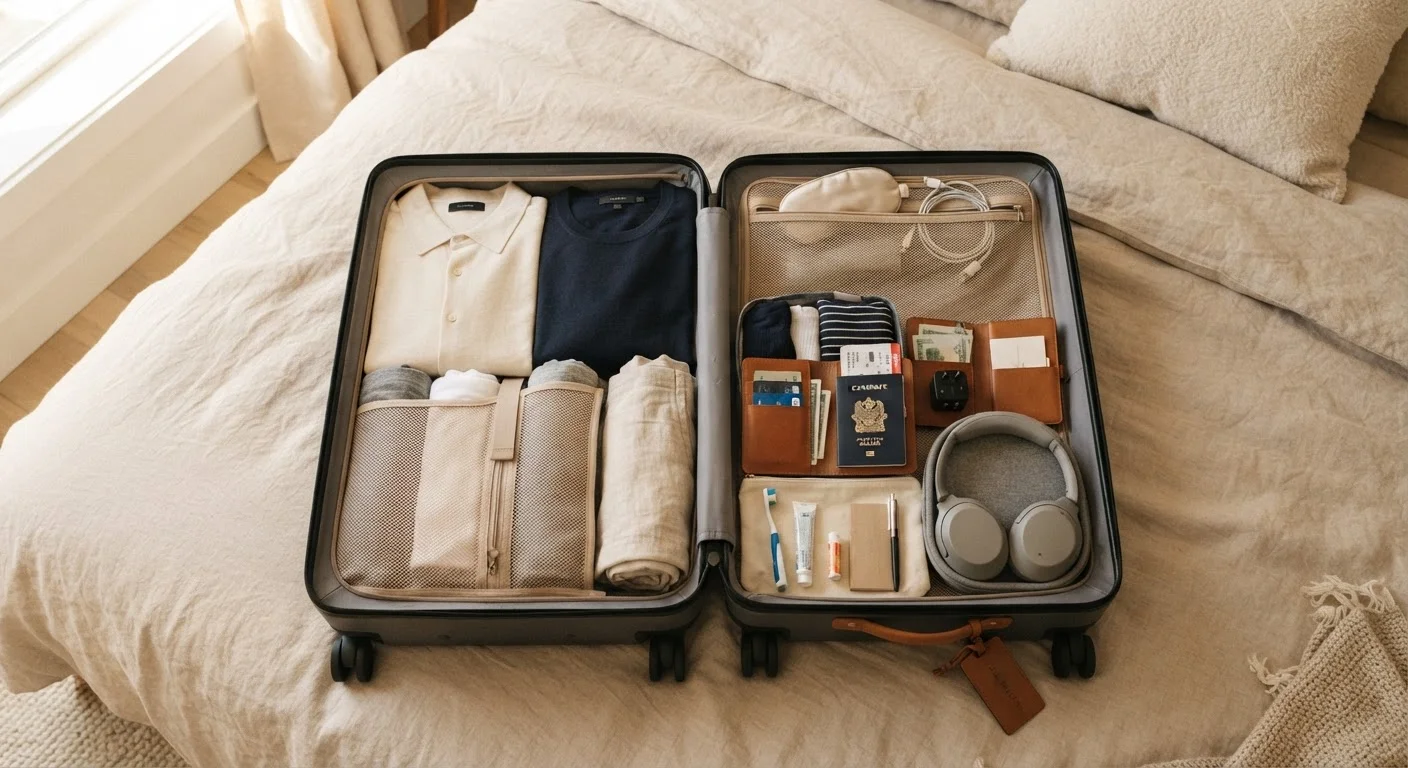
Photo: DockedReads.com | Information Made Easy editorial
Key Takeaways
- Building a capsule wardrobe around a single color palette dramatically reduces how much clothing you need to carry.
- Weighing your bag before departure prevents costly airline fees and physical strain at the airport.
- Rolling clothes and using packing cubes keeps items organized and maximizes usable space.
- Packing versatile, context-appropriate items beats packing for every hypothetical scenario.
- Carry-on limits vary by airline and route — always verify before you travel.
Why Packing Principles Matter More Than Packing Lists
Most travelers approach packing as a logistical puzzle — how to fit everything they might need into the smallest possible bag. But the most useful shift isn't organizational; it's philosophical. Packing well starts with asking the right question: not "What do I want to bring?" but "What will I actually use?"
That distinction cuts to the heart of nearly every overpacking regret. Whether you're heading out for a long weekend or a multi-week journey across several countries, the same underlying principles apply. Understanding them means you can adapt to any trip type, any climate, and any bag size without starting from scratch each time. These strategies are part of a broader approach to thoughtful travel planning — the kind explored in the anatomy of a well-planned trip.
The Core Practices That Travel Veterans Swear By
Experienced travelers tend to converge on a surprisingly consistent set of habits. These aren't tips borrowed from packing influencers — they're the result of hard-won experience carrying too much, losing things in checked luggage, and learning to pack smarter over time.
Build your clothing around a single neutral color palette.
Roll clothes and use packing cubes to organize by category, not by day.
Weigh your bag at home before you leave for the airport.
Pack for the activities you have confirmed, not the scenarios you're imagining.
Limit toiletries to what can't be reasonably purchased at your destination.
For trips that span multiple cities or countries, these principles become even more critical. A bag that worked for a single hotel stay becomes a burden when you're moving between destinations every few days. The complete guide to planning a multi-destination trip offers useful guidance on how packing decisions intersect with route logistics and transport options.
What You Can Do Right Now
Abstract principles only help when they translate into concrete action. The moves below are small enough to implement today but meaningful enough to change how you experience every trip that follows.
If you carry medications or health items, the decisions get more nuanced. Our guide to packing a personal health kit covers what earns its weight and what doesn't — a useful companion to any packing session. More general travel wellness considerations, from staying comfortable in transit to managing jet lag, are worth reviewing as part of your pre-departure routine.
The 1-2-3-4-5-6 Rule as a Starting Point
Checking Your Work Before You Leave
Even well-intentioned packers benefit from a final review. Before zipping up, lay everything out and ask: Does each item have at least two planned uses? Would I replace this if I lost it, or would the trip go on just fine without it? These questions surface the items that snuck in by habit rather than by need.
Cross-reference your packed bag against your actual itinerary — not a general sense of the trip, but the specific days and activities. A beach town with one nice dinner requires a very different kit than a city with museum visits and business meetings. The pre-travel checklist is a reliable final-check resource covering documents, finances, and home security alongside your packing review.
~50%
Clothes packed but never worn on a typical trip
Travel surveys and packing research consistently find that roughly half of packed clothing goes unused, regardless of trip length.
1 in 3
Travelers reporting overweight bag fees
Industry passenger experience data suggests a significant share of travelers are caught off-guard by bag weight limits at check-in.
Common assumptions about packing — like the idea that checking a bag is always less hassle than carrying on — don't always hold up when you examine them carefully. For a deeper look at received travel wisdom, travel myth-busting is worth a read before your next trip.
The content on this site is for informational purposes only and is not a substitute for professional advice. Always consult a qualified professional for guidance specific to your situation.