
Keeping Up Physical Activity When Your Routine Is Completely Gone

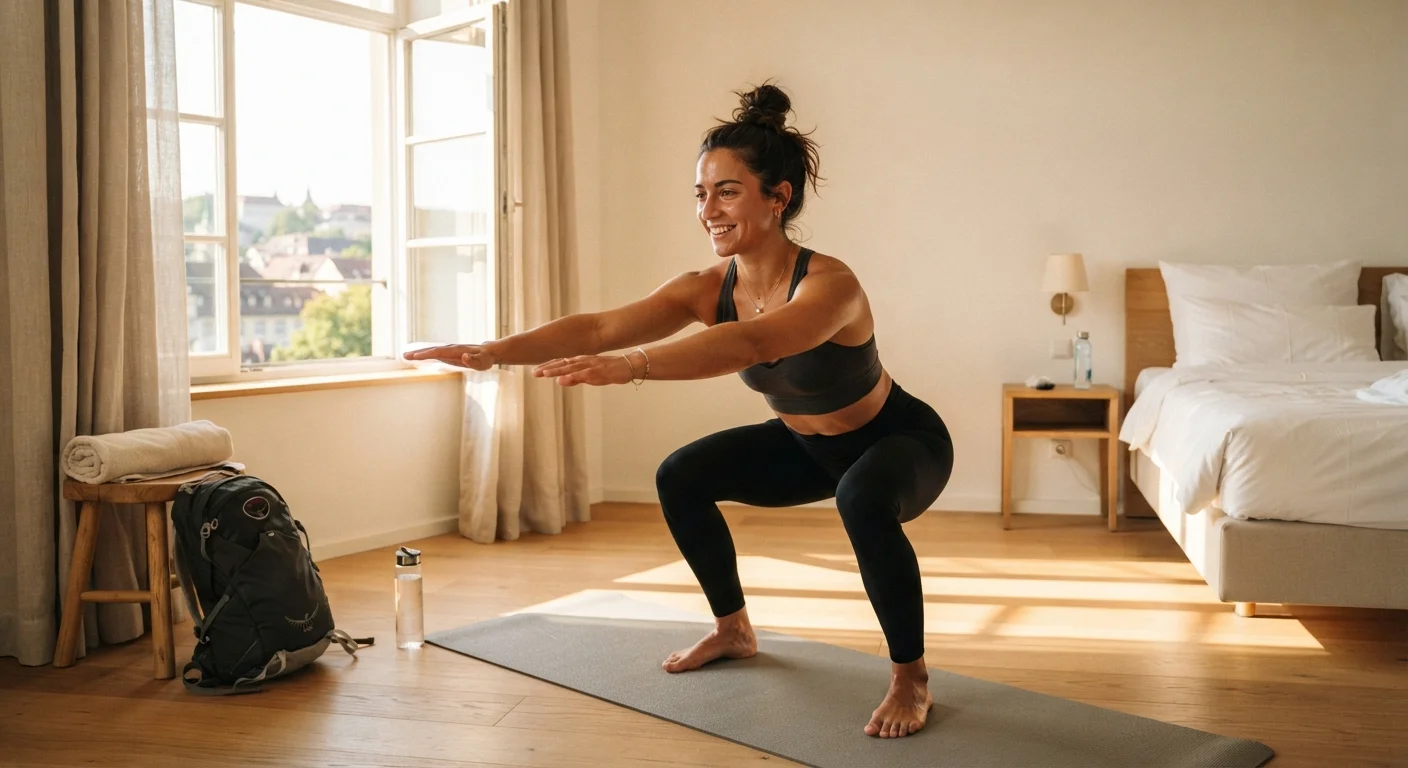
Photo: DockedReads.com | Information Made Easy editorial
Key Takeaways
- You don't need a gym, equipment, or a fixed schedule to stay active while traveling.
- Bodyweight exercises, walking, and mobility work can maintain fitness across any trip length.
- Shifting your definition of a 'workout' is often the key mental adjustment travelers need most.
- Even short movement sessions help manage travel fatigue, stiffness, and mood disruption.
- Planning one moveable anchor — like a morning walk — keeps momentum without rigid scheduling.
Why Travel Dismantles Even the Best Fitness Habits
Most fitness routines depend on invisible scaffolding: a familiar gym, a regular time slot, the same route, the same gear. Travel strips all of that away at once. The gym is gone. The morning slot is eaten by check-in lines or time zone fog. The running shoes are in checked luggage. And somewhere between the airport and the hotel, the internal voice whispers that this week just doesn't count.
That voice is understandable, but it's worth pushing back on. Research generally supports the idea that even brief, moderate movement sessions can help regulate mood, reduce fatigue, and counteract the stiffness that comes from long hours in airplane seats or rental cars. If you're curious about what actually happens physiologically during an exercise break, our overview of deconditioning offers a grounded look at the timeline.
The mental shift that tends to help most is letting go of the all-or-nothing frame. A 15-minute bodyweight circuit in a hotel room is not a consolation prize — it is a complete act of self-care under real constraints. Travelers who stay most consistent tend to be the ones who adapt their standards, not abandon them.
Reframe the Goal Before You Leave Home
Tools and Resources Worth Packing
You genuinely need very little. The floor is your gym. Your bodyweight is your resistance. That said, a few compact items can meaningfully expand your options without adding serious luggage weight.
Resistance bands (loop or flat)
Add variable resistance to squats, rows, and hip exercises without adding meaningful weight to your bag.
Travel foam roller or massage ball
Helps release tight hip flexors and upper back after long hours of sitting in transit.
Lightweight athletic shoes
Versatile footwear that works for hotel room workouts, neighborhood walks, and light jogging.
A movement app or saved workout notes
Removes decision fatigue by giving you a ready-made session when motivation is low and surroundings are unfamiliar.
If you find yourself curious about building real strength without equipment at home — the same principles transfer directly to a hotel room — our piece on home-based resistance training is worth a read before your next trip.
Step-by-Step: Staying Active From Departure to Return
The following steps are designed to layer onto a real travel schedule — not replace it. Start with whichever step matches where you are in your trip.
What you will need
Set a single moveable anchor for each day
Before each travel day begins, identify one movement commitment that can slide to fit your schedule — a 20-minute walk after breakfast, a stretch session before bed, or a bodyweight circuit during a long hotel layover. The specific activity matters less than the act of choosing one. Travelers who name their anchor the night before are far more likely to follow through than those who plan to 'fit something in.'
Use airports and transit time intentionally
Long layovers and terminal waits are underused movement windows. Walk the length of the terminal rather than circling the gate. Take stairs over escalators. Stand at a high-top counter rather than sitting if your body has been sedentary for hours. Even 10 accumulated minutes of walking during a layover contributes meaningfully to your daily movement total — a concept sometimes called NEAT in exercise science, referring to the calories and movement generated outside formal workouts.
Build a 15-minute hotel room circuit
A cleared floor space the size of a rug is enough for a complete full-body session. A simple circuit might include: bodyweight squats, push-ups, reverse lunges, a plank hold, and hip bridges. Cycle through the sequence two or three times with short rest intervals. No equipment, no noise complaints, no gym access required. This structure borrows from the same principles outlined in our desk-worker movement guide — small, repeatable units that require zero commute.
Explore on foot whenever the destination allows
Walking a new city is both movement and travel experience — it requires no justification beyond curiosity. If the neighborhood feels safe and navigable, choose walking over ride-shares for shorter distances. The case for walking as a primary movement tool is stronger than many gym-minded travelers assume, particularly for managing cardiovascular health over sustained trips. Always verify local safety conditions before exploring unfamiliar areas on foot, especially after dark.
Prioritize mobility and stretching on recovery days
Not every travel day warrants a hard effort. Long flights, significant time zone changes, and back-to-back itinerary days are situations where gentle mobility work — hip openers, thoracic rotations, calf stretches, shoulder rolls — may serve your body better than a circuit. Understanding that active recovery is distinct from passive rest helps you make a deliberate choice rather than defaulting to the couch out of inertia.
For travelers who deal with stiffness or joint considerations, low-impact movement options are worth exploring as an alternative framework. And once you're home, mental recovery after intense travel addresses the full-body reset that often follows a demanding trip.
This article is for general informational purposes only and does not constitute medical advice. If you have a health condition that affects your ability to exercise, consult a qualified healthcare professional before attempting any physical activity program.
The content on this site is for informational purposes only and is not a substitute for professional advice. Always consult a qualified professional for guidance specific to your situation.