
Strength Training at Home Without a Full Gym Setup

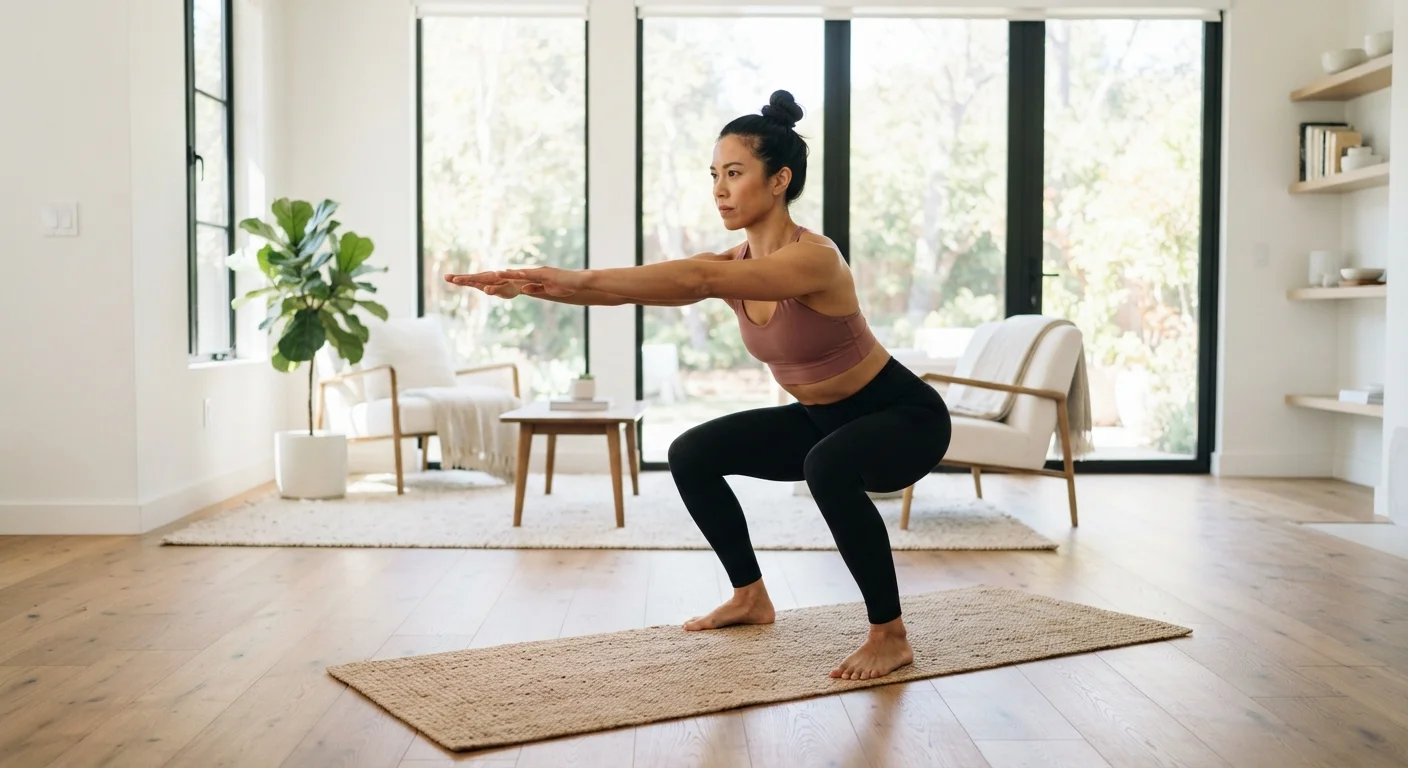
Photo: DockedReads.com | Information Made Easy editorial
Key Takeaways
- Bodyweight exercises can produce meaningful strength gains without any equipment.
- Progressive overload — gradually increasing challenge — is the key driver of strength adaptation.
- Six fundamental movement patterns cover the entire body when trained consistently.
- A few inexpensive tools like resistance bands can meaningfully expand your options.
- Consistency over weeks and months matters far more than any single intense session.
- Always consult a healthcare professional before starting a new exercise program if you have existing conditions.
Why Bodyweight Training Builds Real Strength
The gym is one environment for building strength — not the only one. Muscles respond to mechanical tension and progressive challenge, regardless of whether that load comes from a barbell, a resistance band, or your own bodyweight working against gravity. Research in exercise science consistently shows that muscular adaptations — increased force production, improved neuromuscular coordination, and hypertrophy — can occur across a range of resistance types when training is structured appropriately.
This matters because gym access is genuinely unequal. Cost, location, schedule, and confidence all create barriers. Home-based training removes most of them. If you're returning to exercise after time away, starting in a familiar, private space can also reduce the psychological friction that derails many early efforts.
Progressive overload
Gradually increasing the demand placed on muscles over time so the body continues to adapt and grow stronger, rather than plateauing at a fixed level of effort.
Mechanical tension
The force placed on muscle fibers when they contract against resistance. It is the primary stimulus that drives strength and muscle adaptations, regardless of the source of the load.
Posterior chain
The group of muscles along the back of the body — including the glutes, hamstrings, and lower back — that are critical for posture, hip power, and everyday functional movement.
Unilateral training
Exercises performed on one limb at a time, such as a single-leg squat. These help identify and correct strength imbalances between the left and right sides of the body.
Time under tension
The total duration a muscle is working during a set. Slowing down the lowering phase of a movement increases time under tension and can intensify the training stimulus without adding load.
Core Principles of Home-Based Resistance Training
Effective strength training — wherever it happens — rests on a handful of durable principles.
- Progressive overload: The training stimulus must increase over time. Without it, the body adapts to a fixed demand and stops changing. At home, progression means advancing to harder exercise variations, adding reps, reducing rest, or increasing time under tension — not just doing the same workout indefinitely.
- Adequate recovery: Strength is built during rest, not during the workout itself. Scheduling rest days is not optional; it is part of the program.
- Movement quality first: Learning to control your own bodyweight through a full range of motion produces better long-term results than rushing to harder variations with poor form.
- Consistency over any single session: As explored in the case for low-key, consistent habits, showing up regularly across months is the actual driver of long-term fitness improvement.
Track Your Progressions, Not Just Your Workouts
Essential Movement Patterns to Master
Rather than memorizing a list of exercises, it's more useful to think in terms of movement patterns. Six patterns cover the full body and form the skeleton of virtually every effective strength program.
- Push
- Push-ups and their progressions (incline, decline, close-grip) train the chest, shoulders, and triceps.
- Pull
- Rows using a sturdy table edge or low bar, and eventually pull-ups, train the back and biceps.
- Hinge
- Hip hinges — such as single-leg Romanian deadlifts — develop the posterior chain: glutes, hamstrings, and lower back.
- Squat
- Bodyweight squats, split squats, and Bulgarian split squats build leg and glute strength under meaningful load.
- Carry / Brace
- Planks, hollow body holds, and loaded carries (even a backpack with books) challenge core stability under tension.
- Single-leg / Unilateral
- Step-ups, single-leg squats, and lateral lunges address strength imbalances and improve functional stability.
If your current routine doesn't touch all six patterns, that's a useful signal about where to add variety — not a reason to feel behind.
Minimal Equipment That Genuinely Helps
Zero equipment is enough to begin. Over time, a small number of inexpensive tools can meaningfully expand what's possible.
- Resistance bands: Flat and looped bands provide variable tension and are particularly effective for rows, pull-aparts, hip abduction work, and assisted pull-up progressions.
- A sturdy chair or low table: Useful for incline and decline push-up variations, box step-ups, and seated dips.
- A doorframe pull-up bar: Opens up vertical pulling movements that are otherwise difficult to replicate at home.
- A filled backpack: Adding weight to squats, hinges, or carries without purchasing plates.
None of these are required on day one. If you're also maintaining movement while traveling, the same bodyweight approach transfers to hotel rooms and small spaces without any gear at all.
Know When to Seek Professional Guidance
Building a Simple Weekly Structure
Structure prevents the most common beginner mistake: doing everything on day one and nothing for the next two weeks. A simple framework for a beginner might look like two or three full-body sessions per week, separated by at least one rest day each.
Within each session, aim to include at least one pushing exercise, one pulling exercise, one lower-body movement, and one core-stability drill. Keep sessions between 20 and 40 minutes, focusing on movement quality and controlled effort rather than exhaustion.
Over several weeks, look for places to add challenge — an extra set, a harder variation, a slower tempo. This gradual escalation is progressive overload in practice. If you prefer some structure but aren't drawn to solo training, comparing group classes to solo training can help you decide whether a hybrid approach suits you better.
Track what you do — even a simple note on your phone. Seeing progress documented over weeks is one of the most reliable ways to sustain motivation.
American College of Sports Medicine (ACSM) Exercise Guidelines
The ACSM publishes evidence-based physical activity guidelines for adults, including recommendations on resistance training frequency and volume. A reliable reference for understanding what constitutes adequate training stimulus.
Movement Pattern Self-Assessment Template
A simple logging template to track which of the six movement patterns you're hitting each week, helping you spot gaps and ensure balanced training across the full body.
CDC Physical Activity Basics
The Centers for Disease Control and Prevention offers clear, publicly accessible guidance on recommended physical activity levels for adults — useful for contextualizing how strength training fits into overall health.
This article is for general informational purposes only and does not constitute medical advice. Consult a qualified healthcare professional before beginning any new exercise program, particularly if you have existing health conditions, injuries, or are pregnant.
Frequently Asked Questions
The content on this site is for informational purposes only and is not a substitute for professional advice. Always consult a qualified professional for guidance specific to your situation.