
Eating Well When You Have No Control Over Your Menu

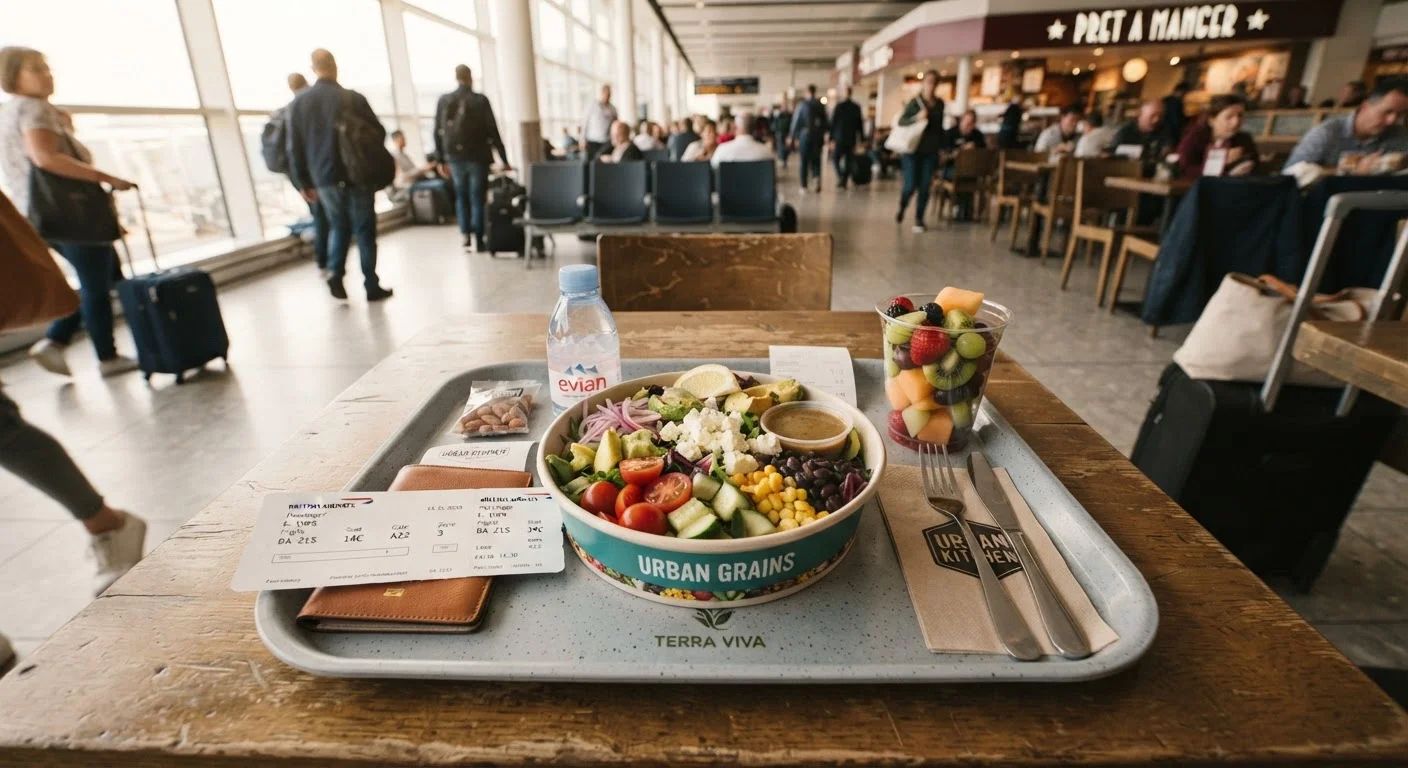
Photo: DockedReads.com | Information Made Easy editorial
Key Takeaways
- You don't need perfect options to eat reasonably well while traveling — small, consistent choices add up.
- Hunger awareness and pre-trip planning reduce the likelihood of stress-driven food decisions on the road.
- Protein and fiber are your anchors in unpredictable food environments; prioritize them when you can.
- Digestive disruption and dehydration are common travel side effects that smart eating choices can help manage.
- No single meal defines your nutritional picture — context and pattern matter more than perfection.
Why Eating Well While Traveling Feels So Hard
There's a particular kind of frustration that sets in around hour three of a delayed flight, standing in front of a terminal food court with options that range from fast-casual fried food to a sad-looking wrap that costs fourteen dollars. For travelers who normally pay attention to what they eat, this is less a logistical problem than a psychological one: the loss of control feels disproportionately stressful, and that stress itself tends to drive worse decisions.
The honest truth is that most travel environments — airports, highway stops, hotel breakfasts, unfamiliar cities — weren't designed with nutritional balance in mind. They were designed for speed, convenience, and margin. Understanding that gap is the first step toward navigating it without either giving up entirely or turning every meal into an ordeal. Eating well on the road doesn't require exceptional willpower or perfect options. It requires a small amount of preparation and a realistic definition of 'well enough.'
For those also trying to maintain physical wellness habits while away from home, our guide to staying active when your routine disappears covers complementary strategies that pair naturally with what you'll find here. And for foundational context on how different nutrients function, the Nutrition Basics hub is a useful reference point.
This Is General Information, Not Medical Advice
Step-by-Step Strategies for Eating Well in Transit
The steps below are ordered roughly by when they apply — before you leave, during transit, and at your destination. None of them require special equipment, significant expense, or access to a grocery store. They're designed to work in the messy middle of real travel.
What you will need
Reusable water bottle
Staying hydrated on the road reduces false hunger signals and supports digestion — especially on long flights.
Compact portable snacks
Nuts, dried fruit, or single-serve nut butter packets bridge gaps between meals and reduce impulse eating at convenience stops.
Small resealable bags
Useful for packing snacks from hotel breakfasts or markets to carry during long transit stretches.
Translation app or food dictionary
Helps decode menus in unfamiliar languages so you can make more informed choices about ingredients.
Pack a small emergency snack kit before you leave
The single most effective thing you can do for your nutrition while traveling costs almost nothing and takes ten minutes at home. Before any trip, assemble a small collection of portable, shelf-stable foods: a handful of mixed nuts, a few pieces of dried fruit, a couple of individually wrapped nut butter portions, or a protein bar with ingredients you recognize. These aren't meant to replace meals — they're circuit breakers. When your flight lands at 10 p.m. and the only thing open is a candy kiosk, having something in your bag means you don't arrive at tomorrow's breakfast ravenous and reaching for whatever's fastest.
Hydrate deliberately, especially in transit
Airplane cabins operate at very low humidity, and long drives tend to discourage bathroom stops — both conditions lead travelers to quietly under-drink throughout the day. Dehydration doesn't just cause headaches; it also mimics hunger, making you reach for food when what your body actually needs is water. Carry a refillable bottle and make drinking a habit tied to transitions: every time you board, disembark, or check in somewhere new, drink before you do anything else. If you're traveling internationally and tap water reliability is uncertain, verify local conditions through official travel health sources before relying on it.
Use the 'anchor food' approach at unfamiliar restaurants
Faced with an overwhelming or entirely foreign menu, many travelers either freeze and order randomly or default to the safest-looking familiar option regardless of its nutritional value. A more grounded approach: identify one reliable anchor in the meal — typically a protein or a vegetable-forward side — and build from there. You don't need to optimize every element. If you find eggs, grilled fish, a bean dish, or a simple salad, pair it with whatever else seems reasonable and move on. Trying to eat perfectly in an unfamiliar food environment creates stress that often backfires. Trying to eat adequately is achievable almost anywhere.
Navigate airport and roadside stops strategically
Airport terminals and highway rest stops are not nutritional wastelands — they just require a slower scan than most hurried travelers allow themselves. At airports, look past the immediate fast-food counters toward grab-and-go cooler sections, which often carry Greek yogurt, hard-boiled eggs, hummus and vegetable packs, or fruit cups. At gas stations and convenience stores, nuts, string cheese, bananas, and sunflower seeds are almost always available. The goal isn't to find a chef-quality meal; it's to eat something that will keep your energy reasonably stable until your next real opportunity.
Manage digestive disruption without overcorrecting
Digestive changes are among the most common — and least discussed — travel complaints. Changes in time zones, unfamiliar foods, different water, disrupted sleep, and reduced physical movement all affect gut function. Rather than reaching immediately for supplements or drastically restricting your diet, start with basics: prioritize fiber-containing foods when they're available (fruits, vegetables, legumes, whole grains), maintain hydration, and keep moving when you can. For more structured thinking about your overall eating patterns — at home and away — the practical weekly eating audit offers a useful reflective framework. If symptoms are severe or persistent, consult a healthcare provider rather than self-treating.
Recalibrate after the trip, not during it
Travelers who judge themselves harshly for every imperfect meal tend to either abandon their eating intentions entirely or develop an anxious relationship with food that makes travel less enjoyable. A more sustainable perspective: your nutritional pattern over weeks matters far more than any single day of airport sandwiches and vending machine granola bars. When you return home, a few days of returning to your normal rhythm — cooking, grocery shopping, eating vegetables — will naturally rebalance what travel disrupted. For a broader look at what different global food cultures can teach us about sustainable eating, the research on eating patterns around the world is genuinely interesting reading. Travel, at its best, expands your palate — not just your passport stamps.
Make Protein Your First Decision
Food Safety Abroad Is a Real Risk
The content on this site is for informational purposes only and is not a substitute for professional advice. Always consult a qualified professional for guidance specific to your situation.