
What Pet Food Labels Actually Tell You — and What They Don't

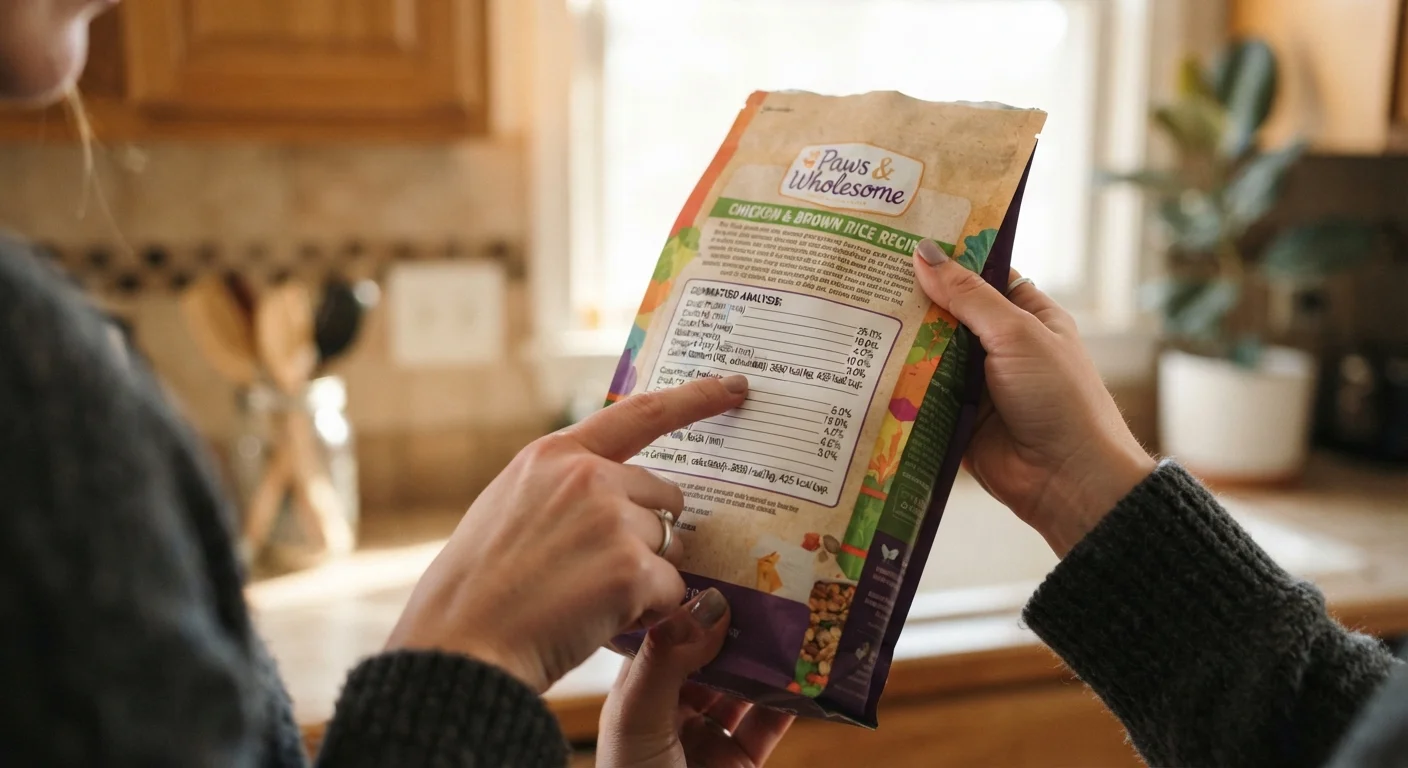
Photo: DockedReads.com | Information Made Easy editorial
Key Takeaways
- Ingredients are listed by weight before processing, so moisture content skews their apparent ranking.
- The guaranteed analysis gives minimum or maximum nutrient levels, not exact amounts.
- An AAFCO nutritional adequacy statement indicates whether a food is complete and balanced for a specific life stage.
- Marketing terms like 'natural' and 'premium' have limited regulatory definitions and don't guarantee superior nutrition.
- No label element reliably reveals ingredient quality, sourcing, or actual digestibility.
The Ingredient List: What the Order Actually Means
The ingredient list on a pet food label follows one firm rule: ingredients are listed in descending order by weight before cooking or processing. This matters because whole meats — chicken, beef, salmon — contain a large percentage of water. Once that moisture cooks off during manufacturing, the actual contribution of that ingredient to the finished product shrinks significantly.
This is why a bag listing "chicken" first isn't automatically superior to one listing "chicken meal" first. Chicken meal is already dehydrated, so its protein contribution per pound is concentrated and often higher. Neither ranking is inherently good or bad — the full ingredient list and guaranteed analysis together tell a more complete story.
Watch for ingredient splitting, a practice where a single ingredient (say, corn) appears multiple times under different names (corn flour, corn gluten, ground corn). Split this way, each sub-form drops lower on the list, making the ingredient seem less prominent than it actually is. This is legal and common.
Read Beyond the First Ingredient
AAFCO Statements and Nutritional Adequacy
One of the most meaningful pieces of text on any pet food package is the AAFCO nutritional adequacy statement — sometimes called the "nutritional adequacy statement" or "complete and balanced" claim. It tells you two things: whether the food is formulated to meet AAFCO nutrient profiles, and for which life stage (growth, adult maintenance, all life stages, or senior/complementary).
A food that carries this statement was either formulated to meet AAFCO's nutrient minimums or tested through a feeding trial. Formulation is more common and doesn't require live animal testing, while feeding trials provide real-world data on how pets actually process the food. Neither method is perfect, but both represent a baseline standard.
If a product says "for supplemental or intermittent feeding only," it is not complete and balanced. That means it shouldn't serve as a pet's sole diet. Treats and toppers almost always carry this designation.
~40%
U.S. pet food brands using formulation (not feeding trials) for AAFCO claims
Industry estimates suggest the majority of pet foods use nutrient profile formulation rather than live feeding trials to substantiate nutritional adequacy statements.
0
Regulatory definitions for 'premium' or 'holistic' on pet labels
Neither AAFCO nor the FDA has established enforceable criteria for marketing terms like 'premium,' 'gourmet,' or 'holistic' on pet food packaging.
Marketing Language vs. Regulatory Definitions
Terms like "premium," "gourmet," "holistic," and "human-grade" carry no standardized regulatory definition under AAFCO or FDA rules. Manufacturers use them freely because there are no enforceable criteria attached. This doesn't mean foods labeled this way are poor — it simply means the words themselves carry no regulatory guarantee.
"Natural" has a limited AAFCO definition: it generally prohibits artificial colors, flavors, and chemical preservatives, but says nothing about sourcing, farming practices, or nutritional density. "Organic" is more tightly controlled through the USDA National Organic Program and requires certified organic ingredients.
For a deeper look at common nutrition misconceptions that marketing language often reinforces, see our piece on pet feeding myths vets frequently correct.
“The ingredient list tells you what went into the bag before processing. It doesn't tell you what actually ends up available to your pet after digestion. Digestibility data, which most manufacturers don't publish, is arguably the more important number.”
— Dr. Cailin Heinze, Board-certified veterinary nutritionist and former faculty member, Cummings School of Veterinary Medicine at Tufts University
What Labels Cannot Tell You
Even a fully compliant, well-formatted label leaves significant gaps. Labels do not disclose:
- Ingredient sourcing or country of origin for individual components
- Actual digestibility — a food can meet protein minimums using sources that are poorly absorbed
- Exact nutrient amounts beyond guaranteed minimums and maximums
- Processing temperatures or methods that affect nutrient retention
Digestibility in particular is a meaningful metric that pet food companies are not required to publish. Two foods with identical guaranteed analysis numbers may differ substantially in how much nutrition a dog or cat actually absorbs. This is an area where independent research and veterinary guidance become valuable supplements to label reading.
For a broader look at how pet health connects to nutrition and everyday care decisions, explore the Pet Health & Care hub.
This article is for general informational purposes only and is not a substitute for veterinary nutrition advice. Consult a licensed veterinarian or board-certified veterinary nutritionist for guidance specific to your pet's health and dietary needs.
Frequently Asked Questions
The content on this site is for informational purposes only and is not a substitute for professional advice. Always consult a qualified professional for guidance specific to your situation.