
Popular Pet Feeding Myths That Vets Frequently Correct

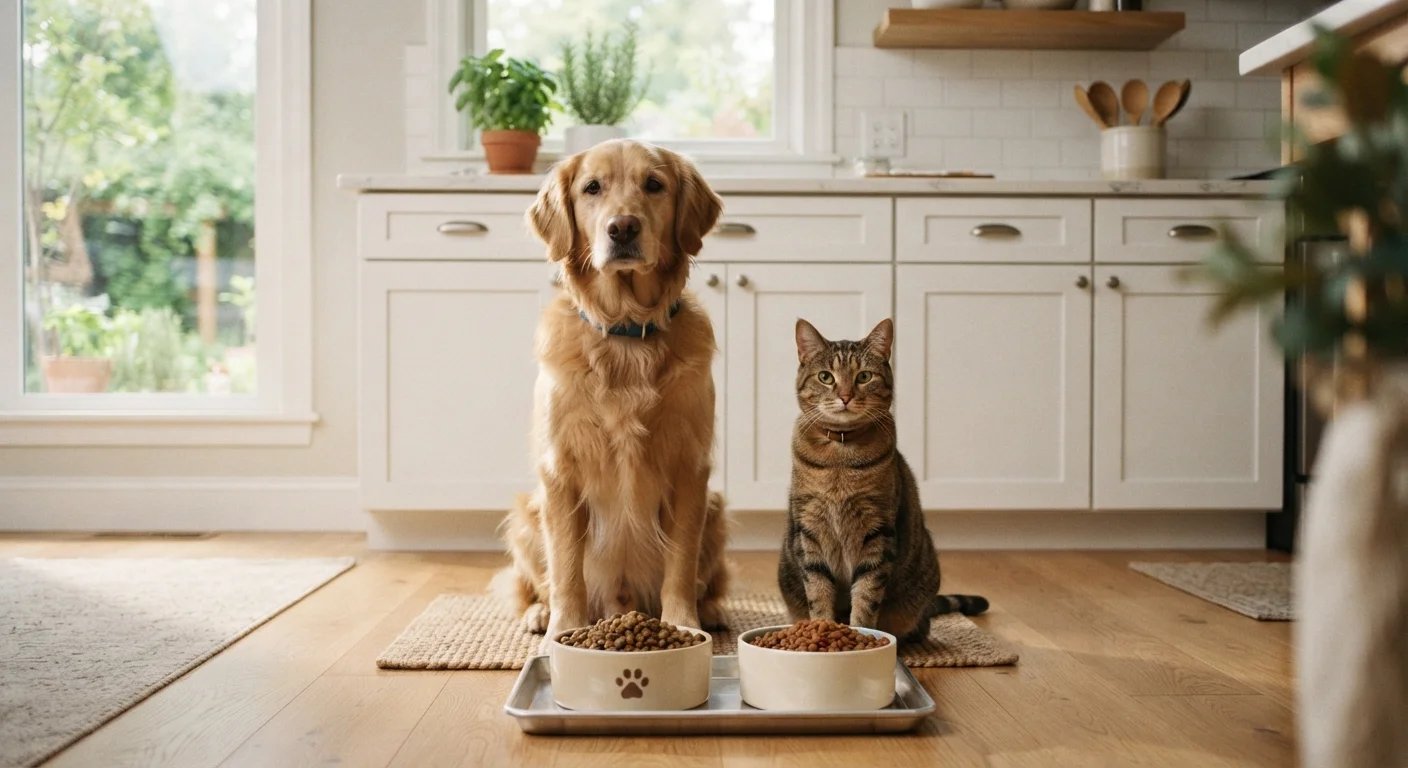
Photo: DockedReads.com | Information Made Easy editorial
Key Takeaways
- Grain-free diets are not inherently healthier for most pets and carry documented cardiac risks in dogs.
- Raw diets pose genuine pathogen risks to pets and humans and are not universally recommended by vets.
- Cats and dogs have fundamentally different nutritional needs and cannot safely share the same food.
- Home-cooked meals frequently lack critical nutrients unless designed by a veterinary nutritionist.
- By-products in commercial pet food are not low-quality filler — many are nutrient-dense ingredients.
Why Pet Feeding Myths Are So Persistent
Pet owners are motivated by genuine care for their animals, which makes them receptive to messaging that promises a more "natural" or "pure" approach to feeding. Marketing language on pet food packaging frequently amplifies these instincts, using terms like "ancestral," "whole-food," and "clean" in ways that are largely unregulated and scientifically undefined.
Veterinarians report correcting the same clusters of misconceptions repeatedly in practice — not because pet owners are uninformed, but because confident, emotionally resonant misinformation spreads faster than careful, qualified science. Understanding what pet food labels are actually telling you is a strong first step toward cutting through the noise.
Myth
Grain-free diets are always healthier for dogs and cats.
Fact
Grain-free diets offer no proven broad benefit for most pets, and in dogs they have been linked by the FDA to an increased risk of dilated cardiomyopathy (DCM).
The popularity of grain-free pet food surged on the belief that grains are unnatural fillers that cause allergies or inflammation. In reality, true grain allergies in pets are relatively uncommon, and grains such as rice and oats are digestible energy sources with recognized nutritional value.
More critically, the U.S. Food and Drug Administration launched an investigation into a potential link between grain-free diets — particularly those high in legumes like peas and lentils — and DCM in dogs. Research is ongoing, but the association has been documented across many breeds. Unless a specific grain intolerance has been diagnosed by a vet, grain-free food is not a necessary or automatically safer choice. See what pet food labels actually tell you to better understand how these formulas differ on paper.
Myth
Raw diets are more natural and therefore safer and better for pets.
Fact
Raw diets carry documented risks of bacterial contamination — including Salmonella and Listeria — that can harm both pets and the humans who handle their food.
The appeal of raw feeding rests on the idea that ancestral diets were raw and therefore optimal. However, domesticated pets — particularly dogs — have undergone thousands of years of physiological adaptation and differ substantially from wild ancestors in their digestive needs.
Major veterinary organizations, including the American Veterinary Medical Association (AVMA), have published position statements discouraging raw protein diets due to pathogen risks. Immunocompromised people, young children, and elderly household members face heightened exposure risk when raw pet food is handled in the home. For a balanced look at the evidence on both sides, our article Raw vs. Cooked Pet Food covers the research in detail.
Myth
Cats and dogs can share the same food without nutritional consequences.
Fact
Cats are obligate carnivores with specific requirements for taurine, arachidonic acid, and preformed vitamin A that standard dog food does not adequately supply.
Feeding a cat dog food long-term — or vice versa — can produce genuine nutritional deficiencies. Cats cannot synthesize taurine in sufficient quantities and must obtain it directly from diet; inadequate taurine causes blindness and heart disease in cats. Dog food is not formulated to meet these feline-specific thresholds.
Conversely, cats generally require higher protein concentrations than dogs, and cat food fed regularly to dogs can contribute to excessive caloric intake and weight gain. The nutritional divergence between these species is explored in depth in Why Cats and Dogs Cannot Share the Same Diet.
Myth
Home-cooked pet meals are inherently more nutritious than commercial food.
Fact
Home-cooked diets are frequently deficient in calcium, zinc, and essential vitamins unless formulated by a board-certified veterinary nutritionist.
Home cooking gives owners a sense of control and transparency, but good intentions do not guarantee nutritional completeness. Studies examining home-prepared pet diet recipes — including those published online — have found that the majority fail to meet established nutritional guidelines. Common shortfalls include calcium-to-phosphorus imbalances, insufficient iodine, and inadequate vitamin D.
If you prefer to cook for your pet, working with a veterinary nutritionist to develop a balanced recipe is strongly advisable. Our related article on nutrients commonly deficient in home-cooked pet meals outlines the most frequently missed gaps in DIY feeding plans.
Myth
By-products in commercial pet food are low-quality waste ingredients to be avoided.
Fact
Animal by-products — such as organ meat, liver, and lung — are often nutrient-dense ingredients that contribute meaningful protein, vitamins, and minerals to pet diets.
The word "by-product" carries a negative connotation, but in pet nutrition it refers to parts of the animal other than skeletal muscle meat. Organs like liver and kidney are among the most nutrient-rich components of any carcass, providing concentrated levels of iron, B vitamins, and essential amino acids.
The quality of by-products varies by manufacturer, but the ingredient name alone does not indicate poor nutrition. AAFCO sets definitions and quality standards for ingredients used in pet food. Understanding what these terms mean on a label — rather than reacting to the word itself — helps owners evaluate food more accurately.
Making Informed Choices: What Evidence-Based Feeding Looks Like
Evidence-based pet feeding does not require a science degree — it requires a willingness to question popular claims and involve your veterinarian in key decisions. A commercially prepared diet that carries an AAFCO nutritional adequacy statement has been formulated to meet established minimum nutrient profiles for its intended life stage, which is a meaningful baseline that many homemade and boutique diets do not reliably clear.
Always Consult Your Veterinarian First
For pets with specific health concerns — including obesity, kidney disease, allergies, or diabetes — diet becomes a clinical matter. Pet nutrition for common health conditions offers educational context for those conversations with your vet, and prescription diets vs. everyday commercial food explains when a therapeutic formula may be recommended.
Supplements are another area where owner enthusiasm sometimes outpaces evidence. Whether omega-3s, probiotics, or joint-support products are genuinely warranted depends on your individual pet's needs — our companion piece on supplements in pet diets addresses this in detail. For broader pet health guidance, the Pet Health & Care hub is a useful ongoing resource.
This article is for general informational and educational purposes only and does not constitute veterinary or medical advice. Always consult a licensed veterinarian before making significant changes to your pet's diet.
The content on this site is for informational purposes only and is not a substitute for professional advice. Always consult a qualified professional for guidance specific to your situation.