
Reading the Guaranteed Analysis Panel on Pet Food

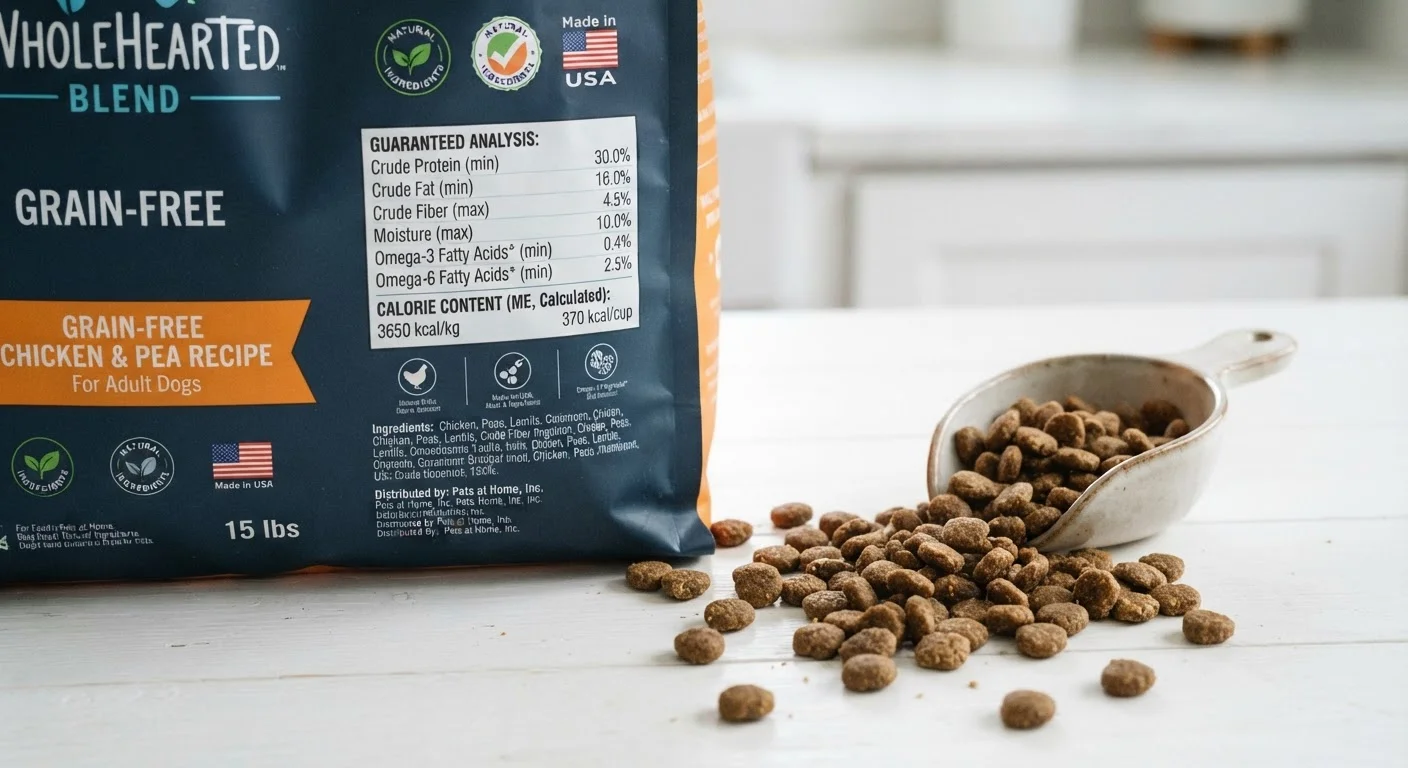
Photo: DockedReads.com | Information Made Easy editorial
What the Guaranteed Analysis Panel Actually Is
Every commercially sold pet food in the United States is required by the Association of American Feed Control Officials (AAFCO) to display a Guaranteed Analysis panel on its label. This panel lists minimum or maximum percentages for four core nutrients: crude protein, crude fat, crude fiber, and moisture. Think of it as a nutritional floor-and-ceiling disclosure — not an exact recipe, but a regulated promise about nutrient boundaries.
The word crude here is a laboratory term referring to the measurement method used, not a comment on quality. Understanding what each figure means — and what it doesn't — helps you make more informed comparisons across foods. For a broader breakdown of what else appears on a label, see what guaranteed analysis panels and ingredient lists are really telling you.
| Nutrients always listed | Crude protein, crude fat, crude fiber, moisture (AAFCO Model Pet Food Regulations) |
| Protein & fat guarantee type | Minimum percentages (AAFCO Model Pet Food Regulations) |
| Fiber & moisture guarantee type | Maximum percentages (AAFCO Model Pet Food Regulations) |
| Typical moisture in dry kibble | ≤12% (Industry standard; varies by product) |
| Typical moisture in wet/canned food | 75–82% (Industry standard; varies by product) |
| Panel reveals ingredient quality? | No — only quantity boundaries |
Breaking Down Each Nutrient Guarantee
Each of the four required figures tells a different story about the food:
- Crude Protein (minimum %): The lowest protein percentage the manufacturer guarantees in every batch. Higher minimums matter most for growing animals, active dogs, and cats — who are obligate carnivores requiring substantial dietary protein. Note that this figure includes protein from all sources, plant and animal alike.
- Crude Fat (minimum %): Fat is a concentrated energy source and carries fat-soluble vitamins. A minimum guarantee tells you the least fat the food will contain; actual fat content may be higher. Foods marketed as 'reduced fat' typically carry a maximum fat guarantee instead.
- Crude Fiber (maximum %): Fiber supports digestive health but in excess can reduce nutrient absorption. This figure is capped at a maximum because too much fiber is considered a quality concern. Most complete adult diets fall between 2% and 5%.
- Moisture (maximum %): Dry kibble is generally capped around 10–12%; wet or canned food commonly runs 75–82%. Moisture percentage dramatically affects how you compare protein and fat figures across food types — which is where dry-matter basis calculations become essential.
Guaranteed Analysis
A mandatory label panel disclosing minimum or maximum percentages of crude protein, crude fat, crude fiber, and moisture in a pet food. It sets nutrient boundaries but does not reflect exact nutrient levels in each batch.
Crude Protein
A laboratory estimate of total nitrogen-containing compounds in a food, used as a proxy for protein content. The method does not distinguish between high- and low-quality protein sources.
Dry-Matter Basis
A method of expressing nutrient percentages after mathematically removing moisture content, allowing valid comparisons between wet and dry pet foods.
As-Fed Basis
Nutrient percentages reported exactly as they appear on the label, including the food's water content. These figures cannot be directly compared across foods with different moisture levels.
Crude Fiber
A measurement of indigestible plant material in a food, reported as a maximum percentage. It reflects only a portion of total dietary fiber and is a rough guide to fiber load rather than a precise measurement.
AAFCO Nutritional Adequacy Statement
A label declaration indicating whether a food is formulated to meet established nutrient profiles or has passed a feeding trial for a specific life stage. It is separate from the guaranteed analysis panel.
Dry-Matter Basis: The Fair Comparison Method
Because wet and dry foods contain radically different moisture levels, comparing their guaranteed analysis figures at face value is misleading. A canned food showing 8% crude protein looks far lower than a kibble at 28% — but once you strip out the water, the difference may be much smaller.
To convert to a dry-matter basis, use this formula:
Dry-Matter % = (As-Fed % ÷ (100 − Moisture %)) × 100
For example, a wet food with 8% crude protein and 78% moisture: 8 ÷ (100 − 78) × 100 = 36.4% protein on a dry-matter basis — actually higher than many dry foods. This calculation levels the playing field for any meaningful comparison. For new owners unfamiliar with these fundamentals, our nutrition primer for first-time pet owners covers the basics in plain language.
When to Involve Your Veterinarian
What the Panel Doesn't Tell You
The guaranteed analysis has real limitations. It does not reveal:
- The quality or digestibility of the protein sources (a food could meet a protein minimum using poorly digestible ingredients)
- The actual amounts of vitamins, minerals, or amino acids present
- Whether the food meets complete-and-balanced standards — that information lives in the AAFCO nutritional adequacy statement printed elsewhere on the label
Owners managing pets with health conditions — such as kidney disease, obesity, or food sensitivities — should treat the guaranteed analysis as a starting point for a conversation with their veterinarian, not a decision-making endpoint on its own. For more on how nutritional needs shift with health status, see how diet intersects with common pet health conditions. The full label — including ingredient list and adequacy statement — tells a far more complete story, which is covered in depth at what pet food labels are actually telling you.
This article is for general informational and educational purposes only. Always consult a licensed veterinarian before making changes to your pet's diet, especially if your pet has an existing health condition.
The content on this site is for informational purposes only and is not a substitute for professional advice. Always consult a qualified professional for guidance specific to your situation.