
Why Diversification Isn't Just About Owning More Things

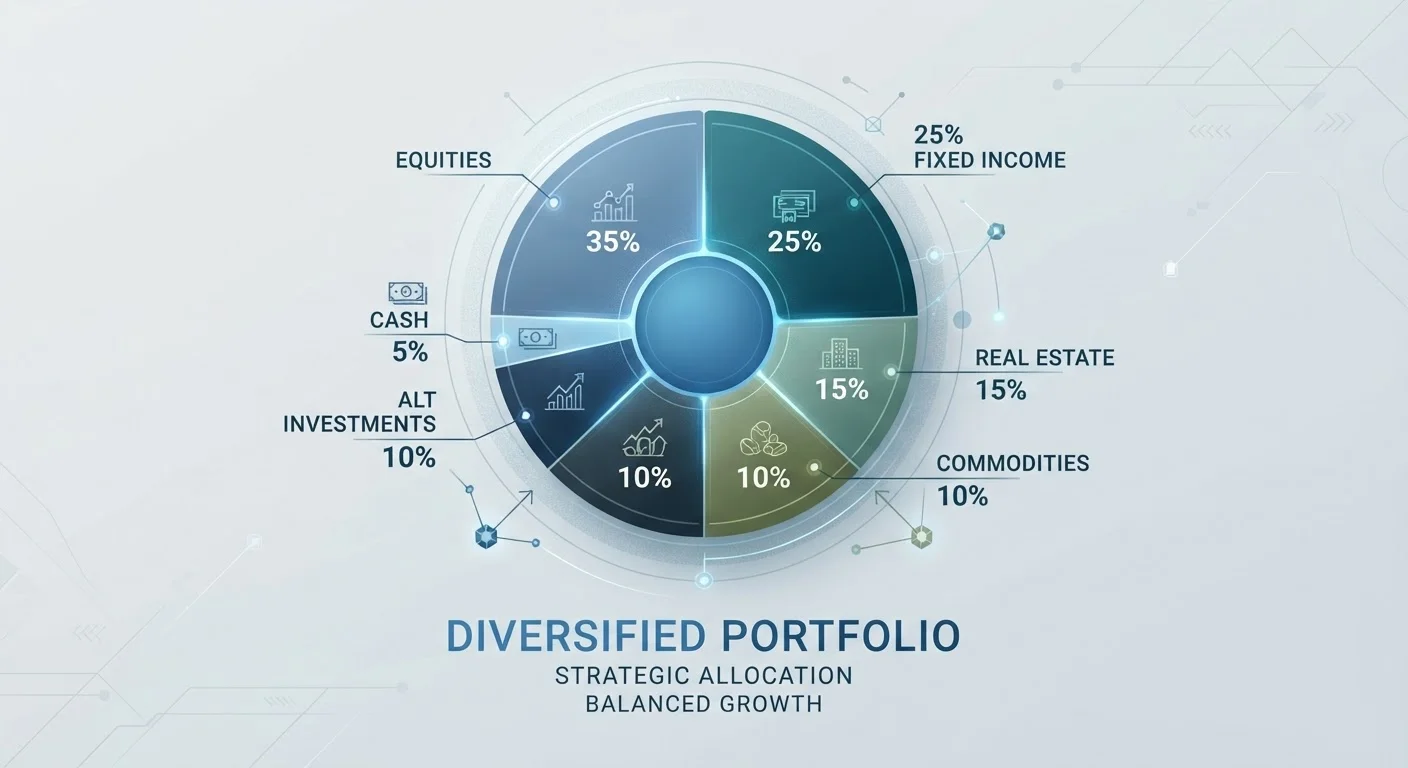
Photo: DockedReads.com | Information Made Easy editorial
Key Takeaways
- Owning many investments doesn't automatically mean you're diversified if they all move together.
- Correlation — how closely two assets move in tandem — is the core measurement of real diversification.
- Mixing asset classes like stocks and bonds typically provides more genuine diversification than owning many stocks alone.
- Diversification reduces risk but cannot eliminate it entirely; all investing involves the potential for loss.
- A well-diversified portfolio is built around your goals and risk tolerance, not a target number of holdings.
The Common Misunderstanding
Ask most people what diversification means, and they'll say something like: "Don't put all your eggs in one basket." That's directionally right — but the analogy only gets you so far. Many investors interpret it to mean they should simply own more things. They add a fifth stock, then a tenth, then a twentieth, and feel confident they've spread their risk appropriately.
The problem is that quantity and diversity are not the same thing. If you own 20 technology stocks, you've multiplied your holdings, but you haven't meaningfully reduced your exposure to the technology sector. When the sector falls, all 20 positions are likely to fall with it. You've built a bigger basket, but it still holds the same kind of eggs.
This is one of the most persistent investing myths that keep everyday people on the sidelines — the belief that volume equals protection.
Diversification Within a Single Asset Class
Why Correlation Is the Real Metric
The concept that actually drives meaningful diversification is correlation — a statistical measure of how two assets move in relation to each other. Assets with high positive correlation tend to rise and fall together. Assets with low or negative correlation move more independently, which is exactly what a diversified portfolio needs.
Consider a straightforward example: stocks and bonds. Historically, when stock markets experience sharp declines, investors often move money into government bonds, which can push bond prices up. The two asset classes don't always move in perfect opposition, but their lower correlation means that bonds have often provided a buffer when equities struggled. That's diversification doing its job.
~0.2
Historical correlation between US stocks and Treasury bonds
Over long historical periods, US equities and government bonds have shown relatively low positive correlation, supporting the case for holding both in a portfolio.
1,952+
Securities in a broad US total market index fund
A single broad US total stock market index fund can provide exposure to thousands of individual companies, spanning every major domestic sector and market capitalisation.
To build on this, understanding stocks, bonds, and funds as the building blocks of a portfolio helps clarify why a deliberate mix of asset types produces more resilient outcomes than concentrating in one.
What Genuine Diversification Looks Like in Practice
Effective diversification typically involves spreading money across several dimensions at once: asset class (stocks vs. bonds vs. real assets), geography (domestic vs. international markets), sector (technology, healthcare, energy, consumer goods), and time horizon (short-term holdings vs. long-term positions).
A portfolio holding stocks across multiple sectors and geographies, combined with a meaningful bond allocation, is far more genuinely diversified than a portfolio with 30 US technology stocks, regardless of how many individual names it contains.
Think in Asset Classes, Not Just Names
It's also worth understanding that your personal risk tolerance and risk capacity shape how your portfolio should be structured. Someone with a longer time horizon and stable income may tolerate more short-term volatility, while someone closer to retirement generally needs their diversification to work harder as a cushion.
Low-cost index funds and target-date funds are commonly used vehicles to access broad diversification without needing to manage dozens of individual positions — though no investment vehicle eliminates risk entirely, and past performance does not guarantee future results.
The Limits of Diversification
Diversification manages what's called unsystematic risk — the risk tied to a specific company, sector, or region. But it cannot protect against systematic risk, which is the broad market risk that affects virtually all assets simultaneously. A global financial crisis or deep recession can cause stocks, corporate bonds, real estate, and commodities to fall together, limiting diversification's protective power at exactly the moment investors most want it.
This isn't a reason to abandon diversification — it remains one of the most well-supported risk-management approaches available to individual investors. But it is a reason to hold realistic expectations. Diversification is a discipline, not a guarantee.
How you contribute to your portfolio matters too. Whether you invest a lump sum or drip money in over time can interact with diversification strategy, particularly in volatile markets.
This article is for general informational and educational purposes only and does not constitute personalised financial or investment advice. Consult a qualified financial adviser before making decisions about your own portfolio.
Frequently Asked Questions
The content on this site is for informational purposes only and is not a substitute for professional advice. Always consult a qualified professional for guidance specific to your situation.